




After what its director calls a record year, the agency says intelligence collection on China has doubled while human sources remain central despite the rapid rise of artificial intelligence.
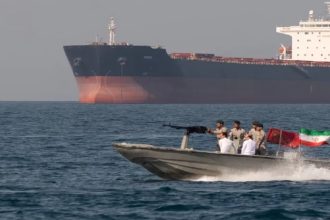
On a day in late spring, an F-15E Strike Eagle went down over Iranian territory. American intelligence had to find the pilot before Iran did. What followed was, in CIA Director John Ratcliffe’s description, the equivalent of finding a needle in a haystack.
The search that recovered the pilot alive was not primarily run by field officers in trench coats cultivating sources over coffee in Tehran. It was run by AI-enabled systems processing satellite imagery, signals data and open-source information at a scale and speed that no human network could have replicated.
Ratcliffe described it to an audience at an Amazon Web Services conference in Washington on 30 June as a “technology-enabled search that only the CIA could successfully and did successfully pull off.”
He then said that, increasingly, all future CIA successes would depend on technology.
And then, in almost the same breath, he told Congress in March that human sources were up 25 per cent, that foreign intelligence collection overall had risen by the same amount, and that collection on China had doubled. The year, he said, was the best he could remember at the agency.
These two statements are not in contradiction. They describe the same institution at a genuine inflexion point, one at which the question of whether machines replace spies is being answered in practice rather than in theory, and the answer is more complicated than the technology evangelists and the human intelligence traditionalists each prefer.
What AI Can Do That People Cannot
The case for technology in intelligence work is not abstract. It rests on three concrete advantages that no amount of expansion in human networks can overcome. The first is volume.
The CIA’s open-source intelligence operations have expanded dramatically as commercial satellite imagery has proliferated, social media has become a primary surface for the expression of political and social reality, and dark-web markets have generated commercially extractable information about weapons transfers, sanctions evasion and financial flows.
The volume of data available from open sources now vastly exceeds the processing capacity of any human analytical workforce. AI tools that triage data streams, flag anomalies, build link analysis between entities and generate rapid investigation summaries convert a flood of information into usable intelligence in hours rather than the months that traditional analytical cycles required.
The second advantage is access. The countries most important to American intelligence collection, China, Russia, Iran and North Korea, have built surveillance states so comprehensive that traditional human recruitment has become extraordinarily dangerous.
Biometric borders, ubiquitous camera networks, digital footprint analysis and counter-intelligence operations that have dismantled multiple CIA networks over the past decade have made the classical case officer’s job in these targets harder than at any previous point in the agency’s history.
Space-based sensors, signals intelligence, and AI-enabled open-source collection can reach targets that a human agent cannot safely approach. A thermal anomaly at a Chinese nuclear facility detected by satellite imagery does not require a source inside the facility.
The third advantage is survival. A compromised algorithm costs the agency money and credibility. A compromised agent costs a human life. This calculation has always existed in espionage, but the combination of China’s and Russia’s sophisticated counter-intelligence capabilities has made the risk to human sources in priority targets acute enough to change the cost-benefit analysis of traditional recruitment.
Under Ratcliffe, the CIA has made approximately 400 technology contracting acquisitions in six months, compressing what previously took up to 24 months of procurement and nine months of security review into a six-month cycle. The contractors being engaged include SpaceX, Amazon, Google and Dell. The agency is simultaneously negotiating an AWS incentive programme worth up to a billion dollars for intelligence community workloads.
What Machines Cannot Do?
None of this has produced a decision at Langley to downsize the human collection workforce. The reason is not sentiment. It is a specific analytical limitation that the CIA’s own 2023 AI strategy acknowledged directly: AI is excellent at what and where, but weak at why.
A satellite can detect a surge in GPU imports to a country under semiconductor sanctions. A well-placed human source can explain whether that surge represents a military programme, a commercial workaround or a deliberate deception operation designed to be detected. AI can identify a pattern of behaviour. A trusted agent can tell you whether the behaviour is genuine or staged. The distinction between those two things is not a marginal refinement in intelligence analysis. It is the difference between a correct strategic assessment and a catastrophic policy error.
The CIA’s former director, William Burns, writing in a major foreign policy publication, has been explicit that human agents remain necessary precisely because they provide the nuanced, contextual understanding that pattern recognition cannot generate.
There is also an accountability dimension that technology cannot resolve. An AI system that misidentifies a hospital as a weapons facility does not bear moral or legal responsibility for a strike ordered on that misidentification. A human analyst who validates the AI’s assessment does.
The law and the ethics of lethal force require a responsible human decision-maker in the chain of authorisation. This requirement is not a procedural formality. It is the mechanism by which intelligence analysis remains connected to accountability. Ratcliffe acknowledged this directly, saying that the CIA would still be driven by human decision-making as it embraces AI, and that only people can decide which is the right way to go.
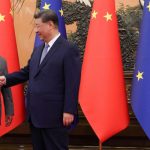
The geopolitical context gives the human intelligence expansion additional weight. China’s collection doubling in a single year is not a technology story alone. It reflects a sustained investment in recruitment, cultivation and placement of human resources in or adjacent to Chinese decision-making structures.
This kind of collection takes years of patient groundwork, linguistic and cultural capability, and the willingness of individual officers and their sources to accept personal risk. It cannot be contracted to Amazon or automated by a neural network. The 25 per cent increase in human resources overall reflects the same patient investment across multiple priority targets. Technology found the pilot in Iran. People are building the networks that will tell Washington what decisions are being made in Beijing, Moscow and Tehran before those decisions become crises.
The Collaboration That Actually Exists
The honest picture of the CIA in 2026 is of an institution running both tracks simultaneously, not choosing between them. AI tools process the data that human analysts previously spent most of their time collecting and sorting. Human analysts are freed to do what they are actually irreplaceable for: building source relationships, making judgements about source reliability, understanding cultural and political context, and providing the moral backstop that keeps intelligence-driven policy tethered to reality.
The CIA’s own framing for this is human-machine teaming, a formulation that deliberately resists the either-or narrative that both technology enthusiasts and human intelligence traditionalists prefer.
What the best year in memory actually represents is the combination working as intended. The rescued pilot, found by AI in a haystack too large for any human network to search, came home because the technology performed.
The doubling of the China collection reflects the human network that technology cannot replace. Both outcomes, in the same year, from the same institution, make the case for the combination more effectively than any doctrine document could. The spy in the field is not being replaced.
The spy in the field now has better tools than any spy in history has ever had. Whether Beijing, Moscow and Tehran can adapt to that combination faster than Washington can exploit it is the intelligence competition that will shape the next decade.