




A nature conservation charity focused on reforestation had 14 of its members arrested on suspicion of membership of a terrorist organisation. A stand-up comedian was detained at the airport for calling Erdogan a dictator in a show. Two journalists were arrested on Sunday for reasons described as unspecified. These events are the backdrop to the NATO summit in Ankara.
In the weeks before NATO leaders arrived in Ankara to discuss the collective defence of democracies against authoritarian aggression, the Turkish government arrested at least 209 people in pre-dawn raids, banned all public demonstrations across the capital for 13 days, ordered stray dogs off the streets, erected billboards along roads to the airport to conceal poorer neighbourhoods from visiting heads of state, and had houses along the summit route repainted. Parks were closed so that a French president could jog without encountering the public.
The leader of the Istanbul branch of the Association of Contemporary Lawyers was detained. The head of the main opposition party was removed by a court order. Istanbul’s mayor, who is also the opposition’s chosen candidate for president, is standing trial from a detention cell on charges the opposition calls politically motivated. At least 21 journalists are currently in prison. Turkey ranked 163rd out of 180 countries on the most recent Reporters Without Borders press freedom index. The alliance that gathered in Ankara to discuss the defence of freedom was hosted by a government that banned its own citizens from demonstrating anywhere near it.
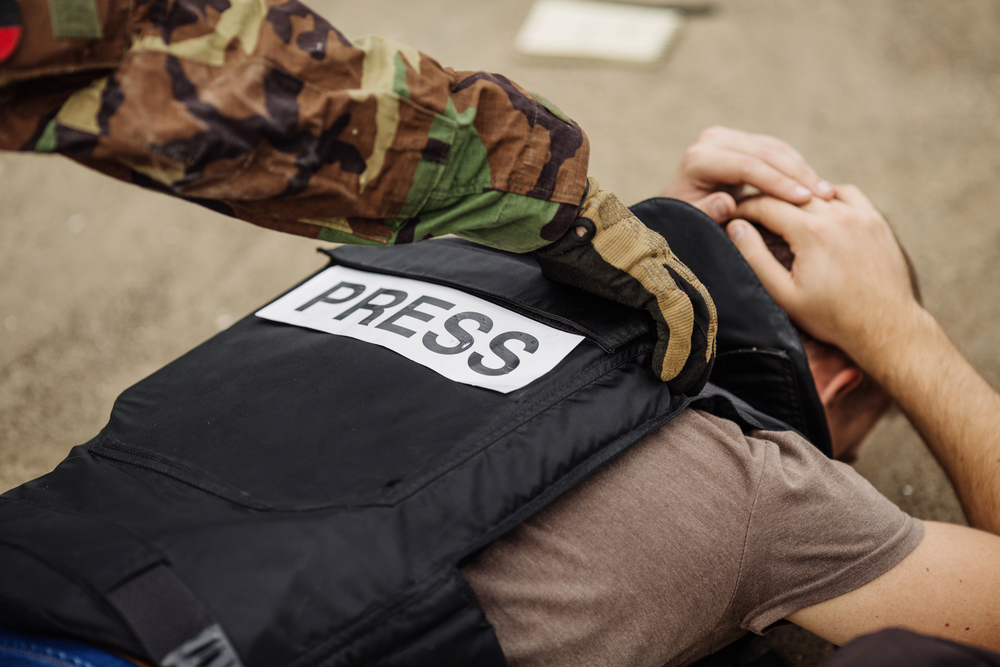
Two more journalists were arrested on Sunday, the day before the summit opened. Buse Söğütlü, the international news editor at the online newspaper T24, and Ceren Erdoğdu, a journalist at OdaTV, were both detained.
Their media outlets said the reasons given were unspecified. Söğütlü’s lawyer told the press he believed the detention was linked to the NATO summit. Reporters Without Borders condemned what it described as indiscriminate, arbitrary and chaotic operations launched ahead of the summit that clearly threaten the reputation and safety of journalists. The Turkish authorities did not publicly explain why two journalists who cover international news were detained on the eve of an international summit.
The Accommodation That Nobody Will Name
Western leaders attending the Ankara summit have mostly avoided publicly raising concerns about Turkey’s record on rights and freedoms. The strategic logic is clear and has been stated plainly enough in diplomatic briefings: Turkey is a NATO member with the alliance’s second-largest army.
It controls the Turkish Straits, which determine whether Russian warships can reach the Mediterranean. It hosts a major American air base at Incirlik. It shares borders with Syria, Iraq, Iran, Armenia, Georgia, Bulgaria and Greece. It has been a crucial intermediary in negotiations between Ukraine and Russia.
Its drone technology, produced by Bayraktar and used against Russian armour in Ukraine, has become a significant element of NATO’s asymmetric warfare toolkit. Erdogan is also on good terms with Trump, and NATO members arriving in Ankara were specifically hoping to shore up Washington’s commitment to the alliance by giving the American president a successful summit with his friend.
All of this is real, and none of it is wrong as a matter of strategic calculation. What it has produced is an institutional silence, among the governments that claim to defend democratic values as a matter of principle, about a crackdown that human rights organisations have not been silent about at all.
The press credentials submitted by outlets known for editorial independence were, according to a coalition of media freedom organisations, among those rejected by the summit’s accreditation process. The coalition said this was difficult to reconcile with NATO’s own standards. NATO did not respond to requests for comment.
The Turkish government’s explanation for the arrests has been consistent: the detainees were suspected of links to revolutionary leftist groups or to Islamic State. The Ankara prosecutor’s office said the June raids were designed to decipher the actions of terrorist organisations. Human Rights Watch noted that authorities provided no evidence of any crimes committed by any of the detainees.
Among those detained on suspicion of terrorism were a journalist and LGBT rights activist, two lawyers, an academic, and 14 members of a nature conservation organisation focused on reforestation. The prosecutor said they were linked to both far-left organisations and Islamic State simultaneously, a combination of alleged affiliations that several commentators described as remarkable in its internal consistency.
The Question NATO Cannot Answer Cleanly
The tension that the Ankara crackdown exposes is not new and it has no clean resolution. NATO has always contained member states whose domestic governance did not meet the standards that the alliance’s founding documents describe as fundamental values. Greece and Turkey both underwent military coups while NATO members. Hungary’s democratic backsliding has been extensively documented and extensively tolerated.
Spain was a dictatorship until the 1970s. The alliance has consistently prioritised collective security over democratic conformity when the two came into conflict, because the alternative, a smaller alliance with purer values and a shorter eastern flank, serves Russian strategic interests more than Western ones.
What the Ankara crackdown makes visible is the price that consistency has. When the alliance that describes itself as a community of democracies holds its summit in a capital that has just arrested more than 200 people in pre-dawn raids, banned demonstrations for a fortnight, jailed the principal opposition candidate and imprisoned at least 21 journalists, the description becomes harder to say with a straight face. The Turkish opposition leader said, addressing Erdogan directly, that it is not the existence of protests that damages a country’s reputation but the suppression of the right to demonstrate. He was correct. He said this on a social media platform whose accounts belonging to LGBT and women’s rights organisations were simultaneously being blocked by Turkish authorities.
Arrests in Turkey for criticising Erdogan have risen sharply in recent years. A comedian was charged last week with insulting the president and denigrating religious values for saying in a show that Erdogan is a dictator. He said it in a comedy performance.
He was arrested at the airport upon returning from holiday. The NATO communiqué adopted in Ankara will contain language about shared values, democratic principles and the rule of law. The comedian is currently in pre-trial detention. Both things will be simultaneously true when the leaders fly home.