




Russia’s growing energy crisis is forcing Moscow to balance the demands of war, domestic stability and international influence in ways it has rarely faced before.
For decades, Russia has used energy as one of its most effective foreign policy weapons. Oil and gas financed military expansion, bought political influence and gave the Kremlin leverage over governments from Europe to Central Asia. Today, that same energy sector is becoming one of Moscow’s greatest vulnerabilities.
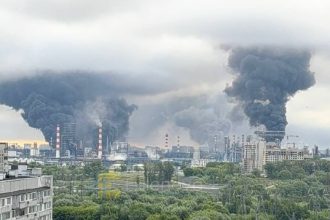
The irony is difficult to ignore. One of the world’s largest oil producers is now struggling to supply enough fuel for its own domestic market. Long queues at petrol stations, fuel rationing across dozens of regions and rising prices have become increasingly common after months of Ukrainian drone strikes against refineries, storage depots and oil terminals. Even President Vladimir Putin has publicly acknowledged that Russia is facing fuel shortages, although he insisted the government would bring the situation under control.
Russia is in a summer fuel crisis
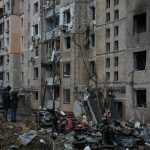
The immediate cause of the crisis lies hundreds of kilometres from the petrol stations themselves. Rather than concentrating solely on military bases, Ukraine has steadily expanded its campaign against Russia’s energy infrastructure. Refineries from Tuapse on the Black Sea to facilities supplying Moscow have been repeatedly targeted, reducing refining capacity and disrupting fuel production. Industry estimates cited by international media suggest that roughly a quarter of Russia’s refining capacity has been affected by the attacks, forcing Moscow to divert supplies and consider measures that would have seemed unthinkable only a year ago.
The consequences reach far beyond inconvenience for Russian motorists.
Modern warfare depends on logistics. Every tank, truck, aircraft and armoured vehicle consumes enormous quantities of fuel. Agriculture, rail transport and heavy industry compete for the same diesel supplies. As domestic demand begins to outpace production, the Kremlin faces an increasingly uncomfortable choice between maintaining exports that generate foreign currency and protecting its own economy from shortages.
So far, Moscow has chosen the domestic market.
Russia has already suspended gasoline exports and is actively considering restrictions on diesel exports, one of its most valuable refined petroleum products. Parliament has approved emergency tax measures, relaxed fuel-quality standards and even opened the door to fuel imports, despite Russia’s status as a global energy superpower. These are emergency responses to a problem that has evolved much faster than policymakers anticipated.
That decision carries important foreign policy consequences.
For years, Russia used discounted fuel exports to strengthen relationships with friendly governments and maintain influence across parts of Eurasia, Africa and Asia. Reliable energy deliveries were not simply commercial transactions; they were instruments of statecraft. Every reduction in exports narrows Moscow’s diplomatic room for manoeuvre and weakens one of the Kremlin’s most effective tools of influence.
The shortages are also changing Russia’s relationships with its closest partners. According to recent reporting, Moscow has explored securing additional fuel supplies from neighbouring countries, including Kazakhstan, while attempting to balance domestic demand with existing contractual obligations abroad. A country that once positioned itself primarily as an exporter is increasingly being forced to think like an importer.
The economic implications are equally serious.
Fuel shortages inevitably push prices higher. Independent filling stations in Russia have, for the first time, begun charging more than 100 roubles per litre for some fuels, while shortages have forced temporary closures of petrol stations in several regions. State-controlled oil companies have kept official prices artificially low under pressure from regulators, but this has simply encouraged panic buying and rapid sell-outs whenever new deliveries arrive.
This creates a dilemma for the Kremlin.
Keeping fuel prices low protects consumers and limits inflation, but it also discourages production and places additional pressure on already strained supplies. Allowing prices to rise would improve market conditions but risks public dissatisfaction at a time when the government is already spending heavily on the war in Ukraine and broader military mobilisation.
Ukraine appears to understand this calculation.
Rather than attempting to destroy Russia’s entire oil industry, Kyiv has focused on creating sustained disruption. Repeated strikes force refineries offline, complicate repairs and require Moscow to spend increasing amounts on air defence, emergency maintenance and logistical redistribution. The objective is not simply economic damage. It is to increase the long-term cost of continuing the war.
Military analysts increasingly describe this as strategic attrition rather than tactical success. A single refinery strike rarely changes the battlefield overnight. Dozens of strikes over many months gradually reshape the economic environment in which military decisions are made. Every damaged refinery reduces flexibility. Every delayed repair increases costs. Every shortage creates another political problem for the Kremlin to manage.
There is also an international dimension that extends well beyond Russia.
The Kremlin remains one of the world’s largest exporters of diesel fuel. Any decision to restrict exports further could tighten global supplies at a time when energy markets are still recovering from disruptions linked to the conflict in the Middle East earlier this year. Energy analysts warn that a prolonged Russian export ban would affect transport, agriculture and manufacturing far beyond Europe, potentially creating another wave of inflationary pressure across international markets.
That is why Russia’s fuel shortage has become more than a domestic economic problem.
It now influences diplomacy, trade and military planning simultaneously. Every litre kept inside Russia is a litre that cannot be used to strengthen relationships abroad. Every export restriction weakens one of Moscow’s traditional instruments of geopolitical influence. Every refinery forced offline narrows the Kremlin’s strategic options.
Perhaps the most striking lesson is how quickly the balance has changed.
For much of the war, Russia treated its energy sector as one of its greatest strategic advantages. Ukraine has increasingly turned that advantage into a point of pressure. By shifting the battlefield from trenches to refineries, Kyiv has demonstrated that the foundations of military power often lie far from the front line itself.
The fuel shortages spreading across Russia, therefore, represent something larger than an energy crisis. They illustrate how modern warfare increasingly targets the systems that sustain military power rather than the forces that exercise it. For the Kremlin, the challenge is no longer simply repairing damaged refineries. It is preserving the foreign policy influence that those refineries helped create. And as the shortages deepen, that task is becoming considerably more difficult.