


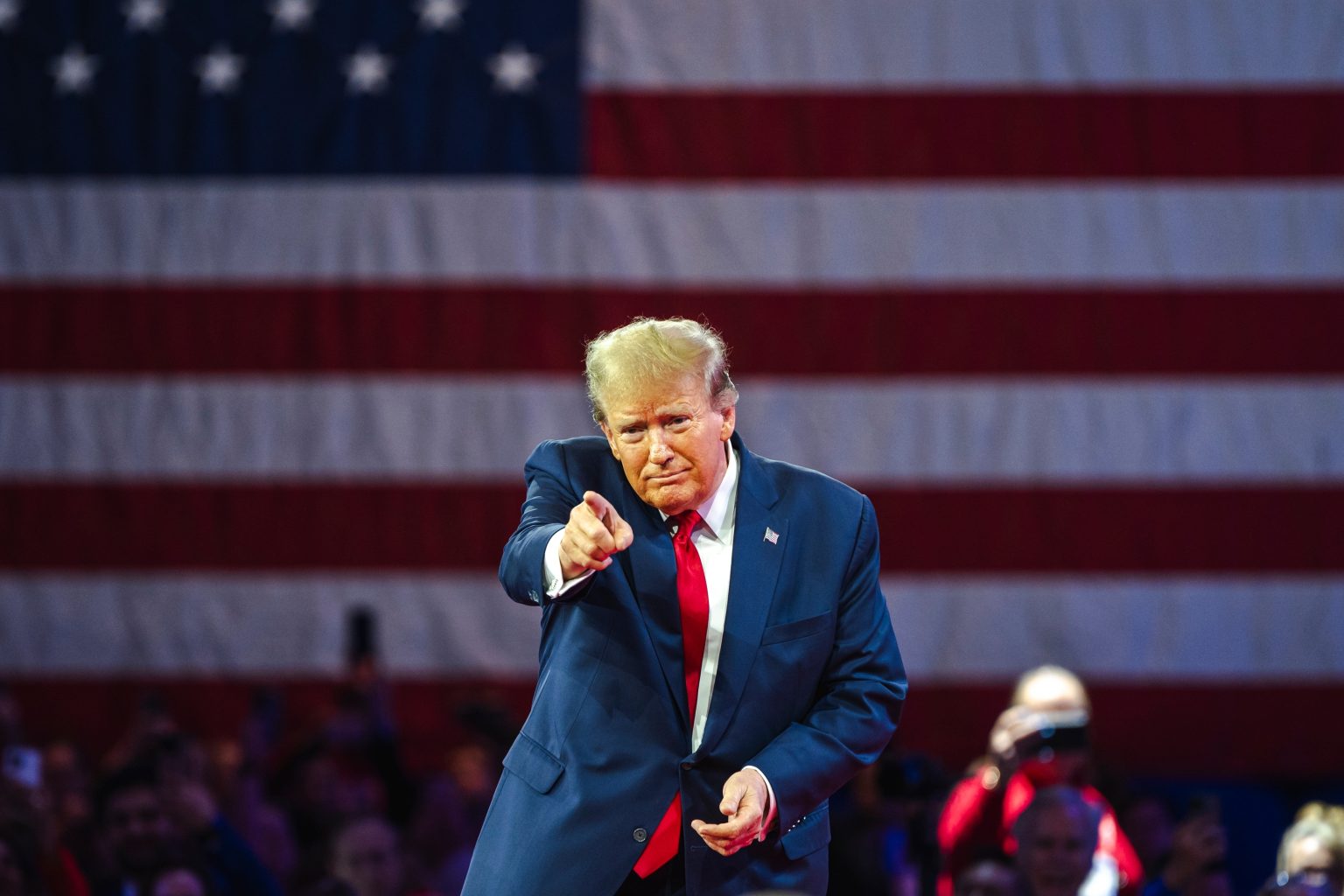


International trust in the United States has deteriorated sharply during Donald Trump’s second term, according to a major global survey that points to a widening gap between Washington’s foreign policy posture and global public opinion.
A Pew Research Center study conducted across 36 countries and involving more than 42,000 respondents between February and May finds that 76% of adults say they lack confidence in Trump’s leadership on global affairs, compared with just 23% who express confidence. The findings suggest not only a personal credibility deficit for the US president, but also a broader erosion in perceptions of American reliability as a global partner.
The scale of negative sentiment is striking in its consistency. Pew notes that “there is no country surveyed in which attitudes toward him have become more positive,” underscoring a uniform downward trajectory across both allied and non-aligned states. The survey also finds that 57% of respondents hold an unfavourable view of the United States itself, compared with 37% who view it positively.
Erosion of trust among traditional allies
Some of Washington’s closest partners have recorded the steepest declines in confidence. In the United Kingdom, the share of respondents who view the US as a reliable partner has fallen from 82% in 2022 to 49% today. In Canada, the drop is even more pronounced, from 83% to just 35% over the same period.
The deterioration is not limited to Western allies. Across multiple regions, Pew reports a broad reassessment of US leadership, driven by perceptions that Washington has become less predictable and more unilateral in its foreign policy decision-making.
Policy choices and global perceptions
The findings come amid what the White House frames as a recalibration of US foreign policy under an “America First” doctrine. The administration argues that greater burden-sharing is necessary among allies, particularly within NATO, and has repeatedly criticised European governments over defence spending and migration policy.
But the survey suggests these positions are not translating into stronger global support. Instead, Trump’s foreign policy agenda appears to be reinforcing perceptions of unpredictability and disengagement from multilateral frameworks.
Respondents express particularly strong disapproval of key policy areas associated with the administration’s global footprint. According to the poll, 77% disapprove of US tariff policy, while 76% disapprove of the handling of the Gaza conflict. A similar majority 72% disapprove of the administration’s approach to the Russia–Ukraine war. Even more contentious are proposals linked to territorial or geopolitical escalation, including Greenland, which 68% of respondents oppose, with only 14% in favour.
On Venezuela, where US actions have been highly visible in recent months, 63% of respondents disapprove compared with 22% who approve.
Declining perception of US global leadership
Beyond specific policies, the broader perception of the United States as a stabilising force has also weakened. The survey finds that 63% of respondents believe the US does not contribute to global peace and stability, while only 35% disagree.
This marks a significant reputational shift for a country that, in earlier surveys, consistently ranked as a leading pillar of the post-war international order. Pew researchers highlight that favourable views of the US have declined “in many places over the past year,” suggesting that the trend is accelerating rather than stabilising.
A widening gap between rhetoric and reception
The White House maintains that its approach is restoring American strength and credibility abroad, arguing that tougher positions on allies and rivals alike ultimately serve US interests. A spokesperson defended the administration’s stance, emphasising that European allies must take greater responsibility for their own security while highlighting US military commitments overseas.
President Trump himself has repeatedly asserted that the United States is now more respected globally than at any point in recent history.
Yet the survey data points in the opposite direction. Rather than a resurgence of American prestige, the findings suggest a broad-based decline in confidence in US leadership, cutting across regions, alliances, and policy areas.
Strategic implications
The divergence between US self-perception and global sentiment carries wider geopolitical implications. Sustained declines in trust may complicate coalition-building on issues ranging from European security to Middle East conflict management and trade policy enforcement. It also risks accelerating strategic hedging by traditional partners seeking to reduce dependency on Washington’s shifting priorities.
While global attitudes toward major powers often fluctuate with political cycles, the breadth of the current decline suggests something more structural: a re-evaluation of the United States’ role as a predictable anchor in the international system.
For now, the numbers captured in Pew’s survey point to a clear conclusion—US influence remains extensive, but its credibility as a trusted partner is under unprecedented strain.