



More than three months after launching military operations against Iran, US President Donald Trump is moving toward a peace deal that ends one of the West Asia’s most consequential conflicts. But did the war achieve its goals on missiles, nuclear ambitions, regional proxies and regime change?
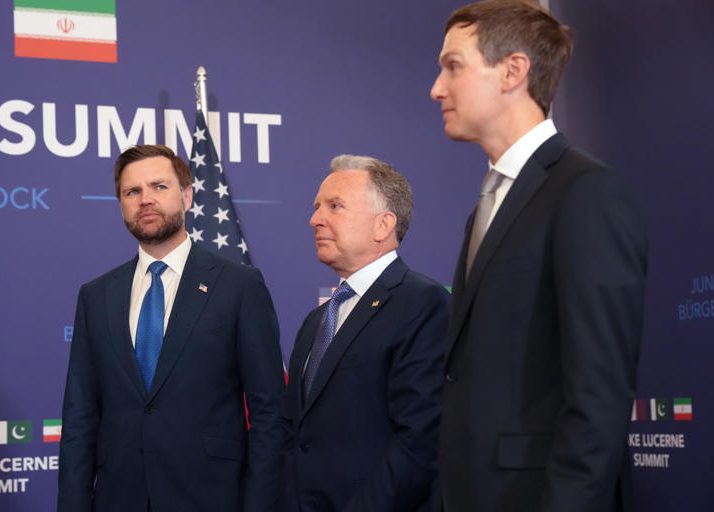
The latest phase of U.S.–Iran diplomacy, emerging from talks in Switzerland, has produced what officials cautiously describe as “encouraging progress,” even as President Donald Trump continues to oscillate between threats of renewed military action and claims of a near-complete peace framework. According to reporting from CNN and multiple international outlets, the negotiations have yielded a provisional architecture: a roadmap for de-escalation, limited sanctions relief, and mechanisms to stabilize maritime security in the Strait of Hormuz, alongside continuing disputes over Iran’s nuclear programme and regional proxy networks.
Yet the political logic underpinning the talks is far from stable. Washington is attempting to lock in a rapid diplomatic win after a period of sustained military pressure, while Tehran is negotiating under the dual weight of economic exhaustion and strategic vulnerability following months of conflict and infrastructure disruption. The result is a peace process that is neither fully voluntary nor fully coerced an uneasy hybrid shaped by battlefield outcomes rather than mutual confidence.
For policymakers in Washington, Tehran, Jerusalem, and key Gulf capitals, the stakes are immediate: whether this framework becomes the foundation for regional stabilization, or the prelude to a renewed cycle of escalation driven by unresolved strategic contradictions.
A Diplomacy Born of Exhaustion, Not Trust
The current negotiations are best understood as the endpoint of a coercive escalation cycle rather than a conventional diplomatic breakthrough. After months of strikes, counterstrikes, and maritime disruptions in the Strait of Hormuz, both Iran and the United States appear to be operating under diminishing strategic returns from continued confrontation.
On the U.S. side, the Trump administration has combined military signaling with diplomatic engagement in a manner that reflects a broader doctrinal shift: escalation is no longer an end in itself, but a bargaining tool intended to compress negotiation timelines. Vice President JD Vance and senior envoys have led technical discussions that focus on verifiable deliverables nuclear inspections, shipping guarantees, and sanctions relief mechanisms rather than broader political transformation.
Iran, by contrast, enters talks from a position of constrained leverage. The closure and partial reopening of the Strait of Hormuz during earlier phases of the conflict exposed both its capacity to disrupt global energy flows and its inability to sustain prolonged economic isolation. Oil price volatility and shipping insecurity have strengthened the urgency in Washington and among Gulf partners for a stabilizing framework, but they have also reduced Tehran’s room for maximalist bargaining.
What emerges is a negotiation defined less by trust than by mutual recognition of vulnerability.
The Architecture of a Conditional Peace
At the core of the emerging framework are three interlocking components: nuclear monitoring, maritime security, and economic conditionality.
First, nuclear oversight appears to be moving toward expanded inspection regimes, with Iranian commitments reported in parallel briefings to allow international monitoring access to key facilities. This represents a partial revival of verification mechanisms that had previously collapsed under sanctions pressure and mutual withdrawal from earlier agreements.
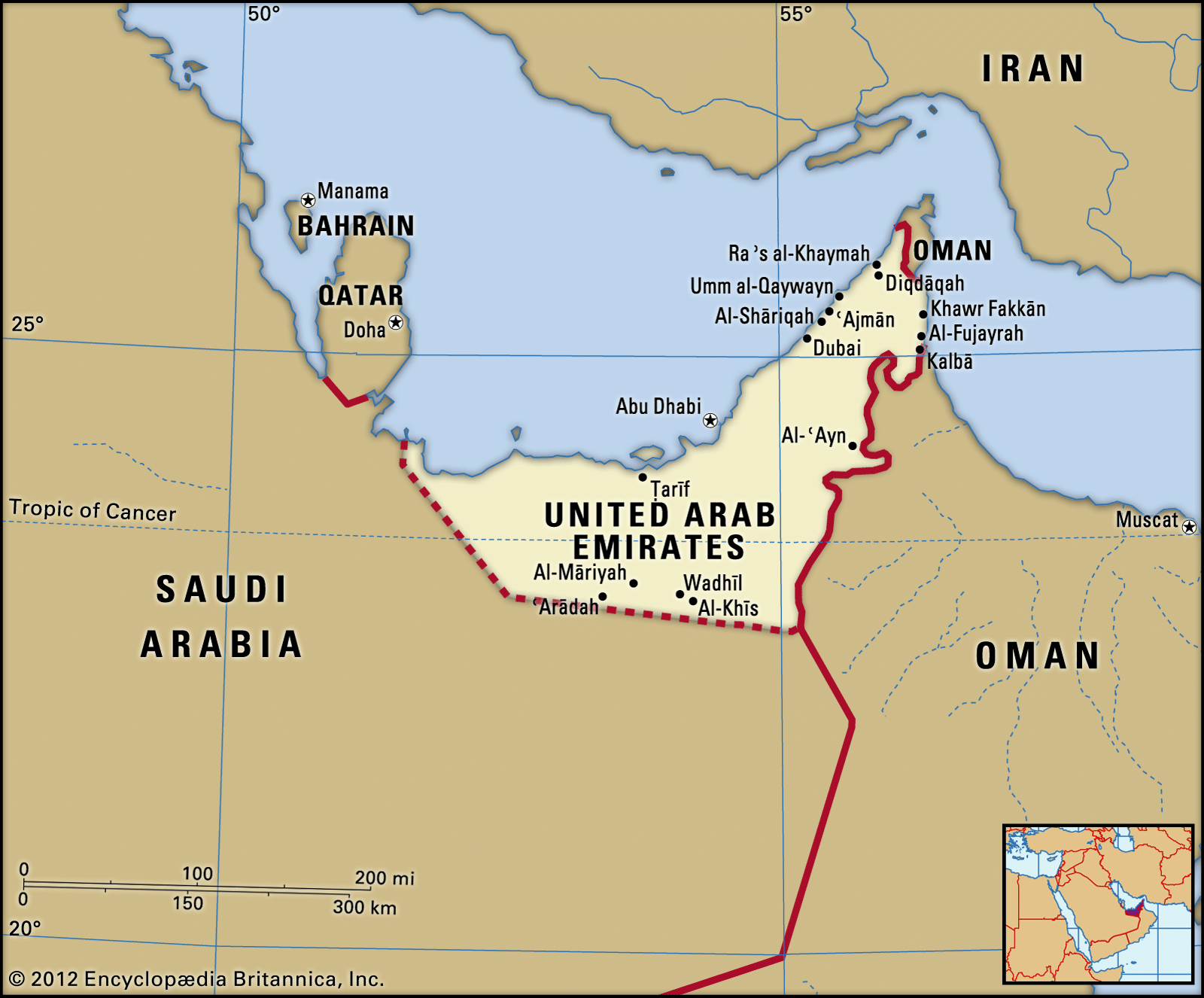
Second, maritime security in the Persian Gulf and the Strait of Hormuz is being treated as a separate but linked track. The objective is not only to prevent Iranian closure of the strait but also to establish enforcement guarantees involving third-party mediators, including regional actors such as Qatar and Pakistan. These arrangements signal an important evolution: maritime security is no longer purely a military issue but a negotiated governance regime for global energy flows.
Third, sanctions relief remains the most politically sensitive dimension. Reports suggest phased easing tied to compliance benchmarks, alongside the unfreezing of Iranian assets under strict usage conditions. However, this is precisely where fragility is most visible. In Washington, skepticism persists over enforcement credibility. In Tehran, any perception of conditional sovereignty remains politically combustible.
The result is a framework that resembles managed containment more than durable reconciliation.
Strategic Winners, Tactical Losers
The provisional settlement creates uneven distributional outcomes across regional actors.
The United States gains immediate de-escalation without fully relinquishing leverage over Iran’s nuclear trajectory. It also benefits from lower energy risk premiums and reduced pressure on global supply chains. However, it assumes continued enforcement credibility an area historically vulnerable to domestic political shifts and alliance fatigue.
Iran secures partial economic breathing space and reduced immediate military pressure, but at the cost of deeper inspection regimes and constrained strategic autonomy. The leadership in Tehran faces a delicate balancing act: presenting concessions as sovereign bargaining gains rather than capitulation under coercion.
Israel, meanwhile, occupies a more ambiguous position. While reduced Iranian operational capacity may align with its security objectives, any agreement that stabilizes Tehran without dismantling its regional networks is likely to be viewed in Jerusalem as incomplete at best, and strategically reversible at worst.
For Gulf states, particularly those dependent on uninterrupted maritime trade, even imperfect stabilization is preferable to sustained escalation. Yet they remain wary of being sidelined in a bilateral U.S.–Iran framework that does not fully integrate regional security architecture.
A Regional Order Built on Managed Instability
The broader geopolitical implication is not the resolution of the U.S.–Iran confrontation, but its transformation into a regulated form of competition.
Rather than a decisive peace, the emerging order resembles a “managed instability regime” in which periodic crises are contained through ad hoc diplomacy, mediated by third parties and underwritten by implicit military deterrence. This model is increasingly characteristic of contemporary international security politics: conflicts are not resolved so much as stabilized at a lower intensity threshold.
This has implications beyond the Middle East. It reinforces a global pattern in which great powers pursue selective de-escalation while maintaining structural rivalry. The U.S.–China relationship in the Indo-Pacific, Russia–NATO dynamics in Europe, and regional conflicts in the Middle East are all converging toward similar equilibrium points: neither full war nor full peace, but continuous calibrated pressure.
In such an environment, diplomacy becomes less about resolution and more about maintenance.
Policy Outlook: Fragile Gains, High Volatility
Over the next 6–12 months, three scenarios dominate policymaker calculations.
The first is incremental stabilization, in which the current framework holds, inspections proceed, and maritime security is gradually institutionalized. This would represent a significant but narrow success, dependent on sustained political discipline in both Washington and Tehran.
The second is negotiation drift, where technical talks continue but political commitment erodes. In this scenario, partial sanctions relief and limited cooperation coexist with periodic crises in Lebanon, the Gulf, or cyber domains, producing a cycle of managed escalation.
The third—and most dangerous—is collapse and re-escalation, triggered by either domestic political shifts in Iran, hardline responses in Israel, or renewed U.S. domestic pressure to abandon the agreement. Given the volatility of recent months, this scenario cannot be discounted.
Across all trajectories, the central risk is not sudden war, but incremental breakdown of compliance mechanisms under cumulative stress.
Waging war failed to fulfill US goals?
The emerging U.S.–Iran understanding does not represent a peace settlement in the classical sense. It is better understood as a structured pause within a longer strategic confrontation—an attempt to convert battlefield exhaustion into diplomatic control without resolving the underlying geopolitical rivalry.
What makes this moment significant is not its optimism, but its fragility. The agreement rests on converging interests that remain tactical rather than strategic, conditional rather than reconciled. As such, it reflects a broader transformation in global diplomacy: the replacement of decisive settlements with iterative, reversible arrangements designed to manage risk rather than eliminate it.
For the international system, this is both stabilizing and precarious. It reduces immediate conflict pressure, but embeds instability into the architecture of peace itself.