



A renewed US push for direct negotiations with Russia is exposing fractures within the G7 over Ukraine’s future, European security guarantees, and the limits of allied consensus.
- A Diplomatic Push That Rewrites the Tempo of the War
- Competing Logics Inside the Western Alliance
- Geopolitical Implications: A Stress Test for the G7 and NATO
- Security and Economic Dimensions of a Premature Settlement
- Regional and International Impact
- Policy Outlook: Three Scenarios for the Next 6–12 Months
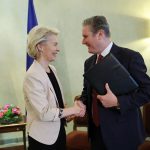
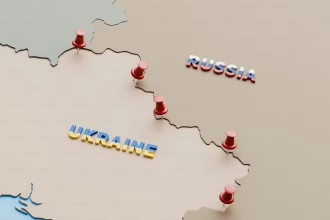
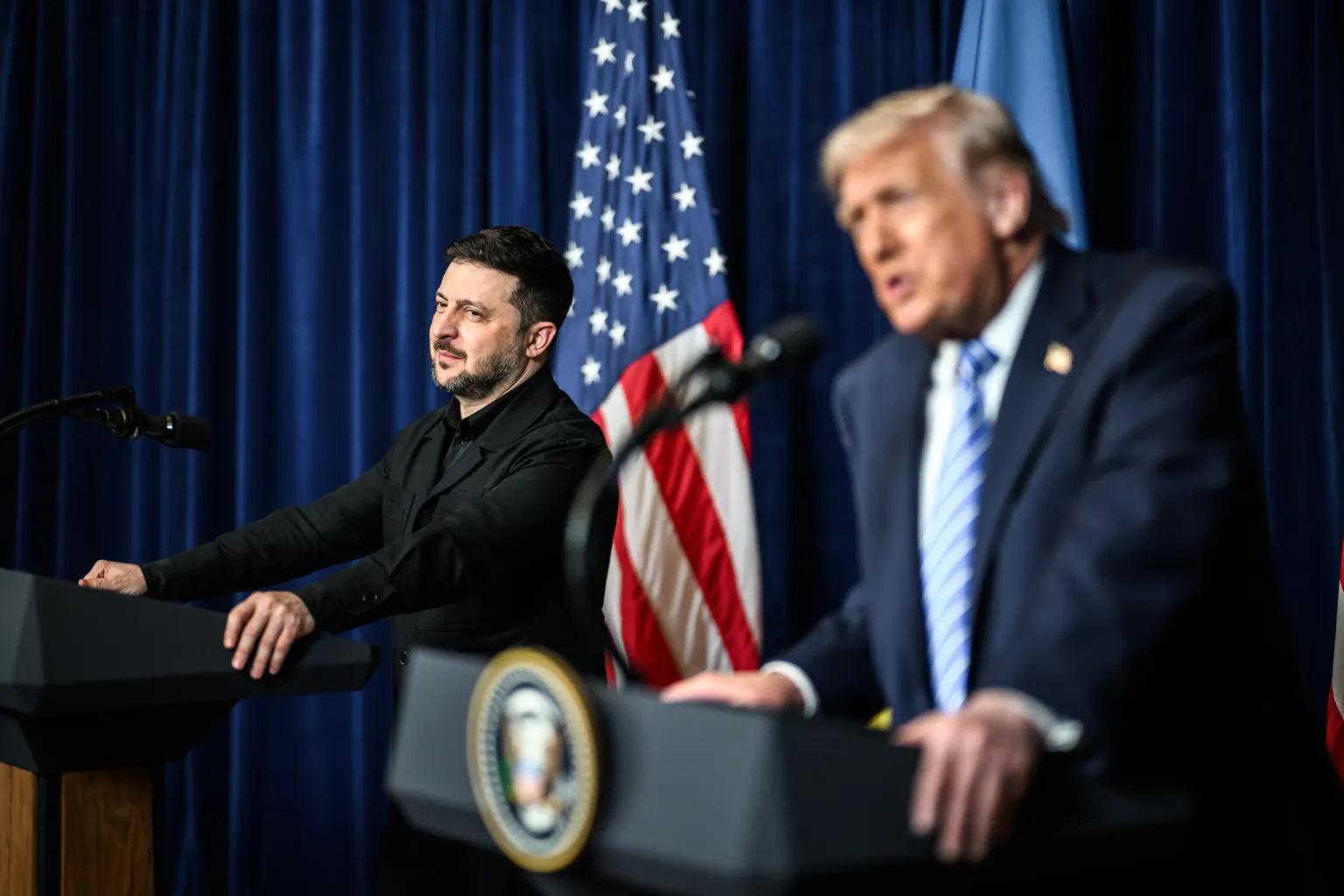
The latest round of G7 discussions has unfolded against a backdrop of renewed diplomatic urgency over Ukraine, as the United States under President Donald Trump intensifies efforts to accelerate peace talks with Russia. The initiative, discussed on the margins of the summit in France, has triggered unease among several European capitals, which fear that the diplomatic tempo being set in Washington risks outpacing allied consensus and weakening Ukraine’s negotiating position.
At the centre of the tension is a structural question that has defined Western policy since the beginning of the war: whether a rapid diplomatic settlement with Russia can be reconciled with long-term European security guarantees for Ukraine. For European governments, the concern is not merely the prospect of negotiations, but the possibility that they could be shaped bilaterally between Washington and Moscow, leaving the EU and key NATO members reacting to outcomes rather than shaping them.
The issue matters far beyond the immediate battlefield. It goes to the heart of the post-2022 Western security architecture, the cohesion of the G7, and the credibility of the transatlantic alliance under strain. As diplomatic signalling accelerates, the emerging divide is not over whether talks should happen, but who controls the conditions under which they begin—and at what cost.
A Diplomatic Push That Rewrites the Tempo of the War
What is unfolding is less a formal peace initiative than a shift in diplomatic tempo. The Trump administration’s approach—focused on rapid engagement and direct leader-level channels—marks a departure from the slower, consensus-driven processes that have characterised Western coordination since the full-scale invasion of Ukraine in 2022.
European diplomats describe the dynamic as “compression diplomacy”: an attempt to condense a highly complex war into a narrow negotiating window. The logic in Washington is increasingly shaped by three assumptions. First, that the current military stalemate risks hardening into a prolonged frozen conflict. Second, that Russia’s leadership retains incentives to negotiate under sustained economic and military pressure. And third, that only direct US engagement with Moscow can produce meaningful movement.
Yet these assumptions are not universally shared. Several European governments argue that accelerated negotiations risk locking in Russian territorial gains without credible enforcement mechanisms. For them, the lesson of previous ceasefire arrangements—particularly in contested post-Soviet spaces—is that premature diplomacy can institutionalise instability rather than resolve it.
At the same time, Kyiv faces a narrowing strategic bandwidth. The government of President Volodymyr Zelenskyy continues to rely heavily on Western military assistance, while also seeking to avoid being placed in a reactive negotiating position. Ukrainian officials are acutely aware that any shift in US priorities reverberates immediately across European aid commitments and battlefield dynamics.
Competing Logics Inside the Western Alliance
The emerging divergence within the West is not ideological, but strategic.
For Washington, the priority appears increasingly defined by conflict management: reducing escalation risks, limiting long-term military exposure, and reasserting control over diplomatic channels with Russia. The attraction of a negotiated outcome—however imperfect—is partly driven by domestic political considerations and broader global resource allocation pressures.
European governments, by contrast, are operating under a different set of constraints. For the European Union and key NATO members, the war in Ukraine is not only a security crisis but a test of credibility. A settlement perceived as premature or imposed risks undermining deterrence against future aggression, particularly along NATO’s eastern flank.
Within this divide, three competing interpretations have emerged:
- The acceleration camp argues that a negotiated settlement, even if imperfect, is preferable to indefinite war. It sees diplomatic engagement with Moscow as unavoidable and potentially stabilising.
- The sequencing camp, dominant in parts of Western Europe, insists that negotiations must follow clear military and security conditions, including sustained pressure on Russia and explicit guarantees for Ukraine.
- The deterrence-first camp, concentrated in Eastern Europe and parts of Northern Europe, warns that any compromise perceived as rewarding territorial conquest would fundamentally weaken the post-Cold War security order.
These differences are not merely theoretical. They shape real decisions on military aid, sanctions enforcement, and long-term defence planning.
Geopolitical Implications: A Stress Test for the G7 and NATO
The tensions playing out within the G7 reflect a broader structural challenge: the fragmentation of Western strategic alignment in an era of prolonged geopolitical competition.
The G7 has historically functioned as a coordination platform for major Western economies during crises. In the context of Ukraine, it has served as a mechanism for synchronising sanctions against Russia, coordinating financial support for Kyiv, and signalling unified political resolve. However, the emergence of divergent diplomatic timelines risks turning the group into a reactive forum rather than a strategic one.
More broadly, the situation places strain on NATO cohesion. While NATO remains formally unified on support for Ukraine, alliance unity has increasingly relied on US leadership as the anchoring force. If Washington shifts toward bilateral diplomacy with Moscow, European allies may find themselves navigating a parallel track of security commitments without full visibility into the negotiating process.
For Russia, these divisions present an opportunity. A fragmented Western approach reduces the likelihood of a unified negotiating position and increases the scope for selective engagement with different capitals. Even absent formal concessions, diplomatic divergence itself becomes a strategic asset.
Security and Economic Dimensions of a Premature Settlement
Beyond diplomacy, the stakes are deeply material.
A rushed peace agreement—or even a prolonged ceasefire without robust verification mechanisms—would immediately raise questions about long-term security guarantees for Ukraine. Without credible enforcement structures, any settlement risks becoming a temporary pause in hostilities rather than a durable resolution.
From an economic perspective, uncertainty over the trajectory of the war continues to shape global energy markets, reconstruction planning, and investment risk across Eastern Europe. Ukraine’s reconstruction needs remain substantial, while European defence spending is already on an upward trajectory. A poorly structured peace could shift costs rather than reduce them.
Sanctions policy is another critical fault line. European officials have invested heavily in coordinated sanctions against Russia. A US-led diplomatic initiative that moves faster than EU consensus could create fragmentation in enforcement, weakening the overall economic pressure architecture.
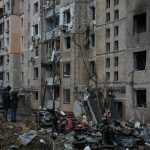
At the same time, the humanitarian and infrastructural toll of the war continues to constrain Ukraine’s domestic economy, making sustained external support essential regardless of diplomatic developments.
Regional and International Impact
The implications of this diplomatic shift extend well beyond Europe.
For smaller NATO members, particularly in Eastern Europe, the perception of alliance unity is as important as military capability. Any sign of divergence between Washington and European capitals risks prompting recalibration of national defence strategies, including accelerated procurement, deeper bilateral security arrangements, and increased reliance on regional coalitions.
For the broader international system, the Ukraine negotiations are increasingly viewed as a test case for how wars involving major powers are concluded in the 21st century. The central question is whether diplomacy can still produce outcomes that are both swift and strategically stable, or whether speed inherently undermines durability.
International institutions, including the United Nations, remain largely peripheral to the current diplomatic track. This reflects a broader trend in which high-stakes security negotiations are increasingly conducted through ad hoc coalitions of major powers rather than multilateral frameworks.
Policy Outlook: Three Scenarios for the Next 6–12 Months
Three broad trajectories are emerging.
1. Managed negotiation track:
The United States successfully brings European allies into a coordinated framework with Russia and Ukraine. Talks proceed slowly but remain unified, with emphasis on security guarantees and phased de-escalation.
2. Fragmented diplomacy:
Washington pursues direct engagement with Moscow while Europe attempts to maintain parallel coordination with Kyiv. This leads to inconsistent messaging, uneven sanctions enforcement, and reduced leverage over Russia.
3. Strategic stalemate continuation:
Diplomatic initiatives stall amid incompatible negotiating positions. The war continues at a lower intensity, with periodic escalations and sustained Western support for Ukraine.
Key risks for policymakers include alliance fragmentation, premature sanctions relaxation, and the erosion of deterrence credibility in Eastern Europe. Conversely, opportunities exist for structured negotiation frameworks if transatlantic coordination can be restored early in the process.
The emerging diplomatic contest over Ukraine is no longer solely about the battlefield or even the terms of a potential settlement. It is increasingly about the architecture of Western decision-making itself. The push by President Donald Trump to accelerate negotiations with Russia is exposing a deeper structural tension between speed and cohesion, between bilateral diplomacy and alliance-based strategy.
For Europe, the central challenge is not simply to influence the outcome of talks, but to ensure that it remains a participant in defining their structure. For Ukraine, the stakes are existential: the risk that its future security is negotiated faster than it can be secured. And for the broader Western alliance, the test is whether unity forged in crisis can survive the transition from war management to war termination.
What is unfolding is not just a debate over peace. It is a contest over who gets to define it—and under what strategic assumptions the post-war order will be built.