



For more than a decade, the dispute between Egypt and Ethiopia was largely understood through one symbol: the Grand Ethiopian Renaissance Dam. To Cairo, the dam represented a direct challenge to the water security of a state that depends overwhelmingly on the Nile. To Addis Ababa, it embodied national development, sovereign rights and the promise of electricity for a country of more than 120 million people.
That argument has not disappeared. But it has changed shape.
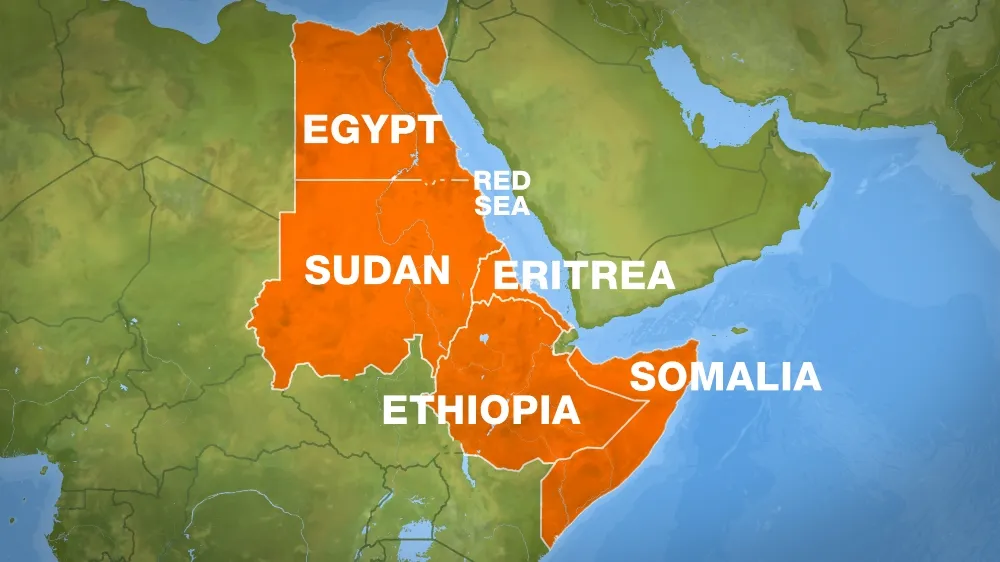
The rivalry is no longer confined to negotiations over water flows, filling schedules or drought management. It has expanded into a wider geopolitical contest stretching from the Blue Nile to the Gulf of Aden, from Sudan’s collapsing state to Somalia’s fractured federal politics, and from the Red Sea shipping lanes to the military calculations of Gulf capitals, Turkey, China and Western governments.
What is emerging is not a conventional war between Egypt and Ethiopia. It is more subtle and, in many ways, more dangerous: a cold war inside one of the world’s most fragile regions.
At the centre of the confrontation lies a basic strategic asymmetry. Ethiopia controls the headwaters of the Blue Nile and has built the GERD as a statement of sovereign power. Egypt sits downstream, with a population concentrated along the Nile Valley and a political class that sees water security as an existential issue. Both countries believe they are defending core national interests. Both believe time is on the other side’s side.
The result is a rivalry that increasingly rewards pressure rather than compromise.
The GERD dispute began as a technical negotiation but became a test of regional hierarchy. Ethiopia started construction of the dam in 2011, at a moment when Egypt was weakened by revolution and political transition. For Addis Ababa, the timing was historic. The dam promised energy generation, export potential and a rare national project capable of uniting a divided country. For Egypt, it was a strategic shock. A downstream power that had long treated the Nile as the foundation of its national security suddenly faced an upstream state capable of regulating a major part of the river’s flow.
Years of talks involving Egypt, Ethiopia and Sudan failed to produce a legally binding agreement. Ethiopia argues that the dam is not intended to harm downstream states and is essential for development. Egypt argues that without binding rules, especially during prolonged drought, the dam gives Addis Ababa unacceptable leverage over its water supply. Sudan’s position has shifted over time, reflecting both technical benefits from regulated flows and political instability at home.
The failure of diplomacy has pushed the dispute into other theatres.
Somalia is now one of them. Ethiopia’s January 2024 memorandum of understanding with Somaliland, which offered Addis Ababa access to the Red Sea in exchange for potential recognition-related concessions, transformed a long-running Somali sovereignty dispute into a regional crisis. For Ethiopia, a landlocked country since Eritrea’s independence in 1993, sea access is a strategic priority. Its economy depends heavily on Djibouti, and Prime Minister Abiy Ahmed has repeatedly framed maritime access as a national necessity.
For Somalia, the Somaliland deal looked like an assault on territorial integrity. Mogadishu denounced the arrangement, rallied diplomatic support and found a willing partner in Egypt. Cairo, already locked in confrontation with Addis Ababa over the Nile, moved closer to Somalia through military and security cooperation. Egypt’s decision to contribute troops to the new African Union mission in Somalia added another layer of tension, particularly because Ethiopia has long maintained troops in Somalia as part of counterterrorism efforts against al-Shabaab.
This created an uncomfortable reality: two states already divided by the Nile dispute could find themselves militarily present in the same conflict environment.
The risk is not necessarily deliberate war. It is miscalculation. A clash between local forces, a dispute over deployments, or an incident involving Ethiopian and Egyptian-backed actors could escalate beyond the intentions of either capital. In the Horn of Africa, conflicts rarely remain inside neat diplomatic boxes. Local grievances, foreign sponsorship and weak institutions tend to merge.
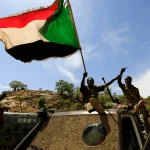
Sudan is another arena where the Egypt-Ethiopia rivalry intersects with wider regional disorder. Since April 2023, Sudan has been devastated by war between the Sudanese Armed Forces and the Rapid Support Forces. The conflict has shattered state institutions, displaced millions and turned Sudan into a battlefield for competing external interests. Egypt has historically viewed Sudan as part of its southern strategic depth and has maintained ties with the Sudanese army. Ethiopia, meanwhile, has its own complicated relationship with Sudan, shaped by border disputes, refugee flows, the Tigray war and the GERD.
Sudan matters because it sits between the Nile and the Red Sea. A stable Sudan could help mediate Nile disputes and balance relations between Cairo and Addis Ababa. A fragmented Sudan does the opposite. It creates space for arms flows, foreign influence, border insecurity and competing military alignments. It also weakens one of the three formal parties to GERD negotiations, making any durable Nile agreement harder to reach.
The Red Sea adds another layer of urgency. This corridor is no longer just a commercial route. It is a contested strategic zone linking the Mediterranean, the Suez Canal, the Gulf of Aden and the Indian Ocean. Egypt’s control of the Suez Canal gives Cairo a direct stake in Red Sea security. Ethiopia’s desire for maritime access makes the same space central to its long-term strategy. Gulf states see ports and military facilities as instruments of influence. Turkey has expanded its footprint through security partnerships and mediation. China maintains its first overseas military base in Djibouti and has major commercial interests in regional infrastructure.
In this crowded environment, Ethiopia’s maritime ambitions are not only about trade. They are about status, autonomy and strategic depth. Egypt’s response is not only about Somalia. It is about preventing Ethiopia from becoming both an upstream Nile power and a Red Sea actor.
That is why the rivalry has become so difficult to contain. The GERD dispute could, in theory, be managed through technical rules on filling, operating and drought coordination. The Red Sea question is harder because it touches sovereignty, recognition, military access and regional balance. Somalia cannot easily accept a deal that appears to legitimize Somaliland’s independence. Ethiopia cannot easily abandon the idea of sea access after making it a national priority. Egypt cannot easily ignore an Ethiopian move toward the Red Sea while the Nile dispute remains unresolved.
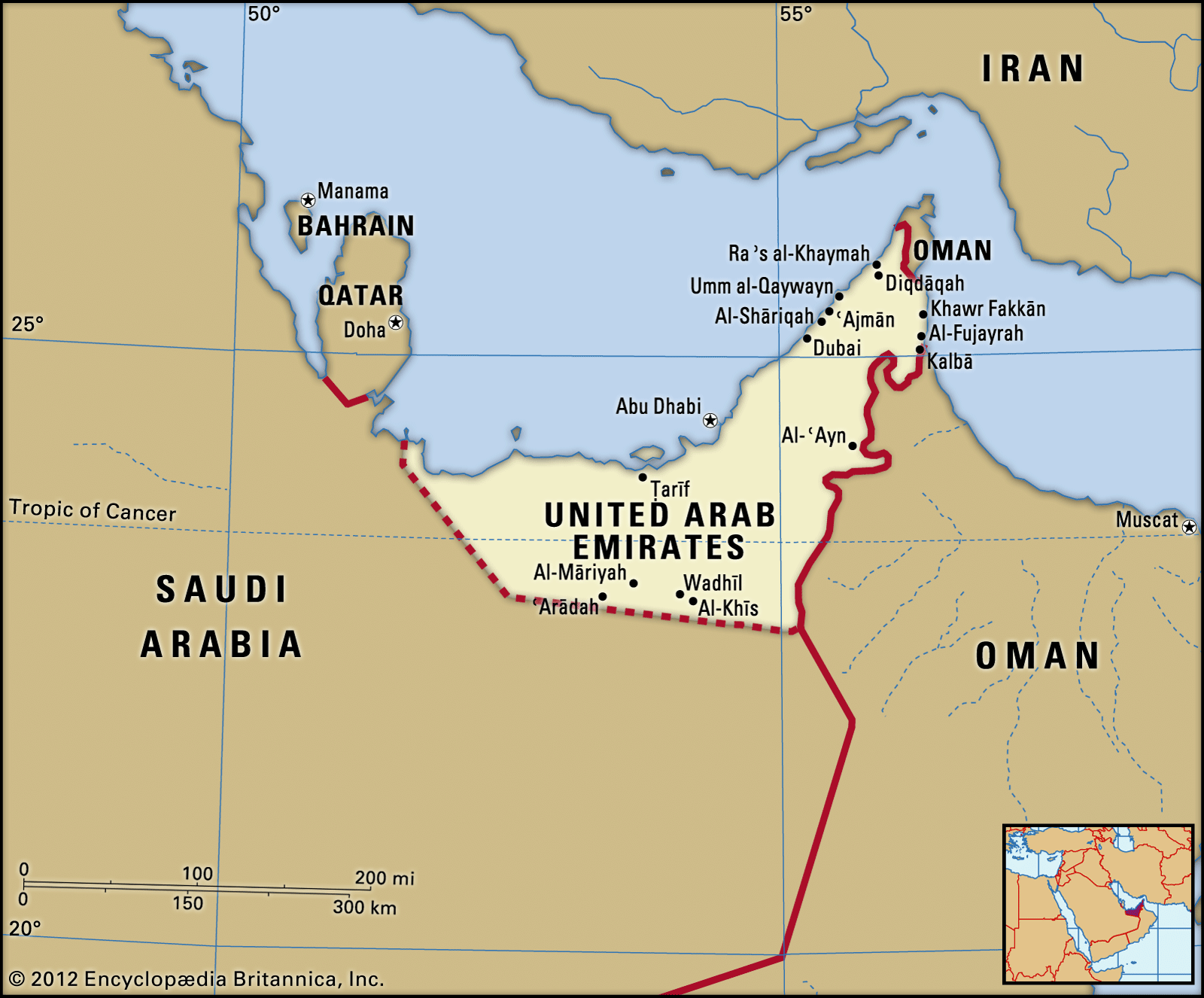
The Gulf states complicate the picture further. The United Arab Emirates has invested heavily in ports and logistics across the Red Sea and Horn of Africa, including Somaliland’s Berbera corridor. Saudi Arabia views Red Sea stability through the lens of maritime security and regional influence. Qatar and Turkey have cultivated ties in Somalia. These actors are not simply outsiders imposing themselves on the region; local governments actively seek their support to strengthen bargaining positions. The result is a marketplace of alignments, where weak states use external patrons and external patrons use weak states.
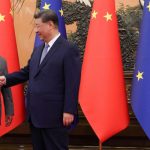
China’s role is quieter but no less important. Beijing’s base in Djibouti, infrastructure financing and trade interests make it a major stakeholder in Red Sea stability. Unlike Egypt or Ethiopia, China does not want ideological alignment or public confrontation. It wants predictability, port access and secure maritime routes. But if regional rivalry deepens, China may find itself forced to protect assets in a more unstable environment.
For Western governments, the dilemma is familiar. The United States and Europe want Red Sea security, counterterrorism cooperation in Somalia, humanitarian access in Sudan, and stable relations with both Egypt and Ethiopia. But these priorities do not always fit together. Supporting Somalia’s sovereignty may anger Ethiopia. Pressuring Ethiopia on the GERD may strengthen Cairo but reduce Western influence in Addis Ababa. Criticizing Egypt’s military posture may weaken a key Arab partner. Ignoring the dispute risks allowing a regional cold war to harden.
There are three plausible scenarios over the next few years.
The first is managed rivalry. Egypt and Ethiopia continue to compete, but avoid direct confrontation. GERD talks remain unresolved but do not collapse entirely. Somalia and Ethiopia, under Turkish or African Union mediation, find a formula that gives Ethiopia commercial access without formal recognition of Somaliland. This is the best-case scenario, but it requires restraint from leaders who have often benefited domestically from nationalist positions.
The second is proxy escalation. Egypt deepens its role in Somalia, Ethiopia strengthens ties with Somaliland, and Sudan’s war continues to invite foreign interference. In this scenario, Cairo and Addis Ababa avoid open conflict but compete through military partnerships, intelligence links, diplomatic pressure and local allies. This is perhaps the most likely path because it allows both sides to apply pressure while denying escalation.
The third is direct crisis. A military incident in Somalia, a major drought linked politically to GERD operations, or a confrontation around Red Sea access could push the rivalry into a more dangerous phase. Neither Egypt nor Ethiopia appears to seek a major war. Both face serious domestic and economic constraints. But strategic rivalries often escalate not because leaders want war, but because they misread signals, overestimate leverage or underestimate local volatility.
The Horn of Africa is especially vulnerable to this pattern. It combines weak institutions, unresolved borders, insurgencies, port politics, climate stress and external military competition. Egypt and Ethiopia are not the only actors shaping these dynamics, but their rivalry has become one of the region’s organizing forces.
The old language of the GERD dispute is no longer enough. This is not only about cubic metres of water or megawatts of electricity. It is about whether Ethiopia can translate demographic and geographic weight into regional power, and whether Egypt can preserve a security order built around the Nile and the Red Sea.
For now, the confrontation remains below the threshold of war. But it is already reshaping alliances, hardening threat perceptions and pulling fragile states into a wider strategic contest. The danger is not that the Horn of Africa suddenly becomes the battlefield of an Egypt-Ethiopia war. The danger is that every local conflict, from Somalia to Sudan, becomes another front in a rivalry neither side fully controls.