


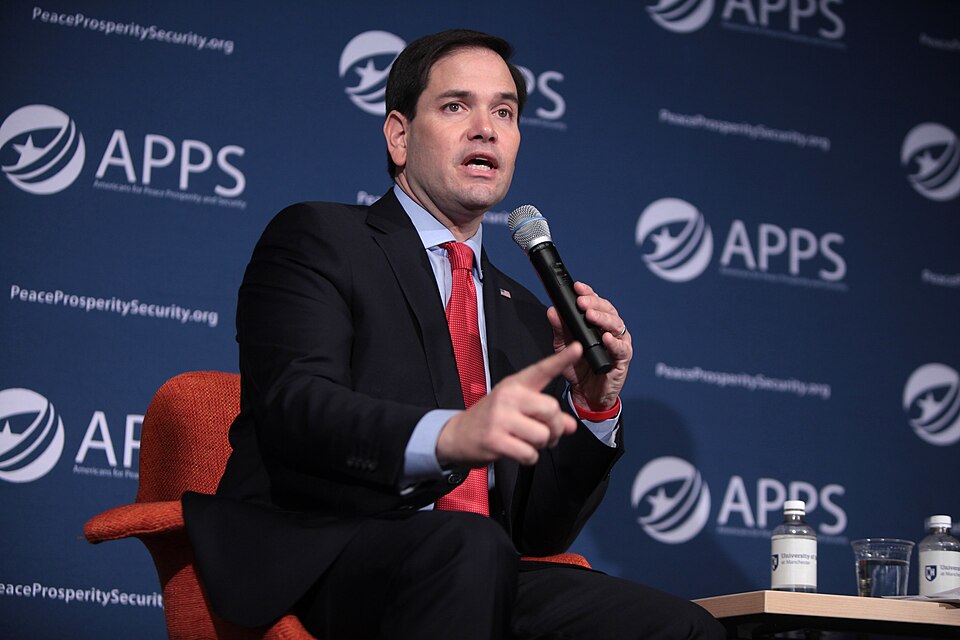
U.S. Secretary of State Marco Rubio traveled to India this week carrying a message that increasingly defines Washington’s global strategy: America cannot compete with China without stronger middle-power partnerships.
The visit focused heavily on energy, trade and technology cooperation, but the broader geopolitical objective was unmistakable. Washington is attempting to stabilize relations with New Delhi after months of tension while strengthening the wider Indo-Pacific coalition designed to balance China’s rise.
India occupies a uniquely important position in this strategy. Unlike treaty allies such as Japan or South Korea, India refuses formal alignment structures while still deepening cooperation with the United States. That flexibility makes New Delhi strategically valuable but also difficult to fully integrate into an American-led bloc.
However, for Washington, the urgency is growing. China’s expanding influence across the Indo-Pacific, combined with uncertainty in the Middle East and Europe, has reinforced the belief among U.S. strategists that India is becoming a pillar of the wider balance-of-power architecture emerging across Asia.