


China’s latest economic indicators are reinforcing concerns that the country’s slowdown may be deeper and more politically sensitive than Beijing publicly acknowledges.
Weak consumer spending, falling property investment and persistent youth unemployment continue pressuring the world’s second-largest economy despite repeated stimulus efforts from Chinese authorities.
For President Xi Jinping, the problem is not only economic, but deeply political. For decades, the legitimacy of the Chinese political model relied heavily on sustained growth and rising living standards. Slower expansion therefore creates broader concerns about social confidence, investor sentiment and long-term political stability.
The property sector remains especially dangerous. Real estate once functioned as the primary store of wealth for millions of Chinese households. Its prolonged weakness has damaged local government finances, private investment and consumer confidence simultaneously.
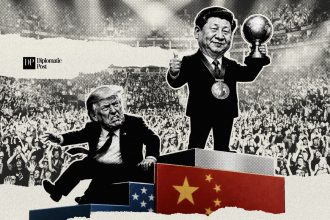
Beijing still possesses enormous financial and institutional tools to stabilize the economy. But the larger geopolitical implication is becoming clearer: China is entering a more uncertain phase precisely as it seeks to project global power and compete strategically with the United States.