


With his popularity in freefall and state elections looming, Germany’s chancellor has handed his most trusted post to a health minister known for pushing reform through resistance.
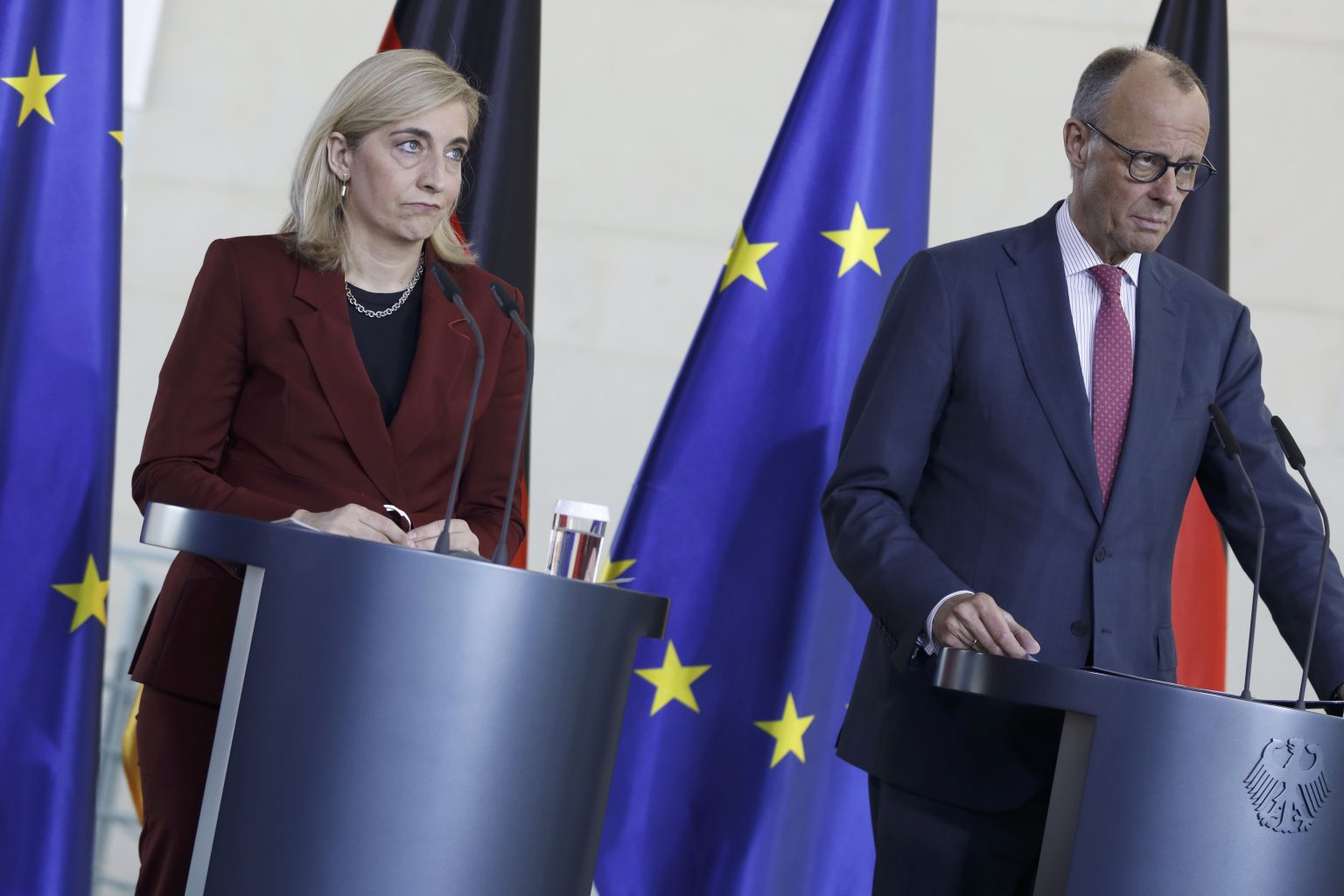
Friedrich Merz has spent barely a year in the chancellery, yet he is already reaching for the kind of reset that most leaders try to avoid making so early. On Friday, he named his health minister, Nina Warken, as his new chief of staff, making her the first woman ever to hold the post in the Federal Republic’s history. It is a small phrase, first woman, that carries real weight in a country still working out how to modernise a conservative party long dominated by men, and it lands at a moment when Merz badly needs a story about renewal rather than drift.
The reshuffle did not come out of nowhere. Merz’s government has struggled almost from the start, weighed down by sluggish economic growth, rising costs at home, tariff disputes with major trading partners, and an energy shock that followed the war between Israel and Iran. A recent opinion poll found only fourteen per cent of respondents satisfied with his leadership, a striking collapse for a chancellor who took office promising to revive Europe’s largest economy. With difficult state elections due in September, decision makers around Merz clearly judged that the government needed a visible jolt before voters go to the polls again, and a chief of staff appointment, though often invisible to the public, is one of the few personnel moves a chancellor can make that signals intent without requiring a coalition negotiation.
Warken, 47, is a lawyer from Baden Württemberg who has sat in the Bundestag on and off since 2013 and has served as health minister since May last year. Merz described her as someone who has shown she can implement reforms even against resistance, and said she would be one of the most important supports for him in his daily work, if not the most important. Political analysts who follow the CDU closely have gone further, noting that Warken is regarded as assertive, well versed in security policy and a tough negotiator, qualities that matter enormously in a job whose entire purpose is to sit at the node between the chancellery, the ministries and parliament, forcing disparate parts of government to move in the same direction. In a coalition juggling economic reform, defence spending commitments and a wary electorate, that coordinating function is not a ceremonial nicety. It is often the difference between a chancellor’s agenda surviving contact with his own bureaucracy or dying inside it.
She replaces Thorsten Frei, one of Merz’s closest allies, who is moving to lead the CDU/CSU parliamentary group in the Bundestag. That move was itself forced by upheaval elsewhere in the party. Jens Spahn, a heavyweight conservative figure, abruptly resigned as parliamentary faction chief after a row over his decision to have a child through a surrogate, a step his own party has long opposed on principle. That resignation exposed a rawer fault line inside German conservatism, between a leadership trying to look modern and a base still attached to traditional positions, and it is one reason analysts describe this reshuffle as Merz attempting to project strength while also making his cabinet look younger and more female, without appearing to lose his grip on the party’s traditional wing.
Why the reshuffle carries a European dimension
Germany’s domestic wobble is not simply a national story. As the largest economy in the European Union and the continent’s most consequential military spender after a decade of hesitation, Berlin’s political stability shapes how far the bloc can move on defence integration, energy policy and support for Ukraine. Merz came to office pledging to overhaul Germany’s finances and unlock investment for infrastructure and defence, promises that depend on a government capable of pushing legislation through parliament without constant internal friction. A chancellor haemorrhaging public support at home has less room to manoeuvre abroad, whether in Brussels negotiations over budget rules or in coordinating Europe’s response to Russia’s war on Ukraine, an area where Berlin has gradually shifted from caution to a more assertive posture on weapons deliveries and industrial cooperation. Warken’s reputation for security policy fluency, cited by commentators as one of her qualifications for the new role, suggests Merz wants someone in his innermost circle capable of navigating that terrain fluently, not simply a domestic fixer.
The reshuffle is also unfinished business, and that matters for how seriously outside observers should take it. Merz has said further changes are coming, and two people familiar with the process say he intends to replace his transport minister, Patrick Schnieder, amid mounting frustration over the state of the national rail network and crumbling infrastructure, with train delays now a constant subject of public complaint. That move has already proven harder than expected, after Merz’s initial choice for the job agreed and then pulled out, an awkward stumble for a chancellor trying to demonstrate decisiveness. The powerful train drivers’ union has pushed back on the idea that swapping out one minister will fix systemic problems, arguing that policymakers have for years failed to set clear goals or provide consistent management, a pointed reminder that personnel changes alone rarely solve structural failures.
That tension, between the symbolism of a reshuffle and the substance needed to actually turn around a government’s fortunes, is likely to define the coming months. Analysts following German politics closely have warned that Merz, who is seventy, must move carefully now that he has started this process, since a chancellor who wavers or draws out further changes risks squandering the very authority he is trying to rebuild. There is a narrow path here. A quick, coherent set of appointments that pairs a credible reformer at the centre of government with a fresh face at transport could give Merz a genuine story of momentum heading into September’s state elections. A messy, drawn out process, by contrast, with more ministers pulling out or more internal party rows like the one that ousted Spahn, would confirm the impression of a government reacting to crises rather than shaping events.
What happens next will say a great deal about whether Merz can convert one symbolically important appointment into an actual recovery in his standing, both with German voters and with partners across Europe watching whether Berlin can supply the stability the continent currently needs from its largest economy. If Warken succeeds in tightening coordination inside the chancellery and Merz completes his reshuffle without further stumbles, this could mark the moment his government finally found its footing. If not, the appointment of Germany’s first female chief of staff risks being remembered less as the start of a turnaround and more as a brief, symbolic pause before the same structural troubles reasserted themselves.