


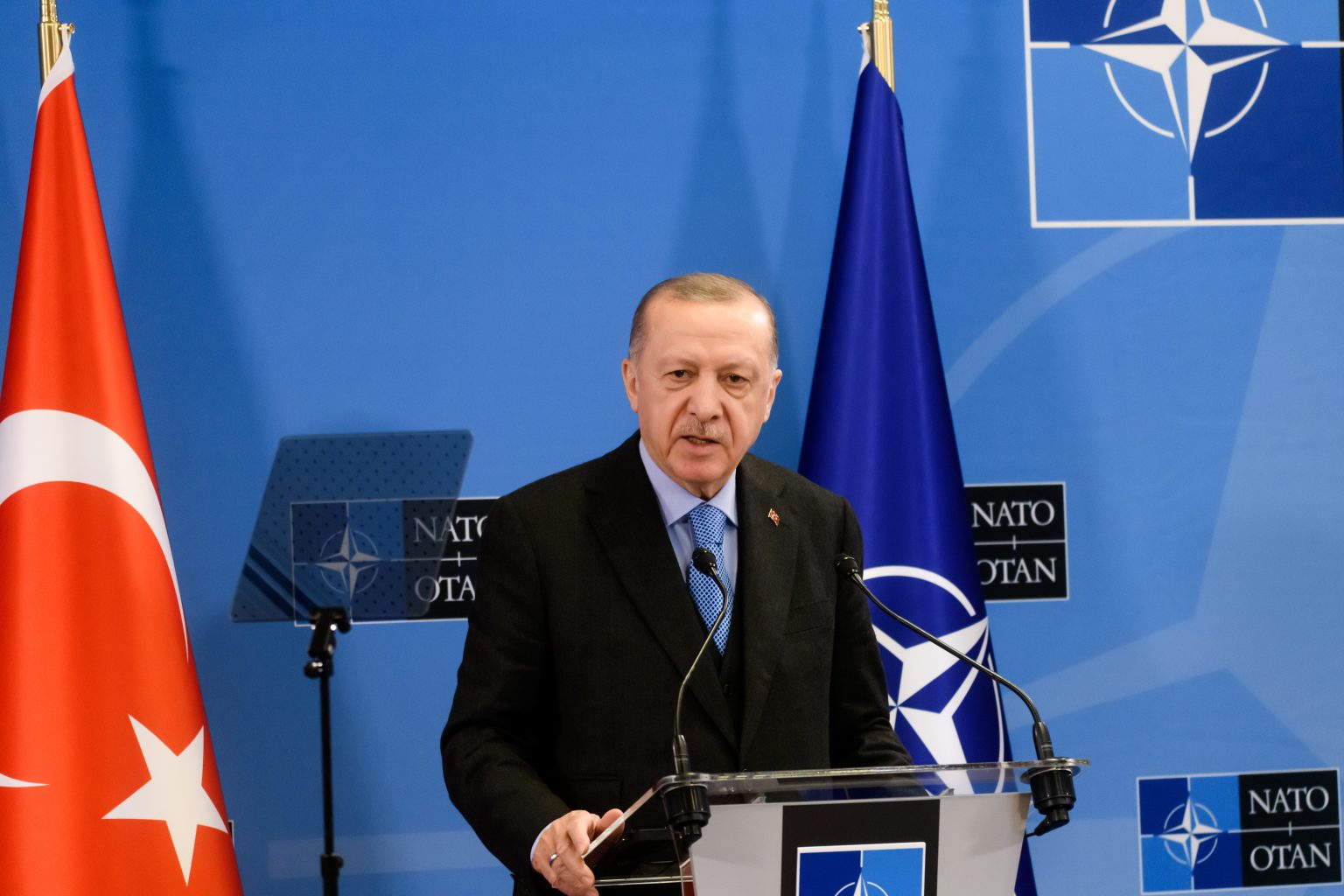


The unveiling of Türkiye’s first long range ballistic missile has triggered a fierce backlash among Western strategic circles over the future of NATO cohesion.
The public unveiling of Türkiye ‘s first intercontinental ballistic missile has sent a jolt through the international security architecture, exposing deep fractures between Ankara and its traditional Western allies. Developed secretly by the Ministry of National Defence research centre, the massive weapon was showcased at a major aerospace exhibition in Istanbul, immediately shifting the strategic calculus across Europe and the Middle East. This development matters immensely because it signals Türkiye ‘s determination to establish absolute strategic autonomy, independent of the security guarantees long provided by the North Atlantic treaty.
While the project remains in its developmental infancy, its mere existence has ignited a fierce rhetorical backlash among transatlantic commentators who fear a renegade military power is emerging on the eastern flank of the alliance.
Dubbed the Yildirimhan, the newly revealed missile represents a staggering technological leap for a domestic arms sector that until recently focused primarily on tactical drones and short-range rocketry. Recent assessments indicate that the liquid-fuelled system is designed to carry a three-tonne explosive payload to a distance of six thousand kilometres, moving at hypersonic speeds between Mach 9 and Mach 25. The technical achievement is underpinned by a significant domestic breakthrough in chemical propellant manufacturing, allowing Turkish engineers to bypass strict Western export controls. Visually decorated with the signature of the republic’s secular founder alongside historical martial imagery, the missile is being promoted domestically as the crowning achievement of a decades-long drive toward complete military self-reliance.
The reaction across prominent Washington think tanks and European capitals has veered rapidly into acute alarm. According to media reports, several influential Western analysts have begun framing the Yildirimhan project as an explicit threat to continental stability, comparing Ankara’s long-range ballistic ambitions to the missile programmes of hostile states like Iran. Some commentators have even speculated that the weapon could eventually be deployed to influence distant conflicts in South Asia, warning that Türkiye is seeking to unilaterally upend the established balance of power across multiple continents. Western officials argue that the development of an intercontinental strike capability is inherently incompatible with the defensive doctrine of a collective alliance, especially when paired with Ankara’s recent acquisition of sophisticated Russian air defence hardware.
From the perspective of the Turkish high command, this intense Western anxiety misreads what is fundamentally a defensive necessity in a collapsing regional order. Security analysts suggest that the ongoing conflict in Ukraine combined with the volatile maritime clashes across the Persian Gulf have convinced leadership in Ankara that external security umbrellas are increasingly unreliable. To counter these perceived vulnerabilities, Türkiye has systematically built a multi-layered domestic defence grid, anchored by the mass production of its Tayfun short-range ballistic systems and a multibillion-pound air defence network known as the Steel Dome. Military planners increasingly believe that possessing an independent strategic deterrent is the only way to insulate the state from surrounding regional wars while reinforcing Türkiye ‘s leverage as a critical geopolitical broker.
However, the transition from a showpiece prototype to an operational combat capability remains fraught with significant technical hurdles and geopolitical risks. The research community believes that because Türkiye ‘s aerospace industry remains heavily dependent on global financial stability and delicate trade links, an open diplomatic confrontation with its largest economic partners could severely stall the project. Furthermore, the lack of extensive live testing data means that the true accuracy and survivability of the system against modern Western interception frameworks remain completely unproven. Regional observers note that if the political establishment chooses to push the programme into rapid mass production without diplomatic coordination, it risks accelerating its own isolation from the very alliance it ostensibly seeks to strengthen.
Analysts caution that uncertainty over Türkiye’s long-term strategic ambitions may prompt a lasting reconfiguration of defence planning throughout the Mediterranean region. In the coming months, greater clarity regarding Ankara’s military direction is expected to emerge through future flight trials and the reactions of international regulatory bodies. Close attention will also be paid to whether Türkiye incorporates its new long-range capabilities into NATO’s integrated air defence architecture or instead pursues an autonomous command-and-control framework. Another important measure of growing political tensions will be the possibility of additional U.S. sanctions targeting major Turkish aerospace companies during the next legislative session.
Although Turkish officials portray the Yildirimhan programme as a landmark achievement for the country’s defence industry, its broader political impact has already intensified disagreements between Ankara and its Western allies, further testing cohesion within the transatlantic alliance.