


A watered-down 21st sanctions package shows the EU can still act against Moscow unanimously, but only by letting a single member state protect a lucrative shipping business tied to Russian gas
The European Union has agreed its 21st sanctions package against Russia, a deal that Brussels wants presented as fresh proof of resolve nearly three and a half years into the war in Ukraine. The reality is messier and more revealing. To secure unanimous approval, which EU sanctions require by law, the bloc had to grant Greece a renewable twelve-month exemption allowing European companies to keep shipping Russian liquefied natural gas to buyers outside the Union, a concession one diplomat privately called an outrageous exemption. It also avoided a scheduled formula adjustment that would have pushed the price cap on Russian oil from 44 dollars a barrel to as high as 58, a jump that would have handed Moscow a significant revenue boost at a moment when the Kremlin is already benefiting from disruption in Middle Eastern energy markets. The package does tighten curbs on Russian banks and targets the shadow fleet Moscow uses to evade existing restrictions. But the manner of its adoption, a near collapse rescued only by carving out a national economic interest, says more about the state of European unity than the sanctions themselves do about pressure on Moscow.
What actually happened, and why Greece could hold the whole bloc hostage
The dispute that nearly sank this package was narrow but commercially significant. A ban on transporting Russian LNG to non-EU markets, agreed unanimously in an earlier sanctions round, was due to take effect from January, part of a broader plan to end EU imports of Russian LNG entirely by the same date. Greece, which hosts the world’s largest merchant shipping fleet, objected specifically to the transport ban rather than the import ban, because a Greek shipping company controlled by the billionaire George Prokopiou has, since the start of last year, moved more than ten million tonnes of Russian LNG on eleven vessels, including seven Arctic-capable icebreakers, completing 144 voyages chartered to Russia’s Yamal LNG facility. Athens argued that if European carriers stopped providing this service, buyers in Asia and elsewhere would simply hire non-European vessels instead, meaning Russian export revenue would be untouched while a slice of the global shipping market shifted away from EU-flagged operators. That is a coherent commercial argument, and it may even be correct on its narrow terms. But it is also precisely the kind of argument sanctions regimes exist to override, because if every member state applied the same logic to its own exposed industry, the sanctions architecture would dissolve into a patchwork of self-interested exceptions.
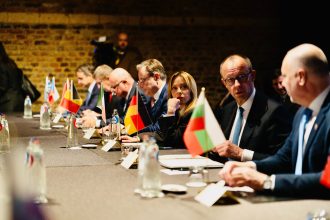
The compromise that emerged, a twelve-month waiver with automatic renewal, is not a footnote. It formalises Greece’s ability to continue what critics call a sanctions-adjacent business model, and it does so through a renewal mechanism that a single member state can plausibly keep extending for years rather than facing pressure to phase it out. Other capitals evidently calculated that a Greek veto risked derailing the entire package, including its banking sector measures and shadow fleet provisions, and that a contained concession was the lower-cost path to unanimity. One diplomat’s framing, that member states showed solidarity with Greece and expect Greece to reciprocate in future, is the language of a negotiated trade-off inside the EU club rather than a statement of policy toward Moscow. That distinction matters, because it confirms that sanctions packages are now shaped as much by internal bargaining among the twenty-seven as by any strategic assessment of what would actually constrain the Kremlin.
The oil price cap decision reveals where the real leverage lies
The more consequential decision buried in this package may be the freeze on the oil price cap rather than the LNG carve-out. The cap’s original formula was designed to adjust automatically based on market benchmarks, and that formula was on track to lift the ceiling from 44 to as much as 58 dollars a barrel, a mechanical consequence of price movements linked to the disruption caused by this year’s war between Israel, the United States and Iran. Brussels judged that scenario politically unpalatable, since raising the cap now, while Ukraine holds battlefield momentum, would have looked like handing Moscow a financial reprieve at the worst possible moment. Freezing the cap for twelve months avoided that optics problem, but it also exposes how sensitive the entire sanctions edifice is to events far outside Ukraine. A regional war three thousand kilometres away nearly forced the EU into loosening pressure on Russia through a technical formula few outside trading desks would have noticed, until it produced a politically indefensible headline. That is a structural vulnerability worth watching, since further volatility in Gulf energy markets could reopen the same dilemma at the next scheduled review.
Regional and institutional stakes beyond the headline numbers
For Ukraine, the practical value of this package lies less in symbolism and more in whether the banking curbs and shadow fleet measures meaningfully raise the cost of Moscow’s war financing, an assessment that will only become clear over months rather than days. For the EU’s broader energy position, the underlying numbers are uncomfortable regardless of the sanctions debate. Russian LNG still accounted for roughly fourteen per cent of EU gas supply, and the bloc imported a record volume from the Yamal project in the first half of this year, even as Brussels prepares to ban imports outright from January. Consultancy analysis has warned the EU risks entering the coming heating season with its lowest gas reserves in fifteen years, a backdrop that explains why Greece’s commercial argument found sympathetic ears even among governments publicly committed to maximum pressure on Moscow. For the sanctions regime as an instrument of EU foreign policy, the unanimity requirement that gave Greece its leverage is not going away, and other member states with their own exposed industries, whether in shipping, agriculture, or finance, will have taken note of exactly how much bargaining power a determined veto threat still carries.
Policy outlook for the next six to twelve months
Three things merit close attention going forward. First, whether the twelve-month LNG waiver becomes a template renewed indefinitely rather than a genuine transition measure, which would tell decision-makers whether the EU’s stated January cut-off for Russian LNG imports is a firm deadline or a moving target. Second, whether the oil price cap freeze holds if energy markets stay volatile, since another automatic adjustment threat before the next review could force Brussels into a similar scramble. Third, whether the shadow fleet and banking provisions in this package produce measurable results, since their effectiveness will shape the political appetite in capitals for a twenty-second package when it inevitably comes. Diplomats and analysts working on EU sanctions policy will also be watching whether other member states begin invoking commercial hardship arguments of their own, testing whether Greece’s success becomes precedent or remains an isolated exception.
The deeper lesson here is not that the EU is abandoning Ukraine. It is that unanimity, the mechanism meant to guarantee collective European resolve, has become the primary constraint on how hard that resolve can actually bite. Each new package now arrives pre-negotiated against domestic economic interests inside the bloc as much as against Moscow’s war economy. That is a sustainable model for maintaining the appearance of unity. Whether it remains an effective model for constraining a war economy that has already adapted to twenty previous rounds of sanctions is a far less certain proposition, and one Brussels will have to answer honestly before too many more exemptions accumulate.