


Germany was supposed to be the country immune to the populist wave sweeping the West. September’s state elections may prove otherwise
For a decade, Germany looked like the exception. Britain voted for Brexit. Donald Trump won the White House twice. Populist parties surged across Europe. Germany alone seemed insulated, its familiar parties still in power, its politics still recognisable. For anyone watching the West’s uneasy relationship with its own democratic traditions, Germany was the last reassurance that liberal democracy could still hold the line. That reassurance is now cracking, according to an analysis of the country’s political trajectory.
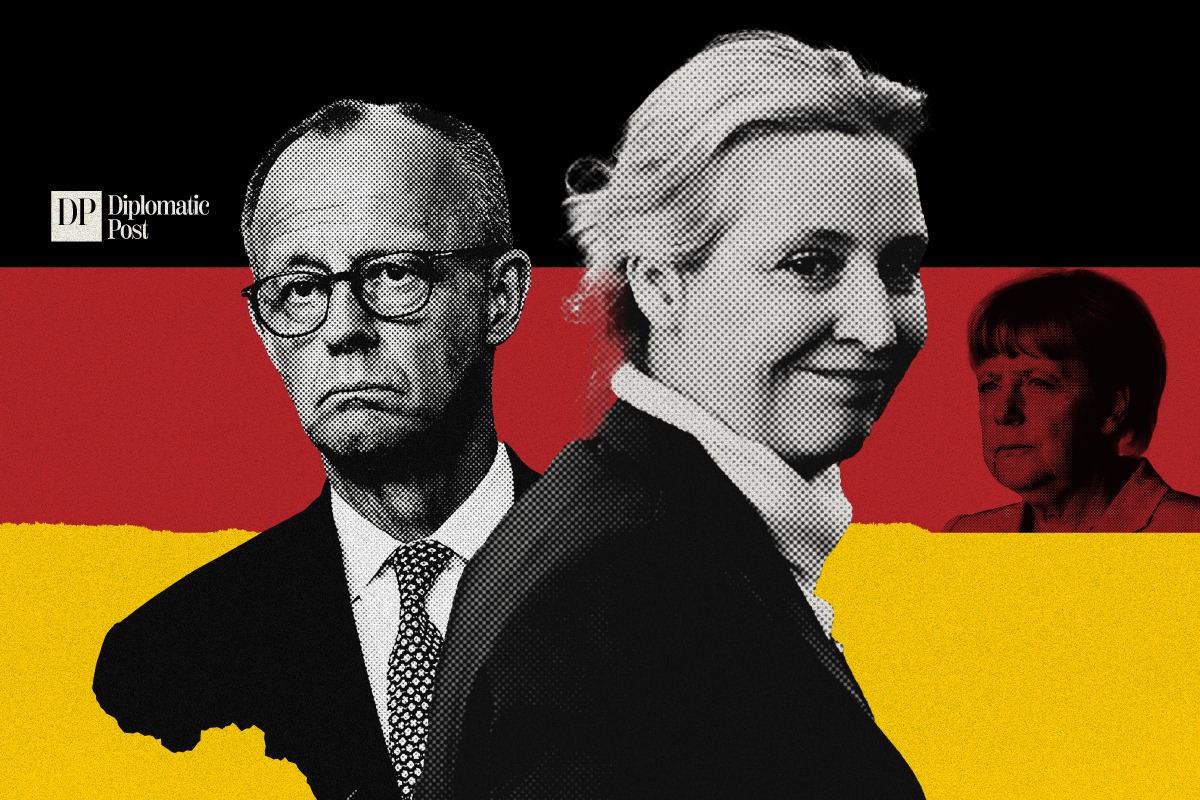
This September, voters in Saxony-Anhalt, Mecklenburg-Vorpommern and Berlin will cast ballots in state elections that may prove to be Germany’s most consequential since reunification. The stakes reach well beyond German borders. Europe’s largest economy, NATO’s indispensable continental anchor, and America’s most consequential European partner is undergoing a political transformation with direct consequences for the transatlantic alliance, the analysis found. The Alternative for Germany, known as the AfD, now leads national polling with roughly 29 per cent support as of June, and has become the dominant political force across eastern Germany entirely.
A postwar consensus built for a different Germany
To understand why this moment matters, it helps to understand what is actually breaking. Throughout the postwar era, German politics rested on an unusually stable foundation, power alternating between the Christian Democrats and Social Democrats, two broad catch-all parties that together often commanded well over 60 per cent of the vote. Elections determined who governed, but rarely challenged the underlying assumptions of the system itself. Consensus, moderation and gradual change defined German politics for decades after reunification. That era is ending.
Crucially, the analysis argues that Germany’s traditional governing parties did not begin to decline because of the AfD’s rise. Their erosion was already well underway before the party emerged as a serious political force. Election after election, the CDU/CSU and SPD lost ground while smaller parties gained steadily, coalition negotiations grew harder, and governments became less stable. The AfD did not create this crisis. It capitalised on frustrations that had been building for years, making its rise less a sudden rupture than the visible symptom of a much deeper loss of confidence in Germany’s governing class.
That discontent has real economic roots. Volkswagen, long the symbol of Germany’s postwar economic miracle, may be facing the gravest crisis in its history as an automaker, working through a radical restructuring affecting up to 140,000 jobs worldwide, including 50,000 cuts inside Germany itself, with four domestic plants potentially receiving no new vehicle models at all, according to the analysis. For millions of Germans, this is not an abstract statistic. It is the end of a certainty that shaped their entire working lives.
The turning point that reshaped German trust itself
Economic anxiety alone does not fully explain the shift. The analysis identifies 2015 as the decisive turning point, the year Chancellor Angela Merkel admitted hundreds of thousands of migrants into Germany, a decision that transformed the country’s politics in ways still shaping it today. Supporters viewed the policy as a humanitarian necessity. Critics saw it as evidence the government had surrendered control over one of a sovereign state’s most basic responsibilities, deciding who may enter the country.
Whatever position one takes on that underlying debate, the analysis argues its consequences are hard to dispute. Millions of Germans came to see the issue as bigger than immigration policy alone, viewing it as a decision about national identity and sovereignty made without meaningful public consent. Distrust that had initially centred on one specific policy gradually expanded into distrust of the governing class as a whole, and the AfD became the primary beneficiary of that broader shift.
Originally founded as a Eurosceptic movement opposing the common currency, the party reinvented itself after the migration crisis as the main vehicle for voters who felt Germany’s governing class no longer represented them. What many observers initially dismissed as a temporary protest vote has proven far more durable, sustained not just by migration concerns but by years of economic stagnation, rising energy costs, declining trust in public institutions, and accumulated dissatisfaction with successive governments.
A firewall that has become the whole system
It was in response to this shift that Germany’s political establishment built what became known as the firewall, or Brandmauer, a refusal by mainstream parties to cooperate with the AfD in any governing capacity. Initially framed as an exceptional, temporary safeguard against a party considered outside the constitutional mainstream, the firewall has evolved into the organising principle of German politics itself, according to the analysis.
That represents a genuine inversion of how democratic systems typically function. In most democracies, electoral success increases a party’s odds of actually governing. In Germany, the analysis argues, the opposite has increasingly become true: the stronger the AfD grows, the more determined every other major party becomes to exclude it from power entirely. On current polling, nearly one in three German voters will support a party that every other major party refuses to govern alongside.
For years this strategy looked sustainable; the AfD remained isolated while broad anti-AfD coalitions still commanded parliamentary majorities. That assumption is growing harder to sustain. Eastern Germany offers the clearest preview of where this trend leads. More than three decades after reunification, the region continues voting differently from the west, and while economic conditions, demographics and lingering effects of communist rule all play a role, the analysis argues these factors alone no longer fully explain the region’s political trajectory. Disillusionment with established parties, scepticism of centralised authority, and support for populist alternatives all took hold in the former communist east well before spreading westward. In Saxony-Anhalt specifically, the AfD now polls around 40 per cent, well ahead of every rival.
Should that polling hold, the AfD would emerge as the dominant party in the state, and any coalition excluding it would require parties with fundamentally different agendas uniting for a single overriding purpose, keeping the election’s actual winner from exercising power. There is nothing legally undemocratic about such an arrangement. In practice, though, it becomes harder to sustain the wider the gap grows between electoral strength and actual governing power. At some point, a firewall built to isolate one party starts reshaping the entire system around that single objective, and every election that reinforces the firewall also reinforces the AfD’s central argument, that millions of Germans can vote for change and simply never receive it.
Merz was supposed to be the answer. The polling suggests otherwise
When Chancellor Friedrich Merz returned to lead the Christian Democrats, many conservatives believed he represented the party’s last real chance to reverse its decline. Unlike his predecessor Merkel, Merz promised a sharper conservative profile, restoring border controls, reviving the economy, reversing a decade of perceived drift, betting that voters who had defected to the AfD could be won back without the party abandoning the political centre.
It was a plausible strategy, resting on the assumption that AfD support reflected dissatisfaction with Merkel specifically rather than a deeper structural realignment. That assumption now faces its first serious test, and the early results are not encouraging for the CDU. Nationally, the party trails the AfD by six percentage points. In Saxony-Anhalt, the Christian Democrats are projected to receive barely half the AfD’s support. A party that once defined itself as the institutional anchor of the Federal Republic, the home of Konrad Adenauer and Helmut Kohl, now struggles to reach half the vote share it once treated as its baseline.
The analysis suggests Merz may be discovering that changing a party’s rhetoric is considerably easier than rebuilding trust it has already lost. Voters who abandoned the CDU are not necessarily waiting for a slightly more conservative version of the same party, many appear to have concluded the CDU is inseparable from the governing class they no longer trust altogether. If September confirms current polling, Germany’s crisis cannot be explained simply as a reaction to Merkel’s legacy. It will instead test whether Germany’s traditional centre-right retains any capacity to absorb public discontent, or whether that role has permanently shifted to another party entirely.
A question every Western democracy will eventually face
The analysis frames Germany’s situation as illustrative of a broader dilemma confronting democracies across the West. How long can governing parties keep losing public confidence while still preserving institutions designed for an earlier political era? At what point does excluding a large and growing share of the electorate from power begin to undermine confidence in democracy itself, separate from the question of whether liberal democracy can successfully defend itself against external enemies?
For most of the postwar period, Germany occupied a category of its own, its history imposing a particular caution toward anything resembling nationalism or revolt against the liberal order. That exceptionalism carried real value, but also a cost; questions openly debated elsewhere were suppressed in Germany for decades. September suggests those questions were never actually resolved. They were simply waiting.
If the polls hold, the AfD will win in Saxony-Anhalt by a margin the established parties haven’t faced there in decades, a party that barely cleared the 5 per cent threshold ten years ago becoming the dominant political force in a state of more than 2 million people. For Washington, the implications are concrete and immediate. A Germany consumed by internal political crisis cannot reliably anchor NATO’s eastern flank, sustain support for Ukraine, or hold firm against Russian energy dependence, the analysis warned. The alliance has long assumed a stable, outward-looking Berlin. That assumption is no longer guaranteed.
The deeper question left unanswered, according to the analysis, is not whether Germany can contain the AfD through firewalls and coalition arithmetic, but whether it can actually address the underlying conditions that made the AfD’s rise possible in the first place. That is the question every Western democracy will eventually have to confront. Germany, this September, may simply be the latest to run out of time to avoid it.