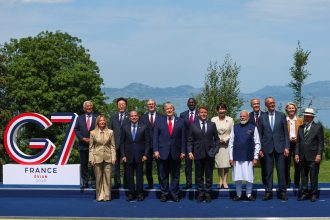



The EU’s national leaders have agreed to sit down to talk about AI development and safety for the first time.
Europe has spent the past three years talking about artificial intelligence the way a nervous swimmer talks about cold water, circling the subject, testing the temperature, never quite jumping in. That hesitation is now ending. Over the coming months, the twenty seven leaders of the European Union are set to place artificial intelligence at the very centre of their political agenda, treating it not as a niche technology file for ministers and regulators but as a matter of economic survival and strategic security. For a bloc that built its reputation on writing the world’s most detailed rulebooks, this marks an uncomfortable but necessary shift from controlling AI to actually building and using it.
The change has been building for a while, but it has become impossible to ignore. According to official statements and briefings from Brussels, EU leaders have already spent an unusual amount of time this year wrestling with the question of technological competitiveness, from an informal retreat in February at a castle in Belgium to a full European Council summit in March that launched what officials call the “One Europe, One Market” agenda. Artificial intelligence featured heavily in both. Ireland, which took over the rotating presidency of the Council on the first of July, has now made AI the centrepiece of its six months in charge, culminating in a dedicated international summit in Dublin in October that will bring together heads of government, chief executives and investors under the banner of using AI to revive Europe’s competitiveness. A further gathering in Brussels in November will focus on applying the technology across public services and industry. Taken together, these moments amount to the most sustained run of high level attention that AI has received from European leaders since the technology entered mainstream politics.
Why the mood in Brussels has shifted
For years the European Union’s signature achievement on artificial intelligence was regulatory. The bloc’s AI Act, agreed after lengthy negotiation, was held up as proof that Europe could set global standards even without owning the companies that build the most powerful systems. That confidence has thinned considerably. Analysis circulating among decision makers in Brussels now openly worries that Europe risks becoming a rule maker for a technology it barely produces, watching American and Chinese firms race ahead while European companies struggle to raise capital, access computing power and scale beyond their home markets. Reports commissioned by the EU itself, most notably an assessment of European competitiveness delivered last year by a former Italian prime minister, warned bluntly that the continent’s sluggish investment climate and fragmented digital market were leaving it dangerously exposed. That warning has since hardened into consensus among leaders, who have repeatedly cited it when explaining why simplification, investment and speed now matter as much as caution.
The security dimension has sharpened this urgency considerably. European officials increasingly describe artificial intelligence in the same breath as defence, energy and critical raw materials, treating it as one of a handful of technologies where dependence on outside powers carries genuine strategic risk. That framing was unmistakable in remarks by the European Council’s president earlier this year, who listed artificial intelligence alongside defence, space and quantum computing as areas where the Union must map its dependencies and actively work to reduce them. The war in Ukraine, the continuing instability linked to Iran, and persistent hybrid interference from Russia and Belarus have all reinforced the sense in European capitals that technological self reliance is now inseparable from national security. Modern militaries increasingly rely on AI for everything from intelligence analysis to drone coordination, and European defence planners have grown uneasy at the prospect of depending on foreign owned systems for capabilities that could prove decisive in a future conflict.
Money has followed the rhetoric, at least in part. Brussels has already committed substantial public funds toward building the computing infrastructure that AI development requires, including large scale investment aimed at establishing so called AI gigafactories capable of training the most advanced models on European soil. Yet officials and industry figures alike concede that public money alone will not close the gap. Private investment in European AI firms continues to trail the sums flowing into American start ups by a wide margin, and technology executives have publicly urged the EU to loosen the compliance burden facing companies before that burden drives investment elsewhere. The result has been a striking reversal in tone from Brussels, where the same institutions that once prided themselves on setting the toughest AI rules in the world are now racing to soften them, delaying elements of the AI Act’s most demanding requirements and folding changes into a broader package of legislative simplification.
What is really at stake for Europe
The deeper story here is about power rather than technology alone. Whoever controls the most capable artificial intelligence systems will hold outsized influence over global supply chains, military capability and the flow of information itself. European leaders now openly acknowledge that the continent risks becoming a permanent rule taker in a world increasingly shaped by two other powers, forced to adopt standards and tools built elsewhere on someone else’s terms. That anxiety explains why cloud sovereignty, the ability to store and process European data on European controlled infrastructure, has become such a live political issue, and why some European governments have begun shifting away from American digital tools in sensitive areas of public administration.
There are real tensions still to resolve. Simplifying AI rules to help European companies compete inevitably raises questions about consumer protection and the safeguards against harmful uses of the technology that the original legislation was designed to guarantee. Diplomats and researchers who track these negotiations describe an uneasy balancing act, in which the same leaders demanding faster deployment and lighter regulation are also expected to reassure citizens that fundamental protections will not be sacrificed for speed. There is also a harder question of capacity. Rules can be rewritten relatively quickly, but building competitive AI companies, deep pools of investment capital and enough computing infrastructure to matter globally takes years, not months. Whether Europe’s leaders can sustain political attention on this issue for that long, given how easily it could be crowded out by the next crisis, remains genuinely uncertain.
What happens over the next six months will say a great deal about whether this moment produces real change or simply another round of declarations. The Dublin summit in October and the follow up gathering in Brussels in November will test whether European leaders can translate strategic anxiety into concrete industrial outcomes, from faster permitting for computing infrastructure to clearer incentives for private investment. If Europe manages to combine its regulatory experience with a genuine industrial push, it could yet carve out a distinctive role as the home of trustworthy, widely adopted applied artificial intelligence rather than the birthplace of the most powerful models. If it fails, the continent risks confirming the very fear now driving its leaders to the table, that Europe writes the rules for a game it no longer has the power to play.