




Labour’s leadership crisis is not merely a domestic political drama—it reflects a broader crisis of governance confronting centrist parties across Western democracies.
- The Limits of the Politics of Competence
- The Rise of a New Political Competition
- Implications for Britain’s International Role
- Economic Pressures and Electoral Reality
- The European Dimension
- How will the new Prime Minister be chosen?
- Will there be early parliamentary elections?
- What will change after Starmer?
- Starmer’s fall is also a warning to his successor
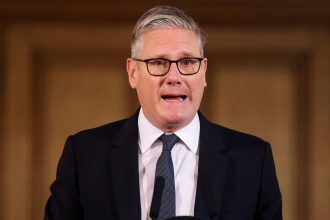
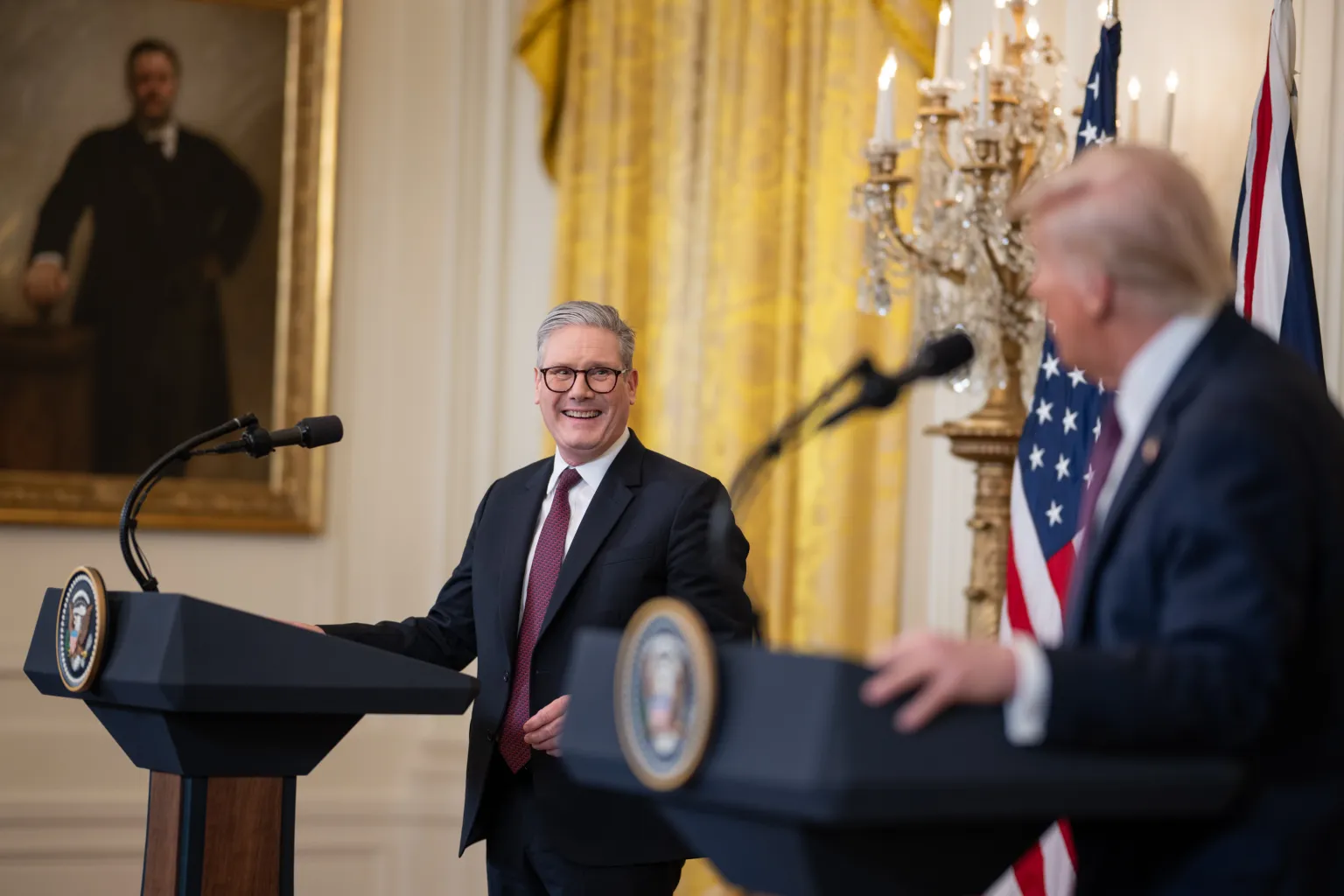
The resignation of Prime Minister Keir Starmer marks more than the end of a troubled premiership. It represents another chapter in the accelerating fragmentation of Western politics, where electoral mandates are becoming shorter, public patience thinner and governing coalitions increasingly difficult to sustain.
Starmer’s departure after less than two years in office is particularly striking because it comes despite Labour’s commanding parliamentary majority. Traditionally, governments collapse because they lose elections or legislative support. In this case, the governing party has concluded that retaining power may require removing the very leader who delivered its landslide victory.
For policymakers across Europe and North America, the significance lies not in the personal fate of Starmer but in what his downfall reveals about the changing nature of democratic politics. Britain is becoming a laboratory for trends increasingly visible across the West: the decline of traditional party loyalties, the rise of anti-establishment movements and the growing difficulty of translating political victory into durable authority.
The contest likely to follow most prominently involving Andy Burnham and potentially Wes Streeting is therefore not simply a battle for Labour’s leadership. It is a contest over how centre-left parties can remain electorally viable in an era defined by economic anxiety, cultural polarization and geopolitical instability.
The Limits of the Politics of Competence
Starmer entered Downing Street promising stability after years of Conservative turmoil. His political proposition was straightforward: competence over spectacle, pragmatism over ideology and managerial government over populist confrontation.
That formula initially appeared well suited to a country exhausted by Brexit disputes, pandemic aftershocks and rapid leadership turnover. Yet the political environment confronting Western governments has changed in ways that make competence alone an insufficient electoral currency.
Across Europe, voters increasingly judge governments against expectations shaped by crises they did not create but are expected to solve. Economic stagnation, housing shortages, immigration pressures, energy insecurity and declining living standards have generated demands for rapid solutions that few governments can realistically deliver.
The result is a widening gap between electoral promises and governing capacity.
Britain’s experience mirrors developments elsewhere. Governments in France, Germany, the Netherlands and Canada have all encountered growing public frustration despite pursuing largely centrist agendas. The challenge is structural rather than ideological. Modern democratic governments face increasingly globalized problems while operating within domestic political systems that reward immediate results.
Starmer’s resignation demonstrates the political consequences of this imbalance. Voters did not necessarily reject Labour’s objectives. Many simply lost confidence in its ability to achieve them.
The Rise of a New Political Competition
The deeper significance of Labour’s crisis lies in the changing nature of political competition.
For much of the post-war period, British politics revolved around competition between Labour and the Conservatives. Today, that duopoly faces pressure from multiple directions simultaneously.
Reform UK has emerged as the most immediate threat. Like other populist movements across Europe, it has successfully positioned itself as an anti-establishment alternative capable of channeling frustration over immigration, economic stagnation and political elites.
What distinguishes Reform’s challenge is not merely its electoral performance but its ability to alter the strategic calculations of both major parties. Labour MPs increasingly fear that traditional working-class constituencies can no longer be taken for granted. The Conservatives, meanwhile, face a parallel threat on their own flank.
This dynamic resembles political developments elsewhere in Europe, where insurgent parties have steadily eroded support for established political movements. From Germany’s Alternative for Germany to France’s National Rally and Italy’s populist coalitions, political fragmentation is becoming a defining feature of democratic competition.
The question confronting Labour’s next leader is therefore not simply how to govern effectively. It is how to build a durable electoral coalition in an environment where voter loyalties are increasingly fluid.
Burnham’s emergence as a frontrunner reflects this challenge. His supporters argue that his regional political identity, working-class credentials and distance from Westminster make him better positioned to reconnect with voters drifting toward anti-establishment alternatives.
Whether that strategy succeeds remains uncertain. Yet the fact that Labour is considering such a recalibration illustrates how profoundly Britain’s political landscape has changed.
Implications for Britain’s International Role
Leadership transitions rarely occur in isolation from broader strategic considerations.
Britain enters this period of uncertainty at a particularly sensitive geopolitical moment. The country remains a central player in NATO, a key supporter of Ukraine and an important participant in efforts to manage tensions involving Russia, China and the Middle East.
Political instability inevitably affects foreign policy credibility.
Allies value predictability. While Britain’s core strategic commitments are unlikely to change dramatically under a new Labour leader, prolonged internal political competition could weaken London’s ability to shape international debates and lead multilateral initiatives.
The timing is especially significant given growing uncertainty about the future direction of transatlantic relations.
The return of Donald Trump to the White House has forced European governments to reassess assumptions about American leadership. Questions surrounding defense spending, strategic autonomy and burden-sharing are once again moving to the forefront of European policymaking.
In this environment, Britain occupies a critical position. It remains one of Europe’s most capable military powers and a bridge between Washington and continental Europe. Any period of domestic political distraction risks reducing Britain’s diplomatic influence precisely when Western coordination is becoming more important.
A Burnham leadership could also introduce new priorities. While unlikely to alter Britain’s core security commitments, his emphasis on regional economic development and domestic renewal could shift political attention inward, reducing the government’s appetite for ambitious international initiatives.
Economic Pressures and Electoral Reality
The next Labour leader will inherit an economic environment that leaves little room for political experimentation.
Britain continues to face sluggish productivity growth, persistent fiscal constraints and mounting pressure on public services. The structural challenges associated with Brexit have not disappeared, while global economic uncertainty continues to complicate investment and growth strategies.
This reality limits the options available to any successor.
Calls for greater public spending must contend with fiscal pressures. Demands for tax reductions face similar constraints. Immigration remains politically sensitive while labour shortages continue to affect key sectors of the economy.
The central dilemma facing Labour is therefore familiar to governments across advanced economies: how to maintain social cohesion and economic competitiveness simultaneously.
Burnham and Streeting represent different answers to that question.
Burnham’s political appeal rests partly on arguments for greater regional investment, decentralization and economic rebalancing. Streeting’s supporters emphasize reform, efficiency and modernization. Both approaches seek to address underlying economic frustrations, but neither can escape the broader structural constraints shaping Britain’s economic outlook.
The European Dimension
For European partners, Britain’s leadership transition will be closely watched.
Since Labour entered government, relations with Brussels have gradually improved following years of Brexit-related tensions. A new leadership contest creates uncertainty about whether that trajectory will continue.
The broader strategic interests of both sides still point toward deeper cooperation, particularly in defense, energy security and industrial policy. Yet domestic political calculations may complicate efforts to move beyond the lingering sensitivities of Brexit.
A stronger Reform UK presence could also influence the debate. Even without entering government, the party’s rise may encourage greater caution among mainstream politicians regarding closer European integration.
As a result, Britain’s relationship with Europe is likely to remain characterized by pragmatic cooperation rather than ambitious institutional realignment.
How will the new Prime Minister be chosen?
Starmer will remain Prime Minister until the Labour Party completes the election of a new leader.
Nominations are expected to begin on 9 July and end on 16 July. Each candidate must be a Member of Parliament and receive the support of 20% of Labour MPs, which in the current composition amounts to approximately 81 nominations.
After that, candidates must also secure appropriate backing from local party organisations or from trade unions and other organisations affiliated with the party.
If only Burnham meets the required threshold, he could become leader and Prime Minister as early as July. If there are two or more candidates, a party-wide vote will follow, which is expected to conclude before Parliament returns from its summer recess in September.
After the election of a new leader, Starmer will formally resign before the King, and the monarch will invite his successor to form a government.
Will there be early parliamentary elections?
There is no automatic obligation for elections.
In the British parliamentary system, citizens elect MPs, not directly the Prime Minister. The Prime Minister is the person who can command the confidence of a majority in the House of Commons.
Since Labour holds a large parliamentary majority, its new leader can form a government without a new vote. The same happened when Conservatives replaced Boris Johnson, Liz Truss, and Rishi Sunak within the same parliamentary term.
Nigel Farage is already calling for general elections, arguing that the new Prime Minister will not have a personal electoral mandate. Politically, this is a strong message, but constitutionally it does not bind the government.
It is unlikely that a new Labour leader would immediately call elections while the party is polling around 19%, with Reform UK in the lead. More realistically, the new Prime Minister would attempt to stabilise the government, introduce a new policy agenda, and rebuild support ahead of elections scheduled no later than 2029.
What will change after Starmer?
The first change will be in tone.
The successor will need to be more direct, more accessible, and better at explaining the government’s overall direction. A mere change of leadership will not be enough if the public continues to receive a series of technocratic measures without a broader narrative.
The second change will have to be in economic policy. The new Prime Minister will face pressure to invest more in healthcare, housing, local transport, and regional development, without triggering a further rise in borrowing costs.
The third test will be migration. Labour will need to demonstrate that it can control borders without fully adopting Farage’s policies or rhetoric.
The fourth test will be relations with the European Union. A decade after the Brexit referendum, the British economy continues to feel the effects of trade barriers. The new Labour leadership may seek deeper economic and security cooperation with Brussels, but without formally reopening the question of EU membership.
In foreign policy, no dramatic shift should be expected. Support for Ukraine, Britain’s role in NATO, and close ties with the United States are likely to remain core pillars of British policy.
Starmer’s fall is also a warning to his successor
Keir Starmer will be remembered as the man who brought Labour back to power, but who failed to convert a landslide victory into lasting political authority.
He stabilised the party, brought it back to the centre, and led it to 411 parliamentary seats. But once in power, he did not clearly explain what he intended to do with that mandate.
His downfall shows that stability alone is no longer enough. In a society affected by stagnation, a crisis in public services, migration anxieties, and deep institutional distrust, voters demand visible results and a clear direction.
His successor will inherit a large parliamentary majority, but very little time. They will have to unite the Labour Party, stabilise the economy, contain Farage, and convince the public that a change of Prime Minister also means a change of policy.
Otherwise, Starmer’s resignation will not mark the end of Britain’s political crisis. It will be just another stop in a decade of instability that began with Brexit.
The most important lesson from Starmer’s resignation may be that political instability is becoming a feature rather than an exception of democratic governance.
Britain is preparing for its seventh prime minister in a decade. While each leadership change has unique causes, the broader pattern reflects deeper shifts in public expectations and political behavior.
Voters are increasingly willing to abandon established parties. Political identities are becoming more fluid. Social media accelerates public dissatisfaction while reducing the time governments have to demonstrate results.
These trends are not uniquely British. They are evident across much of the democratic world.