


Tehran’s allies in Yemen waited weeks to enter the war on Iran, then struck only when it suited them. The pattern reveals a militia that has learned to bank leverage rather than spend it on someone else’s timetable.
When the United States and Israel struck Iran in March, Tehran’s allied militias in Lebanon and Iraq joined the fight almost immediately. Yemen’s Houthis, despite being heavily armed, capable of hitting Gulf states directly, and sitting astride one of the world’s most consequential shipping chokepoints, did not. That delay, and the calculated way the group has acted since, has become the clearest evidence yet that the Houthis have shifted from being Iran’s proxy to something closer to an increasingly independent partner, one that deploys its arsenal on its own schedule rather than Tehran’s.
A late entry, then a narrow one
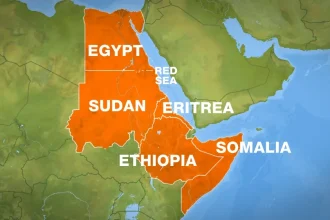
The Houthis did not fire their first shots at Israeli territory until 28 March, roughly a month after the initial US-Israeli strikes on Iran began. Their strikes remained limited through early April, and they paused entirely once a ceasefire took hold on 7 April. When fighting flared again on 8 June, the group fired two missiles at Eilat and threatened a total ban on Israeli-linked shipping through the Red Sea, a threat notable mainly for what it withheld: the group’s campaign against Red Sea commercial traffic, the tactic that gave it global leverage during Israel’s war in Gaza, was never actually deployed at scale during the Iran conflict, even as Iran itself moved to close the Strait of Hormuz against Gulf Arab oil exports.
Yemen analysts describe the Houthis as a movement that, while sharing Iran’s regional “Axis of Resistance” framing and political affinity with Tehran and Hezbollah, is primarily driven by a domestic agenda specific to Yemen. Washington maintains that Iran has armed, funded and trained the group with Hezbollah’s assistance, a characterisation the Houthis reject, saying they now develop weapons of their own. Reuters reported that observers were divided on what the group’s initial restraint meant, with some diplomats suspecting individual, unattributed attacks on regional targets that media could not independently confirm, and others viewing the pause as deliberate, coordinated patience aimed at maximising pressure once deployed.
Part of the explanation is straightforward degradation. Israel’s 2025 bombing campaign against Houthi targets hit critical infrastructure, degraded missile and drone capabilities, and killed senior political and military leaders, according to regional analysis, leaving the movement under sustained military and economic pressure compounded by a US terrorist designation and sanctions. But weakness alone does not explain the group’s behaviour.
Rather than committing its full arsenal to aid Tehran, the Houthis prioritised investment in domestic control inside Yemen, a choice that became more visible in a subsequent offensive south of Hodeidah, the group’s deadliest ground assault in years, which briefly overran government positions before being repelled. Using force inside Yemen carries far less diplomatic risk for the Houthis than force at sea, which could jeopardise a roadmap toward de-escalation that the group has spent years securing.
That consolidation has an organisational dimension as well. Before the Hodeidah offensive, the Houthis paraded a new General Mobilisation Force structure, modelled on Iran’s Basij paramilitary militia and built to project strength and cement control across northern Yemen.
Since the Gaza ceasefire in late 2025, the group has also quietly rebuilt its missile stockpile and expanded domestic production, reducing its historical dependence on weapons manufactured directly in Iran. A May 2026 study, examining more than 800 missile and drone components recovered from Red Sea seizures across 2024 and 2025, described the shipments as Iranian-designed self-assembly kits arriving disassembled for reconstruction inside Yemen, a design that the researchers say indicates continued Iranian supply networks while also requiring an increasingly capable Houthi technical workforce to turn the components into functioning weapons.
Leverage over Saudi Arabia, not just over Israel
The clearest sign of the group’s growing autonomy has come in its posture toward Saudi Arabia. In early July, an Iranian civilian aircraft landed in Houthi-controlled Sanaa, breaching a Saudi air blockade in place for nearly a decade.
The Saudi-led coalition responded by threatening strikes of what it called unprecedented force against targets including Hodeidah port and Sanaa airport, a threat that preceded the Hodeidah ground offensive. On 13 July, airstrikes attributed to Yemen’s internationally recognised, Saudi-backed government hit the runway at Sanaa airport specifically to prevent another Iranian flight from landing, though the aircraft reportedly diverted to Hodeidah instead. The Houthis blamed Riyadh directly, declared the de-escalation phase over, and threatened Saudi airports and infrastructure in turn.
Yemen analysts argue the group is using this pressure as leverage inside Yemen’s long-stalled UN-mediated peace roadmap, agreed in principle in late 2023, under which Riyadh would pay public-sector salaries, share oil revenue, and reopen Sanaa airport and Hodeidah port in exchange for a lasting ceasefire.
The threat of renewed conflict lets the Houthis press for concessions they have struggled to secure through negotiation alone, particularly since Saudi Arabia’s own rapprochement with Tehran may leave Riyadh reluctant to challenge Houthi rearmament directly, according to Danny Citrinowicz, an Iran analyst at Israel’s Institute for National Security Studies, who has argued that a prospective joint Houthi threat against both the Strait of Hormuz and the Bab al-Mandeb strait would raise the group’s strategic value to Tehran while simultaneously strengthening its independent leverage within that relationship.
The Houthis’ selective activism extends beyond the Gulf. When Israel became the first country to formally recognise Somaliland in December 2025, the group’s leader, Abdul-Malik al-Houthi, declared any Israeli military presence there a legitimate target, a reaction Yemen analysts trace to the movement’s own history as self-described heirs to a Zaydi imamate that fell in 1962, rather than purely to instructions from Tehran.
The fragile US-Iran memorandum of understanding that paused the broader regional war does not mention the Houthis at all, leaving the group room to rebuild military capacity largely undisturbed. For Riyadh, the practical result is a return to what analysts describe as Yemen’s familiar “no peace, no war” equilibrium, now running at a higher level of tension, in which the roadmap’s concessions have stopped functioning as incentives for Houthi disarmament and instead become gains the group expects to collect while keeping its Red Sea leverage in reserve for whenever it next decides the moment is right.