


Washington Found a Weapon Cheaper Than a Warship, and It’s a Balance Sheet. One Quiet Egyptian Fund Nearly Doubled Its Money and Just Rewrote Washington’s Middle East Playbook
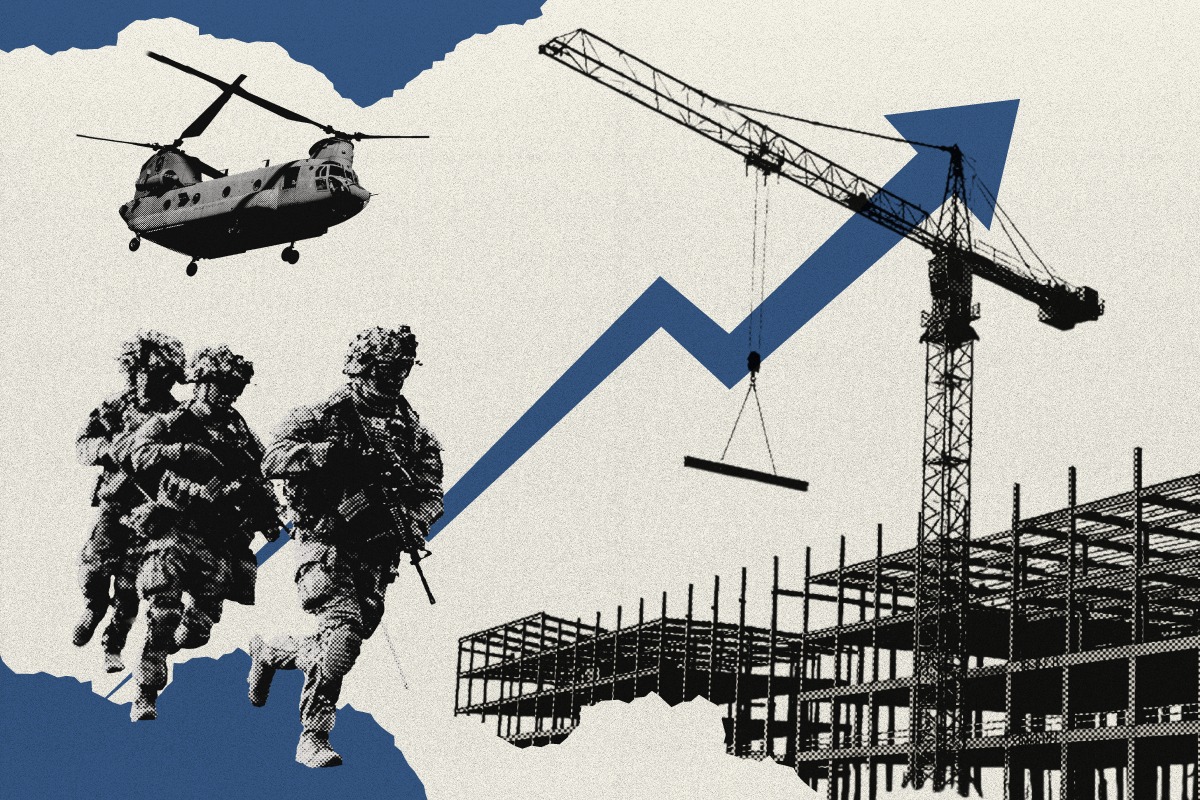
As the ceasefire with Iran collapses and another round of military spending gets debated in Washington, a quieter argument is gaining ground among policymakers. Military power can win a battle, but on its own, it rarely delivers the lasting strategic outcome a country actually wants. One of the clearest pieces of evidence for that argument has been sitting in Egypt for more than a decade, largely unnoticed.
A fund that was never supposed to work this well
Congress authorised the Egyptian American Enterprise Fund in 2011, placing up to $300 million in the hands of private investors with an unusual instruction: grow Egypt’s economy on behalf of the American people. Fifteen years later, the fund has invested in more than one hundred fifty companies, helped support close to seventy thousand jobs, and grown to an estimated market value exceeding five hundred million dollars, nearly double the capital Congress originally put in. It has done this while operating in a country where the local currency has lost more than eighty per cent of its value since 2016, and where the fund itself nearly got swept up in the closure of USAID earlier this year.
According to the fund’s own leadership, the choice that mattered most was made at the very beginning. Rather than sending American investors to run operations on the ground, the fund’s managers decided to rely on Egyptian talent from the start. In 2014, the fund began working with Lorax Capital Partners, a first-time private equity firm it helped seed, and a year later made its first investment in Fawry, a digital payments platform that now serves roughly fifty-five million Egyptians, nearly half the country’s population. That single investment has generated more than ninety-three million dollars in proceeds for American taxpayers, close to five times the fund’s original stake, while the fund still holds a position in the company.
A model with roots in a very different Cold War moment
The enterprise fund concept did not originate in the Middle East. President George H.W. Bush introduced it in 1989 to help Poland and Hungary transition away from centrally planned economies after the Cold War, seeding the Polish American Enterprise Fund with an initial allocation that eventually returned one hundred twenty million dollars to the US Treasury once its active investment phase wound down. Analysts who have studied that era describe the record as mixed but ultimately successful, with funds in Poland and Albania performing especially well even as others drew more criticism.
President Obama revived the model after the Arab Spring, authorising funds for both Egypt and Tunisia in 2011, though a similar effort planned for Jordan never got off the ground after congressional funding stalled.
The fund’s portfolio reads less like a foreign aid program and more like a venture capital track record. Beyond Fawry, the fund has backed Sarwa Capital, a consumer finance firm that expanded access to credit for small businesses, Algebra Ventures, one of Egypt’s leading venture capital firms, and Orchidia, a domestic manufacturer of generic eye medicine.
It has also supported healthcare access for roughly half a million Egyptians and helped catapult the country’s startup scene into one of the fastest growing in the Middle East and North Africa, with Egypt recording the highest number of startup investments in the region back in 2022.
By working through seven first-time Egyptian fund managers rather than parachuting in outside expertise, the model effectively built new financial institutions in Egypt that will outlast the fund itself.
The fund’s history has not been free of political turbulence. Reports on its early years describe a period when a US senator held up its funding, reportedly out of frustration with the Obama administration’s broader Middle East policy rather than any objection to the fund’s design. The episode is a reminder that even a program built to sit outside day-to-day politics can still get caught inside it, particularly when it depends on continued congressional support to keep operating.
Where does the idea go from here?
The fund’s advocates argue its lesson extends well past Egypt. Enterprise funds, they say, can advance American strategic interests by building durable partnerships around shared economic stakes rather than around troop deployments or foreign aid grants that expect little in financial return.
The current administration has taken notice, with its fiscal year 2027 budget and a new supplemental funding request both seeking broad congressional authority to establish new enterprise funds, a signal that the model could expand into other countries facing political transitions of their own.
Proponents point to three conditions they consider essential for any new fund to succeed: independent boards staffed with investment professionals from both the United States and the host country, a heavy reliance on local partners who understand the market on the ground, and strict conflict-of-interest rules paired with regular reporting to Congress to keep taxpayer money accountable.
Strip away the debate over whether this approach can scale to other countries, and the numbers from Egypt are not in dispute. Congress put up roughly three hundred million dollars; the fund’s assets are now worth close to double that amount, and the investment came without the human and financial costs that have defined recent American military engagements in the same region.
Whether Washington chooses to build on that record in other struggling economies, or reverts to the older playbook of bases and bombs, is now a decision sitting with lawmakers who have the fund’s own balance sheet in front of them.