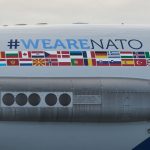





Russia was described as a long-term threat in the final declaration issued at the conclusion of NATO’s 36th summit, held over two days in Ankara. The declaration also reaffirmed the Alliance’s commitment to supporting Ukraine.
One of the shortest summit declarations in NATO’s history, the document reiterates the Allies’ commitment to collective defence, identifies Russia as a long-term security threat, announces more than $50 billion in new defence procurement, and endorses a €70 billion assistance package for Ukraine this year.
The Allies effectively reaffirmed their commitment to implementing the decisions adopted at the 2025 Hague Summit, as well as their obligations under Article 5 of the North Atlantic Treaty. As stated in the declaration, NATO will continue to pursue its 360-degree approach to deterrence and defence.
Regarding Ukraine, the declaration notes that “Ukraine contributes to transatlantic security” and stresses that “NATO Allies reaffirm their support for Ukraine’s right to defend its freedom, sovereignty and territorial integrity.”
Following his meeting with Volodymyr Zelensky on the margins of the summit, Donald Trump stated that Ukrainian strikes on Russian oil refineries represented “an escalation that could help bring the war to an end.” US Secretary of State Marco Rubio added that Washington was discussing “Ukraine’s ability to strike deep inside Russia so that Russia can see how difficult it is to defend its own airspace.”
Trump also made it clear that the United States would grant Ukraine a licence to manufacture missiles for the Patriot air defence system.
What these developments will ultimately mean for Ukraine—and for Europe—is the subject of this analysis, which draws upon publicly available information while also offering my own interpretation of the broader geopolitical picture.
Zaluzhnyi speaks out from London
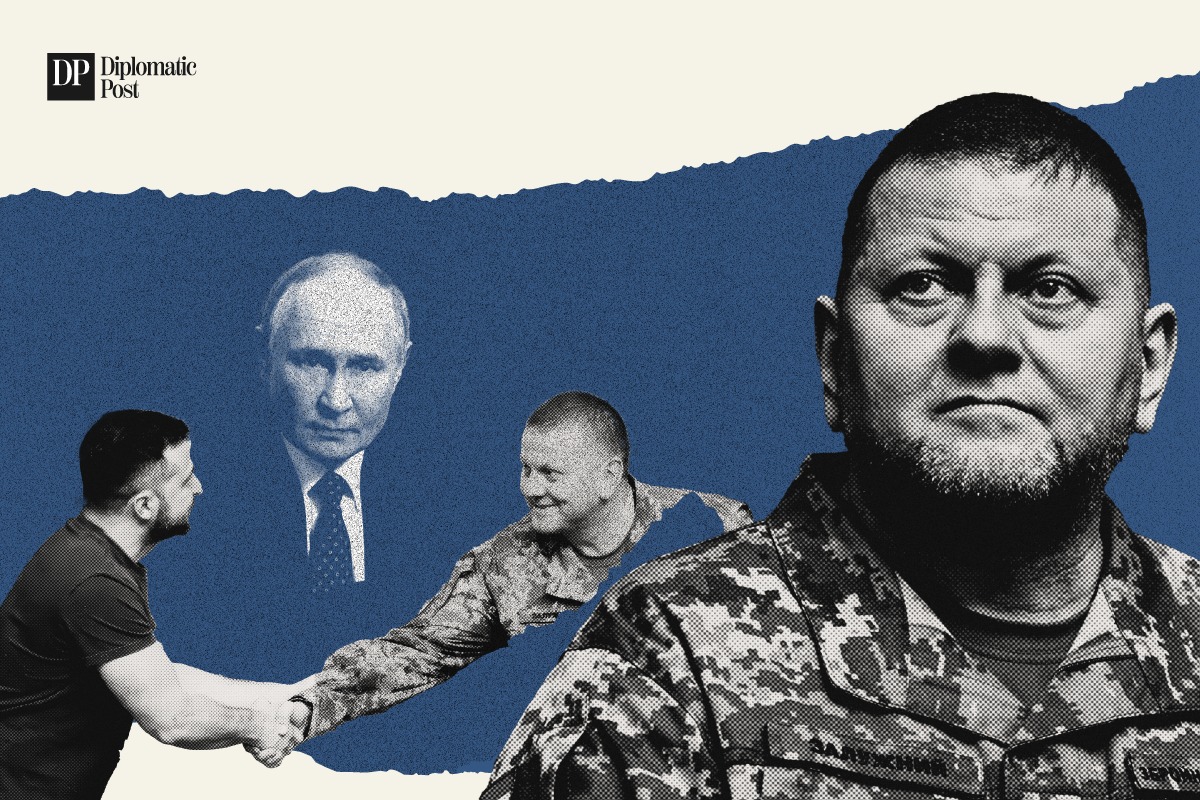
Ukraine’s ambassador to the United Kingdom and former Commander-in-Chief of the Ukrainian Armed Forces, Valerii Zaluzhnyi, has warned against assuming that Russia has already lost the war.
Writing in The Telegraph, Zaluzhnyi argued:
“An increasing number of Western analysts now claim that Russia has effectively lost the war. This is a dangerously mistaken assessment of the conflict’s trajectory. It reflects a tendency to interpret events through the prism of individual battlefield successes rather than considering the broader strategic picture.”
The senior Ukrainian diplomat—widely regarded as a potential future presidential candidate—argued that advances in military technology have made rapid battlefield breakthroughs virtually impossible, turning the conflict into a prolonged war of attrition.
Although Ukrainian strikes inside Russia are inflicting genuine damage, he noted that such operations are expensive, technologically demanding and inevitably provoke retaliation that may prove even more destructive.
According to Zaluzhnyi, neither side should expect this style of warfare to produce a decisive strategic victory.
His assessment closely mirrors an article published recently by the American outlet National Security Journal, which our portal carried on 1 July under the headline: “Kyiv Has Turned Russia into a Battlefield—but That Is Not Enough to Win.”
That analysis argued that:
Ukraine has inflicted real damage deep inside Russia, setting refineries ablaze, targeting fuel convoys and transforming what was once Moscow’s secure rear into a battlefield. Yet these attacks cannot force Russian troops to withdraw from Donetsk, while Russia has demonstrated an ability to absorb levels of punishment that would likely destabilise most governments and still continue advancing along the front. The tempting Western conclusion—that inexpensive technology can replace sustained military support—may prove to be the most dangerous mistake of all.
Zaluzhnyi sees the bigger picture
Returning to Zaluzhnyi’s argument, the former commander believes the battlefield has reached something approaching strategic equilibrium.
Russia, he says, is unable to conquer Ukraine, while Ukraine lacks the means to recover all of its occupied territories.
“The decisive factor is which society can withstand the economic, military and psychological burdens of a prolonged conflict for longer, while maintaining the international support required to continue fighting. That—and not any individual tactical success—will determine how and when this war ends.”
His warning stands in sharp contrast to what has become an increasingly dominant narrative in many Western media outlets—a narrative that is too often echoed by commentators in Croatia and elsewhere—that Ukraine is already defeating Russia.
This perception is reinforced by the growing number of dramatic videos showing successful Ukrainian strikes against Russian energy infrastructure. Yet, as is so often the case, there is another side to the story.
Russia, at least for now, does not prohibit the publication of footage showing Ukrainian attacks on Russian territory across its social media platforms.
Ukraine, by contrast, has maintained strict wartime restrictions on publishing material related to Russian strikes. Violating these rules constitutes a serious criminal offence.
As a result, footage of Russian attacks on Ukrainian critical infrastructure rarely reaches international audiences, and when it does, it is often presented selectively, with emphasis placed on strikes against residential neighbourhoods or civilian facilities.
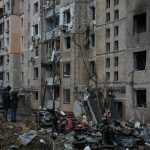
Meanwhile, Ukraine has in recent days been subjected to some of the largest and most intense aerial assaults since the beginning of the war, involving ballistic missiles, cruise missiles and large numbers of drones.
What is the objective?
There is another reason why the narrative of an impending Ukrainian victory has become especially prominent over the past ten days. It reflects an effort to influence two crucial decisions taken at the NATO summit in Ankara—both of which were ultimately approved.
The objective was to convince Trump that Ukraine now possesses the strategic initiative against Russia and that it is therefore in the West’s geopolitical interest to continue supporting Kyiv at the highest possible level.
Above all, two priorities were at stake.
The first was securing additional financial assistance through the German-backed initiative to provide Ukraine with €70 billion over 2026 and 2027.
The second, equally important, was obtaining American Patriot missiles to defend Kyiv against increasingly frequent and powerful Russian ballistic missile attacks—retaliation for Ukraine’s strikes on Russian infrastructure.
Trump remains frustrated with NATO—but praises Turkey
Donald Trump remains dissatisfied with NATO, particularly over what he sees as the Alliance’s failure to support the United States during its confrontation with Iran and Washington’s efforts to secure the Strait of Hormuz. European leaders, meanwhile, arrived at the summit deeply concerned that the gathering could descend into discord, hoping that Turkish President Recep Tayyip Erdoğan, who enjoys a close working relationship with Trump, would help keep the meeting on course.
That dynamic became evident when Trump openly praised Erdoğan while simultaneously signalling that Washington might reconsider its suspension of F-35 fighter jet deliveries to Turkey.
The prospect has caused considerable anxiety in Israel, where officials argue that Israel’s exclusive possession of the fifth-generation aircraft is essential to maintaining the regional military balance—or, more accurately, a balance that overwhelmingly favours Israel. At the same time, it is worth remembering that Israel remains the only country in the region widely believed to possess nuclear weapons, making the notion of Turkey using F-35s in an offensive campaign against Israel highly improbable, regardless of political tensions between the two countries.
An experienced politician and businessman, Trump also understands the importance of carefully calibrating political pressure. Rather than directing his frustration at the Alliance as a whole, he chose to single out Spain, criticising Madrid for previously refusing—more openly than most NATO members—to host American aircraft intended for operations connected to the conflict with Iran. Spain had also been among the most vocal European critics of Washington’s military campaign.
Other key allies, including Italy and France, adopted similarly cautious positions, yet largely escaped Trump’s criticism.
For Trump, however, NATO now serves another strategic purpose. The Alliance increasingly functions as a mechanism through which European allies are encouraged—or pressured—to purchase advanced American military equipment instead of European-made alternatives. NATO Secretary General Mark Rutte, who has reportedly been nicknamed “Trump’s whisperer” in some European diplomatic circles, has played an important role in facilitating this approach.
The Patriot dilemma
The renewed discussion over Patriot missiles for Ukraine deserves closer examination.
Earlier this year, the United States halted the delivery of Patriot systems that had already reached Europe and were awaiting transfer to Ukraine. The decision was driven by the rapidly deteriorating security situation in the Middle East.
Instead, Washington redirected those systems to protect American military bases in the Persian Gulf and to reinforce Israel’s air defences.
Yet developments have continued to evolve.
A new phase of confrontation between the United States and Iran appears increasingly possible. Trump has announced the prospect of further American strikes against Iranian targets, suggesting they could begin as early as the same evening, while adding that future decisions would depend on how events unfold.
Against that backdrop, a difficult question emerges: how can Washington simultaneously provide substantial numbers of Patriot missiles to Ukraine when the United States produces only around 600 interceptor missiles annually?
Ukraine would require thousands of interceptors if it hoped to provide comprehensive protection against Russia’s growing campaign of cruise missiles, ballistic missiles and, increasingly, hypersonic weapons—targets that remain difficult even for Patriot systems to intercept consistently.
Manufacturing Patriot missiles in Ukraine
Granting Ukraine a licence to manufacture Patriot missiles domestically could represent a significant shift.
Such production would most likely focus on the PAC-2 interceptor, rather than more advanced variants. Whether production could begin within two months, three months or even longer is ultimately less important than the broader strategic consequences.
For Ukrainian civilians living under constant missile attacks, every delay carries obvious human costs.
The more important question concerns Russia’s response.
The Kremlin stated ahead of the Ankara summit that it would closely monitor NATO’s decisions. Yet there is a considerable difference between monitoring developments and responding with concrete military action if those decisions cross what Moscow considers unacceptable thresholds.
Whether Russia would react forcefully to the establishment of licensed Patriot missile production inside Ukraine remains impossible to predict.
Moscow’s so-called “red lines” have repeatedly been crossed throughout the conflict without triggering the dramatic escalation that many observers had anticipated. Instead, Russia has generally responded with periods of intensified missile and drone attacks before reverting to its broader military strategy.
In many Western capitals, this restraint is increasingly interpreted as a sign of weakness, hesitation or an inability to escalate further.
That perception, in turn, encourages continued Western military support for Ukraine and reinforces Kyiv’s willingness to expand long-range operations against Russian territory.
Zaluzhnyi’s broader strategic message
It is precisely here that Valerii Zaluzhnyi’s assessment differs from the public messaging coming from President Volodymyr Zelensky and many of Ukraine’s European supporters.
As noted earlier, Zaluzhnyi appears to be looking beyond the daily headlines toward the long-term strategic balance.
Why he has chosen to express these views publicly is ultimately a question only he can answer. One possible explanation is domestic politics.
Widely regarded as the most credible potential challenger to Zelensky in any future presidential election, Zaluzhnyi may be positioning himself as a leader prepared to present Ukrainians with a more realistic assessment of the war’s trajectory.
If that is indeed his objective, it suggests he believes Ukraine’s political debate will eventually have to move beyond wartime messaging and confront the strategic realities facing the country.
At the same time, developments among Ukraine’s allies reveal that Western unity is becoming increasingly fragile despite the optimistic tone of NATO’s final declaration.
The divisions emerging within the Alliance may ultimately prove just as important as developments on the battlefield itself.
Conclusion
The Ankara NATO Summit strengthened Ukraine’s position, but it did not change the fundamental reality of the war. More money, weapons and air defence systems can help Kyiv resist Russia, yet they do not guarantee a decisive victory.
As Valerii Zaluzhnyi warned, the conflict is increasingly becoming a war of endurance, where the decisive factor will be economic strength, political stability and the ability to maintain international support.
At the same time, growing divisions within NATO over funding and long-term commitments reveal that Western unity cannot be taken for granted. The future of the war will depend not only on the battlefield, but also on political decisions in Washington, Moscow and European capitals.
For now, neither side appears capable of achieving a complete victory without enormous costs. The question is whether the conflict will move towards negotiations or enter another phase of escalation.