




Decades of US funding and joint weapons development have helped turn Israel into a major defence exporter, even as its growing arms industry raises questions over dependency and accountability.
There is a striking paradox at the heart of global defence procurement right now. Governments across Europe and Asia have publicly condemned Israeli military operations, suspended export licences, and hosted street protests demanding arms embargoes. Yet behind closed doors, their procurement officials have been quietly signing some of the most lucrative weapons deals in their countries’ recent history.
The result, confirmed in figures released by the Israeli Defence Ministry in early June 2026, is that Israel’s arms exports reached 19.2 billion dollars in 2025, a record for the fifth consecutive year, up nearly thirty per cent on the previous record set just twelve months earlier, and more than quadruple the figure from a decade ago.
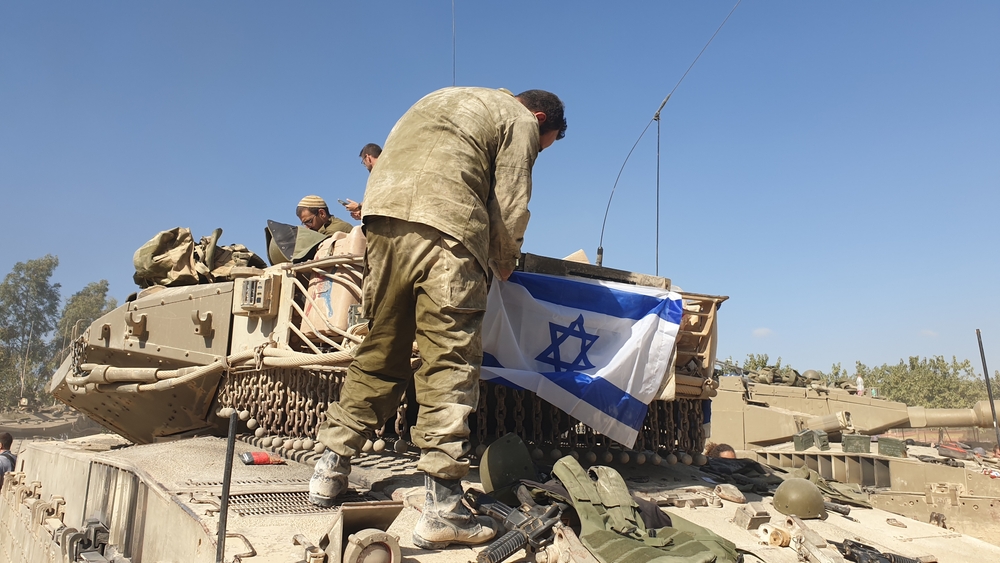
The scale of the expansion is extraordinary by any measure. Following the October 7, 2023, Hamas attack and the multi-front conflicts that followed, Israel’s defence sector entered a period of remarkable growth.
The number of defence-related startups in the country nearly doubled from 160 in July 2024 to 312 by April 2025, and the three largest companies, Israel Aerospace Industries, Rafael Advanced Defence Systems and Elbit Systems, between them now hold a combined order backlog approaching 90 billion dollars. Arms exports account for between 75 and 80 per cent of all Israeli weapons production, meaning the country’s defence industry is overwhelmingly export-dependent, and therefore heavily motivated to keep winning contracts regardless of the political climate surrounding individual buyers.
The product mix tells its own story. Missile, rocket and air defence systems led exports at 29 per cent of total deal volume in 2025, a reflection of demand driven by Russia’s war in Ukraine and the broader anxieties it has generated across Europe and the Indo-Pacific.
Surveillance and optronic systems surged from six per cent of exports in 2024 to 22 per cent in 2025, a category that includes battlefield observation tools and precision-targeting equipment with obvious applicability across a wide range of conflicts. Europe accounted for 36 per cent of the total, with Asia-Pacific close behind at 32 per cent, a notable shift from 2024 when Europe alone absorbed more than half of Israel’s arms sales.
What the export figures do not immediately reveal is the degree to which American financial and technological support underlies Israel’s commercial success. The United States provides Israel with approximately 3.8 billion dollars annually in military grant aid under the ten-year Memorandum of Understanding signed in 2016, making it by far the largest recipient of American military assistance.
Much of this funding flows directly into research and development programmes that have produced the very systems Israel is now selling to third parties. The Arrow missile defence system, which Israel has sold to Germany in two separate deals collectively worth roughly 6.5 billion dollars, was co-developed with American funding and requires American approval for each export to a new customer.
The Iron Dome system, of which the SkyHunter variant is now being produced at a joint Raytheon-Rafael facility in Arkansas, similarly reflects deep American technological and financial investment. Security analysts suggest that Washington has, in effect, subsidised the development costs that Israeli companies are now recovering through export revenues, while American manufacturers compete in a market partly shaped by their own government’s generosity to a strategic partner.
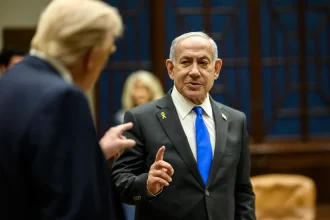
A series of legislative proposals currently before the US Congress would deepen this integration further. A provision under consideration in the National Defence Authorisation Act for fiscal year 2027 would more closely integrate US and Israeli military supply chains, creating additional pathways for Israeli companies to access American procurement opportunities and embed their technologies more deeply into American defence infrastructure. Prime Minister Benjamin Netanyahu has personally endorsed the proposal, describing it as one of his priorities.
Beyond the financial returns, Israeli officials are explicit about the geopolitical function of arms exports. Supplying critical defence systems creates long-term dependencies that make recipient governments less likely to take positions that antagonise Israel in international forums. Romania signed a 2.3 billion dollar deal for Spyder air defence systems this week, while Greece recently committed around 740 million dollars to Israeli-made rocket artillery systems.
Germany has now signed more than 10 billion dollars in Israeli defence contracts over the past two years, a relationship that continued even through a temporary arms embargo Berlin imposed on weapons going in the other direction. Western officials and regional observers note that this dynamic creates structural incentives for governments to mute their public criticism, since publicly confronting a country while depending on it for air defence systems is an uncomfortable position to sustain.
The critical questions going forward are whether the proposed NDAA provision deepens US-Israeli defence integration as advertised, and how European governments resolve the tension between their stated ethical concerns and their growing operational dependency on Israeli systems.
Watch also for whether the combined order backlog of 90 billion dollars translates into sustained export growth through 2026 and 2027, or whether political pressures eventually constrain deals in ways that rhetoric alone has so far failed to do. For now, the gap between what governments say about Israel and what they buy from it is widening, not narrowing, and Washington’s financial footprint beneath that market is larger than the headline figures suggest.