


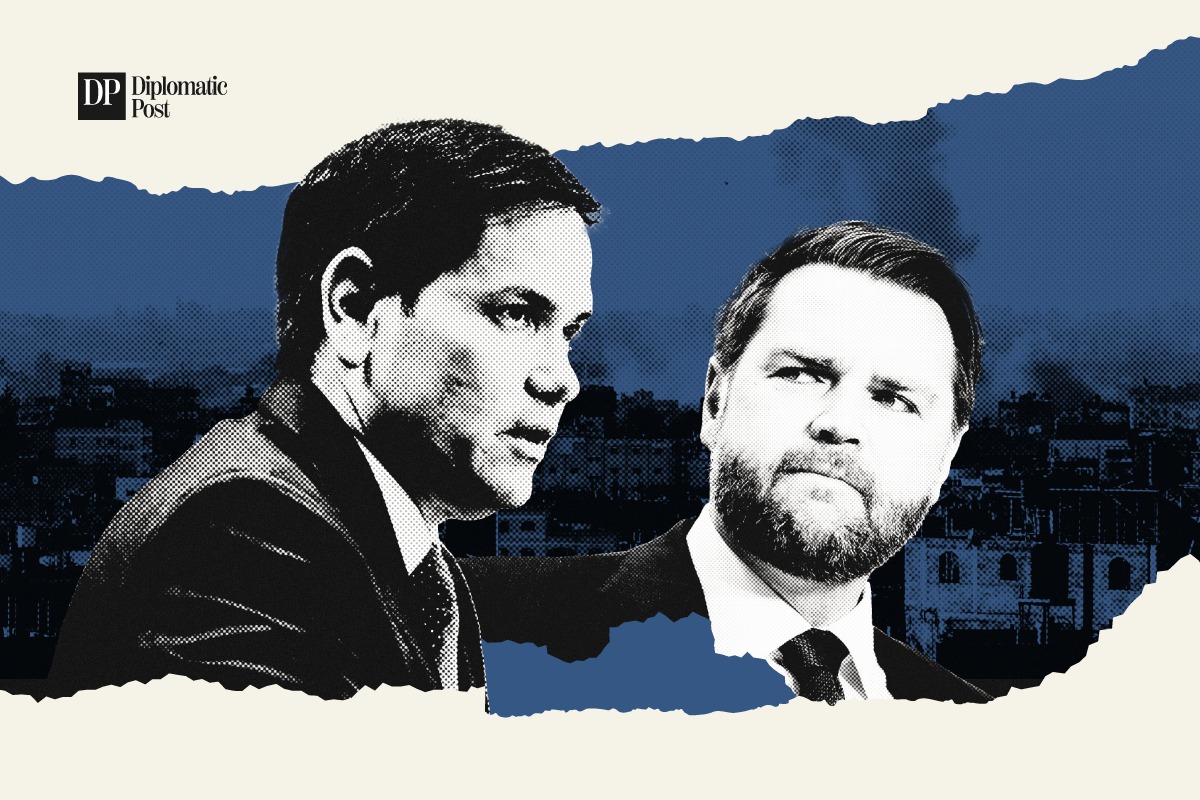


Vance’s decision to chase the Iran file may have handed Rubio the safer ground and left his own presidential ambitions tied to a war few Americans wanted.
When the first American bombs fell on Iran on 28 February, JD Vance found himself in the most uncomfortable position of his political career.
He had built his entire public identity around one conviction: that foreign wars were a catastrophic mistake, that the American working class had been sent to die in other countries’ conflicts for the benefit of elites who would never sacrifice their own sons, and that a new Republican Party should stand firmly against the interventionist impulse.
He had said all of this explicitly and repeatedly. Then his boss launched a war, and Vance not only fell into line but asked, twice, to be sent in as its lead negotiator.
Rubio declined. He was sceptical that a good deal was achievable and, according to officials familiar with internal administration deliberations, saw little political upside in owning a process that could easily become a trap. Vance, who wanted to demonstrate his foreign policy credentials to an audience he would need in 2028, pushed Trump to give him the role, and Trump agreed.
A retired American diplomat with experience in the first Trump administration described the assignment plainly: it was “a pig in a poke” and “a loser job.”
The same source noted that Trump’s semi-joking public comment that he would blame Vance if the talks failed suggested that the vice president had been, whether knowingly or not, set up for failure.
The Iran war has since done to Vance’s presidential prospects precisely what the Iraq war did to the Democrats who supported it in 2002 and paid for it in every election that followed. His odds on prediction markets for the 2028 Republican presidential nomination fell from 54 per cent to 37 per cent after the war began. He and Rubio are now tied at around 20 per cent on the general election market.
His average unfavourable rating, tracking across hundreds of polls, has climbed to 44.7 per cent. The approval rating decline he has experienced since the war began is described by polling analysts as historically significant. None of this is because Vance has done anything obviously wrong. It is because he attached himself to a conflict that is deeply unpopular with the exact voters who once made him the favourite for the next Republican nomination.
The Trap Rubio Left Open and Vance Walked Into
The political geometry of the situation is striking for its clarity. Rubio, the hawkish son of Cuban immigrants who has never expressed scepticism about American military power abroad, had a coherent ideological reason to support the Iran war. He did so, unambiguously and publicly.
The risk for Rubio is that if the war goes badly enough, its association with him becomes a liability. But Rubio at least owns his position honestly. Vance’s problem is the opposite. He owns a position that contradicts everything he ever said, in a war he did not believe in, that he then volunteered to manage, and that is failing to produce the clear victory that might have justified the contradiction.
The memorandum of understanding Vance negotiated with Iran following the ceasefire has been widely criticised, including within Republican circles, as lopsided in Tehran’s favour. Iran retained the ability to impose tolls on maritime traffic through the Strait of Hormuz under certain provisions. Its proxies remain operational across the Middle East.
Its stockpile of weapons-grade nuclear material has not been fully accounted for.
Senior Republican senators, speaking anonymously to political reporters, warned that the deal “could turn out very bad.” One described the risk plainly: Vance could become the fall guy for a war he did not want and a deal that did not deliver. A congresswoman summed up the binary with no ambiguity: “There’s a chance he can become the fall guy, a chance he could become the hero.”
The prospect of becoming the hero now appears to be receding. A second round of talks in Switzerland followed the Pakistan negotiations, but exchanges of fire between the United States and Iran continued even after the ceasefire was signed.
The Strait of Hormuz deal held for days before Iranian vessels struck two ships in the waterway. Subsequent talks have been handed to Jared Kushner and Steve Witkoff, with Vance notably absent, suggesting a quiet distancing from a process that is not going well.
What the Coming Months Will Decide
The Iran war will define Vance’s political future in 2028 through one of two outcomes. If a durable settlement is reached that can be credibly presented as a success, and if Iran genuinely moves away from nuclear weapons development in a verifiable way, Vance can campaign as the man who ended the war through direct engagement when the hawks would have kept it going indefinitely.
That narrative would work for him. The voters who liked him originally valued toughness combined with restraint, and a successful peace deal would be consistent with both. But if the ceasefire collapses, if Iran resumes full nuclear enrichment, if the Strait of Hormuz deal unravels and if the war is remembered as expensive, inconclusive and dishonestly managed, Vance will own the outcome in a way that Rubio has been careful to avoid.
Republican strategists who advised on Rubio’s 2016 presidential campaign have already drawn the Iraq comparison explicitly, predicting that Iran will be a flashpoint in 2028 in the same way the Iraq war defined Democratic primary politics in 2004 and 2008. The parallel is precise.
Then as now, the question is not simply whether the war was right or wrong. It is the candidate who can credibly claim they saw the problem coming. Rubio always supported this war. Vance said he would not fight other countries’ wars, then went to Pakistan to negotiate one. That is the contradiction he will need to resolve before the first Republican primary vote is cast.