




Billions Allocated for Drones and Artificial Intelligence Systems
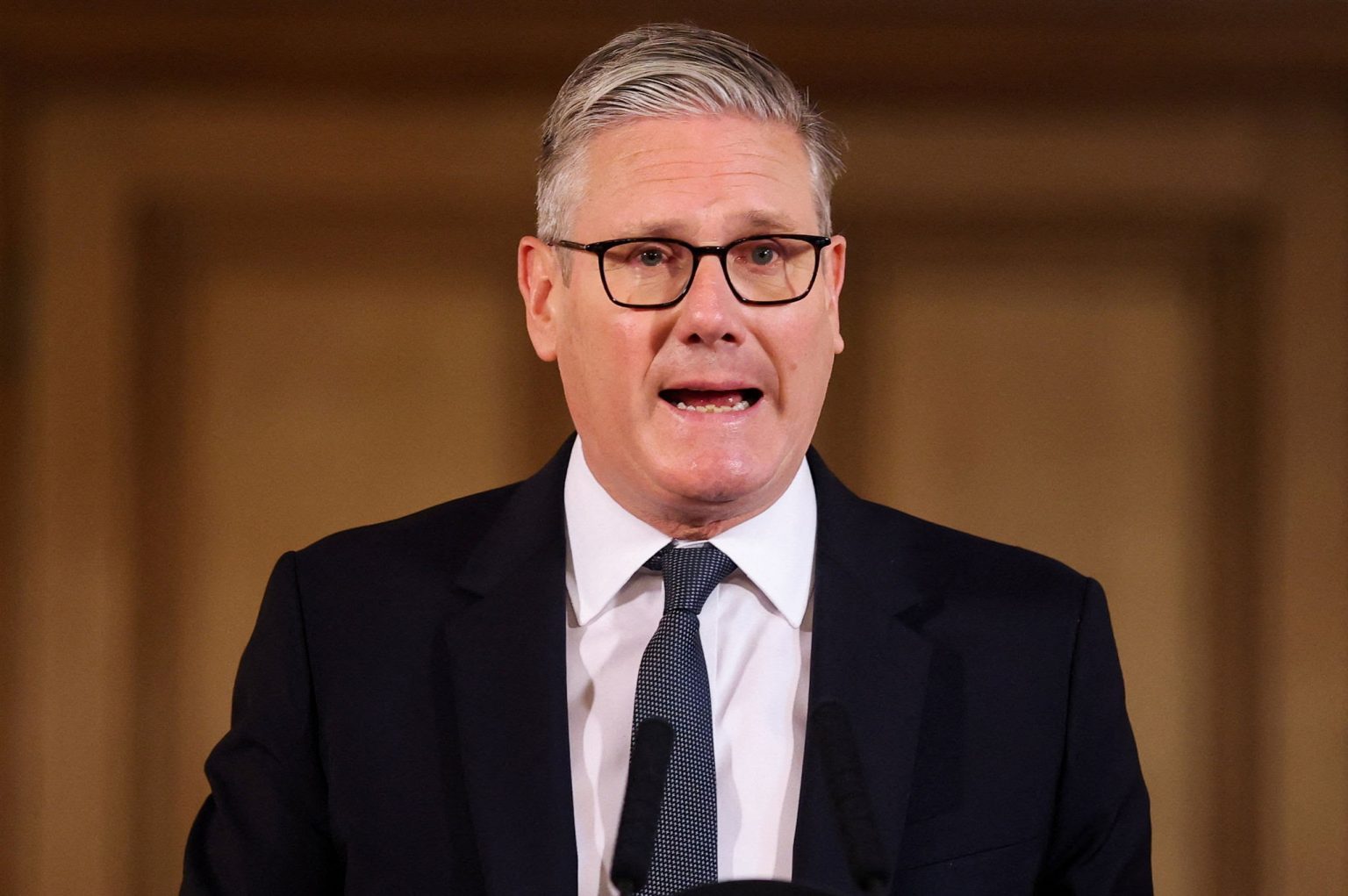
Outgoing British Prime Minister Keir Starmer today unveiled a major defense investment plan that will increase UK military spending from the current 2.3% of GDP to 2.7% by the end of the decade, with the goal of reaching 3% of GDP during the next parliamentary term.
Starmer said defense investment over the next four years will total nearly £300 billion (approximately €350 billion), with annual defense spending set to rise from £54 billion to nearly £80 billion by 2029, according to Sky News.
He added that total defense-related spending, including associated costs, will reach 4.2% of GDP, still below NATO’s longer-term target of 5% of GDP.
The outgoing prime minister said the world is facing its most serious security challenges in decades, citing the wars in Ukraine and the Middle East, rising geopolitical tensions, and growing disinformation campaigns.
He stressed that NATO is more important than ever and urged European countries to assume greater responsibility for their own defense.
The plan includes replenishing ammunition stockpiles, modernizing the armed forces, and investing £5 billion in drones and autonomous weapons systems—described by Starmer as the largest British investment in these technologies to date.
According to Starmer, the new defense strategy will enable the creation of a “hybrid” Royal Navy, the modernization of the Royal Air Force through unmanned aircraft that will operate alongside Typhoon fighter jets, and the strengthening of the British Army, making it “ten times more lethal.”
The strategy also includes investments in long-range missile systems, armored vehicles, and counter-drone technologies, as well as £500 million for new equipment for commandos and special forces and an additional £115 million for the development of artificial intelligence-based military technologies.
Starmer said the program will create nearly 60,000 jobs, with British companies, workers, and innovators receiving priority. It also establishes a £50 billion export support fund for Britain’s defense industry.
The outgoing prime minister said the strategy would contribute to building a “more European NATO” by strengthening the military capabilities of European allies without undermining transatlantic relations with the United States.
He noted that the UK is jointly developing precision-guided weapons with Germany, while cooperating with Norway on the construction of frigates designed to track Russian submarines. In addition, £400 million will be allocated to joint defense procurement projects with allied nations.
“This plan represents our best assessment of what the country needs to meet the challenges of the current moment, and it provides a foundation on which I am confident my successor will continue to build,” Starmer said.
He later added that he has no doubt future Labour governments will continue increasing defense spending.
“I am absolutely convinced this is a platform upon which whoever comes after me will be able to continue building,” the outgoing prime minister said.
Starmer also argued that the outcome of the war in Ukraine will shape Europe for decades to come, emphasizing the need to increase pressure on Russia by strengthening Ukraine’s defenses and imposing additional economic measures against Moscow.
Responding to a journalist’s question about whether the new strategy is sufficient to deter potential Russian aggression against NATO, Starmer said he was “completely confident,” pointing to lessons learned from the war in Ukraine and the conflicts in the Middle East.
He also confirmed that several infrastructure and energy projects would be postponed or canceled in order to free up funding for defense, stressing that “there are no easy solutions” and that difficult political choices are unavoidable.
NATO Secretary General Backs Starmer’s Plan
NATO Secretary General Mark Rutte welcomed the UK’s plans to increase defense spending.
I welcome the UK’s Defence Investment Plan. Stronger UK defence makes us all safer. This is a good step towards reaching the 3.5% of GDP on defence agreed in The Hague last year
— Mark Rutte (@SecGenNATO) June 30, 2026
Defence spending and production will be an important focus of the #NATOsummit next week
“I welcome the UK’s defense investment plan. A stronger British defense makes all of us safer. This is an important step toward reaching defense spending of 3.5% of GDP, as agreed in The Hague last year,” Rutte wrote on the social media platform X.