


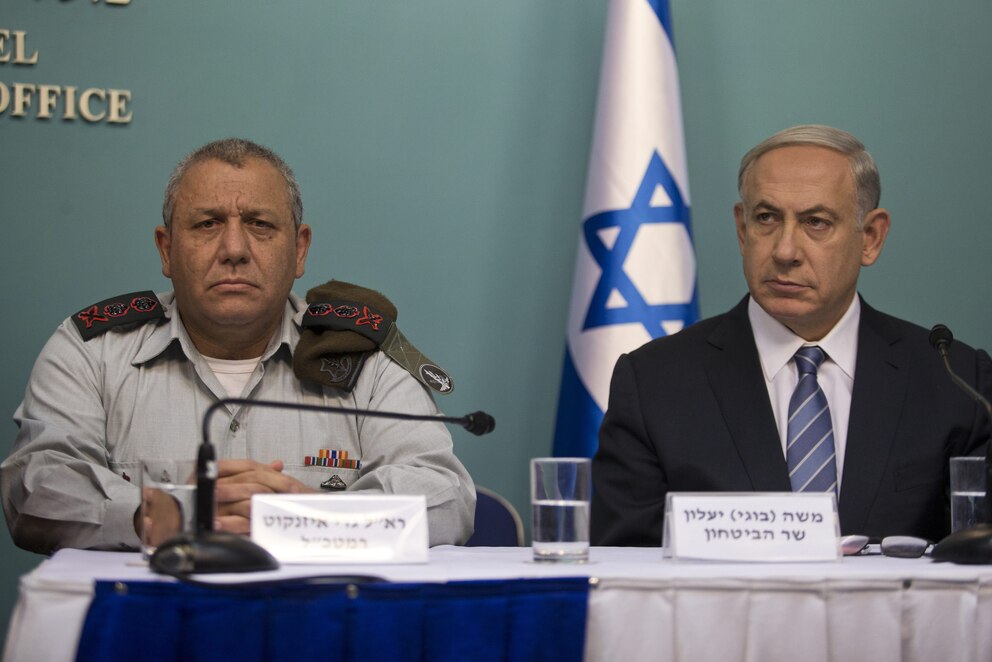


A new political challenger to Prime Minister Benjamin Netanyahu is emerging in Israel. Former Israeli military chief Gadi Eisenkot has seen a surge in public support and, according to the latest opinion polls, is posing the most significant threat to Netanyahu’s Likud party ahead of parliamentary elections scheduled for late October.
A New Rival Takes Shape
Israel’s political landscape is increasingly pointing to a new principal opponent for Benjamin Netanyahu.
Former Israel Defense Forces (IDF) Chief of Staff Gadi Eisenkot, who founded his own political party, Yashar (“Straight” or “Honest”), last year, has rapidly gained momentum. Recent polls suggest his party is now seriously challenging the long-standing dominance of Netanyahu’s Likud ahead of the upcoming elections.
The shift in political dynamics is also reflected in Likud’s campaign strategy. In recent weeks, the ruling party has focused much of its messaging on attacking Eisenkot. Through social media videos and campaign materials, Likud has attempted to portray the former military commander as a politician who could only form a government with the support of Arab political parties.
One campaign post featured the slogan, “No Gadi Without Tibi,” alongside an AI-generated image showing Eisenkot standing with Arab lawmaker Ahmad Tibi outside Israel’s parliament.
Polls Show a Tight Race
Only a few months ago, Eisenkot’s Yashar party was polling in the single digits. In recent weeks, however, support has risen sharply.
According to a Channel 12 poll, Yashar would win 21 seats in Israel’s 120-member Knesset, while Likud would secure 23. A political alliance led by former prime ministers Naftali Bennett and Yair Lapid would win 18 seats.
When asked who would make the better prime minister, 38 percent of respondents chose Eisenkot, while 36 percent preferred Netanyahu.
A Stark Contrast to Netanyahu
Political analysts argue that one of the main reasons behind Eisenkot’s rise is that he represents a completely different style of leadership.
While Netanyahu is known for his forceful public appearances and decades of political experience, Eisenkot has built his reputation as a calm, measured military strategist.
Their personal backgrounds are equally different. Netanyahu comes from a prominent family and served in Israel’s elite Sayeret Matkal special forces unit. Eisenkot, by contrast, is the second of nine children born to Moroccan Jewish immigrants. He grew up in Tiberias and Eilat, far from Israel’s traditional centers of political power.
Ironically, Eisenkot served as IDF Chief of Staff from 2015 to 2019 after being appointed by Netanyahu himself.
The Gaza War Shaped His Political Path
Eisenkot entered politics in 2022 alongside Benny Gantz. Following Hamas’ October 7, 2023 attack on Israel, he joined Netanyahu’s wartime cabinet.
Over time, he became one of the government’s most outspoken critics regarding the conduct of the war in Gaza. Eisenkot argued that the government lacked both a clear military strategy and a credible plan to end the conflict or secure the release of Israeli hostages.
His criticism carried additional weight because of his personal tragedy. In December 2023, his youngest son, Gal Eisenkot, was killed while fighting in Gaza. Two of his nephews were later also killed during the conflict.
In June 2024, Eisenkot and Gantz resigned from the wartime cabinet over disagreements with Netanyahu’s policies. A year later, Eisenkot launched his own political movement.
Likud Intensifies Its Attacks
As Eisenkot’s popularity has grown, so too has the intensity of the campaign against him.
Recent videos have mocked his English-language skills while accusing him of lacking the resolve to confront Iran, seeking to portray him as a weaker leader than Netanyahu.
Israel’s pro-government Channel 14 has also accused Eisenkot of being too lenient toward Hezbollah during his military career. Eisenkot has rejected the allegations and is reportedly considering legal action.
The Road to Power Remains Uncertain
Although opinion polls indicate that Eisenkot has become Netanyahu’s strongest political challenger in years, forming a governing coalition remains a formidable task.
Even if opposition parties win enough parliamentary seats, assembling a stable coalition that includes left-wing, right-wing, centrist, and Arab parties could prove extremely difficult.
Nevertheless, analysts believe Eisenkot represents a fundamentally different challenge from Netanyahu’s previous rivals.
As The Economist’s Israel correspondent Anshel Pfeffer argues, many of Netanyahu’s past opponents attempted to emulate his political style. Eisenkot, by contrast, derives his political appeal from being almost the complete opposite of the longtime prime minister.
Still, the differences between the two men are more about leadership style than national security policy. Eisenkot spent years as one of the architects of Israel’s military strategy, meaning the policy gap between him and Netanyahu is considerably narrower than their contrasting public personas might suggest.