




For fifty years, the dollar ruled the world because America controlled the energy that powered it. Now it wants to rule the world because America controls the intelligence that runs it.
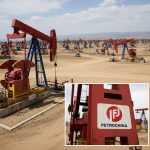
In 1974, Henry Kissinger and the US Treasury engineered one of the most consequential quiet deals in the history of international finance. Saudi Arabia would price its oil in dollars. The dollar surpluses that flowed to Riyadh would be recycled into American Treasury bonds. In return, Washington would provide a security umbrella covering the Gulf. The arrangement did not require a treaty or a public announcement. It required only that the logic held: countries that needed oil needed dollars, countries that held dollars bought American debt, and America used the proceeds to fund the most powerful military the world had ever seen. The petrodollar system, as it became known, gave the United States what the French called its “exorbitant privilege” — the ability to borrow cheaply, run deficits without consequences and project power globally, all because the world could not do without the currency it printed.
That system is now weakening, and a new one is forming in its place. The emerging architecture does not run on oil. It runs on artificial intelligence, the chips that power it, the data centres that house it and the American companies that sell access to it. A growing body of financial and strategic analysis describes this development as the rise of the “AI dollar” or “compute dollar” a framework in which American technology exports, particularly in AI infrastructure, are beginning to replicate the monetary leverage that oil exports once provided. The implications for global power, for America’s rivals and for the countries caught between the two, are as significant as anything that came out of the original Kissinger arrangement.
How the Petrodollar Worked and Why It Is Cracking
To understand what is replacing the petrodollar, it helps to understand what is breaking it. The original system rested on three pillars: oil priced universally in dollars, surplus revenues recycled into American financial markets, and a US security guarantee credible enough that Gulf producers accepted the arrangement. Each of those pillars is now under strain. As of early 2026, approximately 80 per cent of global oil trade continues to be settled in dollars, down from near-universal participation in earlier decades. China, the world’s largest oil importer, has been systematically building the financial infrastructure to settle energy trades in yuan, using its CIPS payment system, the Shanghai International Energy Exchange and bilateral agreements with producers ranging from Saudi Arabia to Russia. Gold prices broke above 5,400 dollars per ounce in March 2026, reflecting accelerating central bank diversification away from dollar reserves. France moved 129 tonnes of gold from New York to Paris in the seven months to January 2026. Germany completed a similar repatriation of 674 tonnes stored in New York and London.
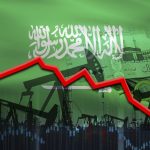
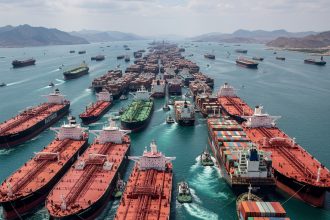
The 2026 Iran war dealt the petrodollar a direct structural blow. Gulf states whose energy infrastructure was struck by Iranian missiles states that had been part of the implicit security-for-currency bargain for fifty years refused to allow American aircraft to use their territory and airspace for offensive operations. The countries whose cooperation sustained the petrodollar system were publicly signalling that American protection was no longer worth the price it implied. Saudi Arabia, its Aramco terminal at Yanbu struck by Iranian drones and its oil exports disrupted, was simultaneously drawing down the very dollar reserves that petrodollar recycling had accumulated. The security-for-currency bargain that Kissinger constructed did not break. But the cracks that had been widening for years became visible to everyone.
The Architecture of What Comes Next
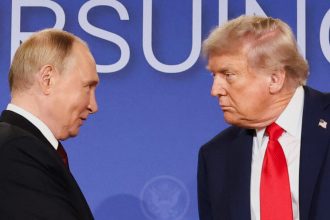
Into this deteriorating landscape, the United States has been quietly constructing a replacement mechanism. The Trump administration has described it explicitly as a “Petro-AI-Dollar” concept, linking access to American artificial intelligence hardware and software to continued engagement with the dollar system. The underlying logic follows the petrodollar template remarkably closely. Oil was the indispensable input of the 20th-century industrial economy. Compute, specifically the advanced semiconductors and AI infrastructure that American companies design and produce, is rapidly becoming the indispensable input of the 21st-century digital economy. Countries that need advanced AI capabilities need access to American chips. Countries that receive that access, in the current arrangement, accept conditions that bind them into the American strategic orbit.
The evidence for this architecture is already visible in specific deals that have been struck over the past eighteen months. The United Arab Emirates signed a 1.4 trillion dollar investment commitment to the United States in exchange for access to NVIDIA hardware. That access was granted only after Abu Dhabi’s technology group G42 cut its ties with Chinese vendors. Malaysia received streamlined defence trade and preferential technology licensing in exchange for export control alignment and sanctions cooperation. South Korea secured 25 billion dollars in military purchases and, significantly, approval for nuclear submarine technology. Qatar’s 38 billion dollar security partnership includes burden-sharing arrangements at Al Udeid Air Base. The pattern across each of these deals is consistent: access to American AI infrastructure is granted in exchange for strategic alignment, and that alignment comes with monetary dimensions that reinforce dollar usage.
The strategic logic underlying this architecture has been articulated clearly by researchers at one of Washington’s leading security institutions. The petrodollar system provided 50 years of monetary advantage that helped the United States win the Cold War, manage the 2008 financial crisis and fund the industrial rebuilding of American manufacturing. The compute-dollar system, they argue, offers comparable advantage if it is designed correctly. Where the petrodollar system reinforced itself through recycling oil producers held dollars, bought Treasuries, kept American borrowing costs low the compute-dollar system reinforces itself through integration. Once a country builds its AI infrastructure on American terms, using American chips, American cloud platforms and American model providers, the cost of switching to a rival system becomes prohibitive. Interoperability becomes lock-in, which is exactly what the petrodollar achieved for a generation.
China, the Challenger
The country that understood the petrodollar’s strategic function most clearly, and that has been working hardest to escape its logic, is China. Beijing’s response to the AI dollar has two parallel tracks. The first is domestic: an enormous, state-directed investment programme in semiconductor manufacturing, AI model development and the training infrastructure that underpins both, designed to reduce the degree to which Chinese AI capabilities depend on American components. The second is international: a campaign to offer countries in the Global South access to Chinese AI infrastructure as an alternative to American access, without the strategic conditions that American technology deals now carry.
The limitations of China’s challenge are real and should not be overstated. American AI companies remain substantially ahead of their Chinese equivalents in frontier model performance. American semiconductor design, particularly at the most advanced nodes, has no near-term Chinese peer. The US dollar still accounts for approximately 58 per cent of global foreign exchange reserves, according to IMF data for late 2025, while the yuan accounts for roughly 3 per cent. The SWIFT payment network processes transaction volumes that dwarf the Chinese CIPS alternative. The dollar’s advantage in deep, liquid financial markets, legal predictability and decades of institutional trust cannot be replicated quickly by any rival.
But the trend lines matter as much as the current position. As one authoritative assessment noted, a new competitive order is taking shape as major powers seek to secure their spheres of interest. The weaponisation of the dollar through sanctions, asset freezes and payment system exclusions has accelerated the search for alternatives in a way that the dollar’s pure economic appeal could never have produced. Countries are not abandoning the dollar because yuan or yuan-based systems are superior. They are diversifying because the demonstration that dollar-denominated assets can be frozen has changed the risk calculation for every government that holds them.
What the Coming Months Will Reveal
The AI dollar system is not yet formalised. It is a strategy in formation, visible in the structure of bilateral deals rather than in a single declared architecture. Its durability will depend on whether American semiconductor leadership is maintained as China’s domestic chip programmes mature, whether the political conditions attached to AI infrastructure access prove acceptable to the middle powers Washington is courting, and whether the dollar’s financial advantages survive the fiscal pressures that high American debt levels and rising interest payments are imposing.
The Ankara NATO summit in July will offer one early test. The billions of dollars in new defence contracts to be announced there are part of the same architecture: American technology, American standards, American industrial output, underpinning a security system that reinforces dollar usage across 32 allied economies. Whether that reinforcement is enough to compensate for the cracks the Iran war opened in the Gulf petrodollar system is the question that will define the monetary landscape of the next decade. Kissinger’s deal lasted fifty years. The question is not whether its replacement is being constructed. It clearly is. The question is whether it will last as long, and whether the rest of the world will accept the terms.