



America’s political left is winning elections it was not supposed to win. Understanding why requires looking not at the left, but at the conditions that produced it.
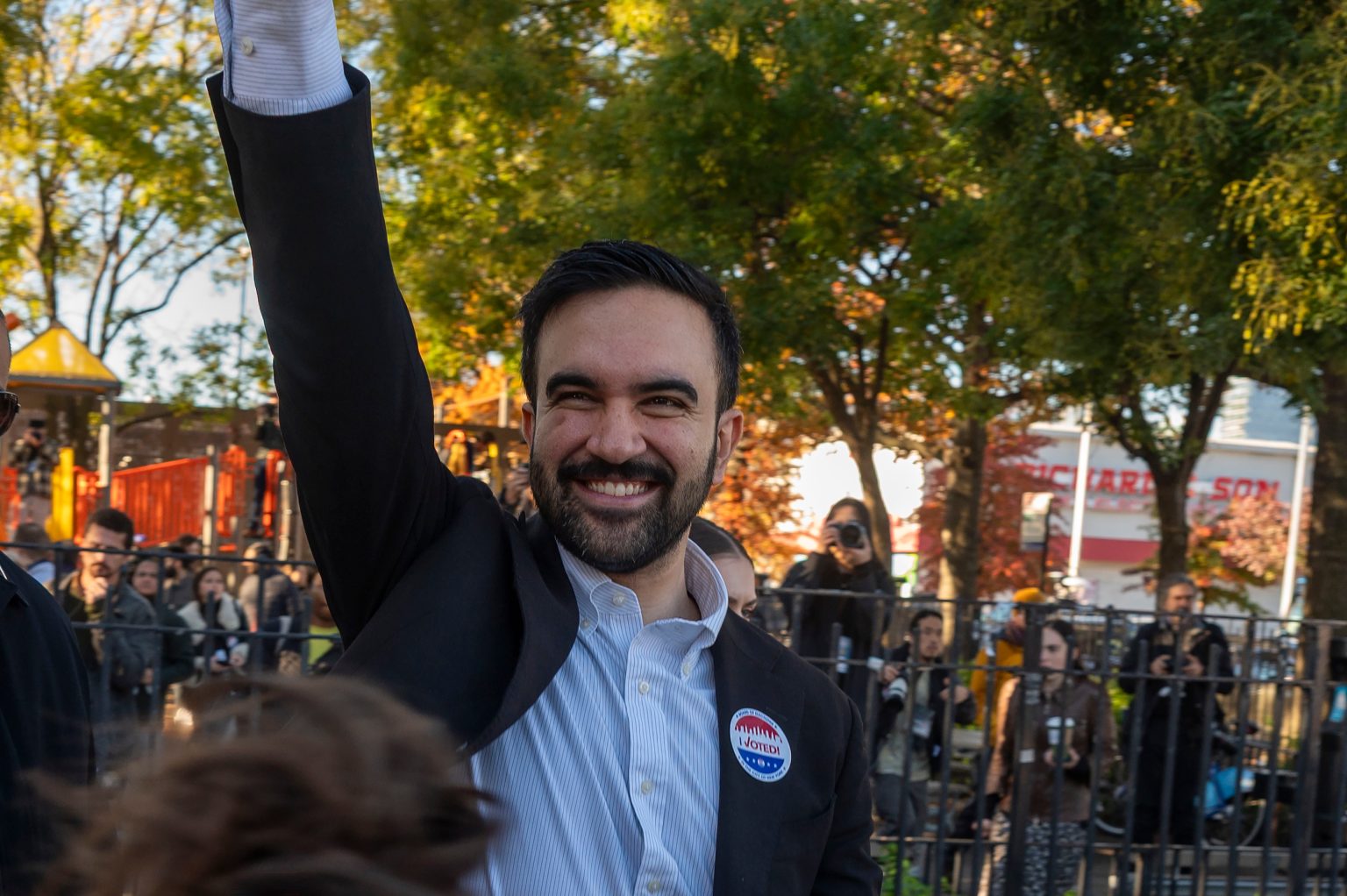
On New Year’s Day 2026, Zohran Mamdani stood in the abandoned City Hall subway station in New York and took the oath of office as the 112th mayor of America’s largest city. He was sworn in by Bernie Sanders, then sworn in again at a public ceremony before thousands of supporters braving January cold. He was 34 years old, a former housing counsellor and rapper, a member of the Democratic Socialists of America, the first Muslim and first South Asian mayor in New York’s history. His campaign had promised rent freezes, free city buses, universal childcare, city-owned grocery stores and tax increases on the wealthy. He had defeated Andrew Cuomo, a former state governor backed by the Democratic Party establishment and endorsed by Donald Trump, in what Sanders described at the inauguration as “the biggest political upset in modern American history.”
Six months later, the political force that Mamdani represents is no longer a New York story. His endorsed candidates swept congressional primary races in June, defeating incumbent Democrats including the chair of the Congressional Hispanic Caucus. Democratic socialists have advanced to mayoral runoffs in Los Angeles and won the Democratic primary for mayor in Washington DC, where the winner would govern in the shadow of a White House that has threatened federal intervention if a “crazy socialist” takes power in the nation’s capital. Bernie Sanders is touring the country, drawing the largest crowds of his career, mentioning Mamdani in every speech. A Fox News poll conducted in March found a record 38 per cent of American voters saying it would be a good thing for the country to move toward socialism, up from 32 per cent in 2022 and 18 per cent in 2010.
The question of whether socialism is coming to America has become, in 2026, more genuinely interesting than at any point since the 1930s. The answer is complicated, contested and revealing of something deeper than any single election result.
What Is Actually Happening and Why
The first thing to understand is what “democratic socialism” in the American context actually means. It does not mean the nationalisation of industry in the Soviet or Cuban sense. It does not mean a command economy or the abolition of private property. Mamdani, repeatedly and publicly, has rejected the label of communist that Trump attached to him. What he and his allies describe as democratic socialism is closer to the social democratic tradition of Scandinavian Europe: robust public services, a higher minimum wage, housing intervention, healthcare access and redistribution from wealthy individuals and corporations to working families through taxation. It is the politics of the post-war consensus in Britain or Germany, repackaged for an American context in which those ideas have historically been treated as radical.
Why is this politics gaining ground now? The structural answer is the one that polling consistently reveals. American capitalism, as experienced by younger generations, has delivered rising costs and stagnant wages in the same period that it has delivered spectacular wealth concentration at the very top. Millennials and Generation Z entered adulthood through the wreckage of the 2008 financial crisis, accumulated student debt in a system that promised mobility and delivered precarity, and watched housing costs reach levels that make home ownership a generational fantasy for millions of people while asset owners grew wealthy simply from holding what they already had. The economic system these generations have experienced is one in which the rewards flowed primarily to the already wealthy. The politics they are gravitating toward is a rational response to that experience.
The political catalyst is Trump. The democratic socialist movement received its first major boost after the 2016 election, when DSA membership surged as voters who had hoped the establishment Democratic party would hold back the right instead watched it lose to it. It received a second surge after 2020, and a third after 2024. A national co-chair of the Democratic Socialists of America put the logic plainly: “More people are having to work multiple jobs or more hours to make ends meet, just to deal with those costs. Meanwhile, people see what the federal government is doing: investing more in militarism, giving trillions of dollars in tax cuts to the already wealthiest.” The Iranian war of 2026, deeply unpopular at home, has extended this sense that a federal government exists to serve interests other than those of working people. The harder Washington leans on behalf of the wealthy and the powerful, the more the politics of redistribution gains traction among those who feel excluded from its benefits.
The Limits of the Moment
The rise of democratic socialism as a political force inside the Democratic Party does not mean that America is about to become a socialist country. The structural obstacles are formidable and should not be minimised. American constitutional design distributes power across fifty states, a federal legislature with extraordinary inertia, and a judicial system that has historically protected property rights against redistributive political programmes. The Senate’s composition gives disproportionate weight to smaller, more rural states where progressive politics have less purchase. Mamdani’s victories have come in New York City, where registered Democrats outnumber Republicans by a margin of more than five to one. His candidates’ success in congressional primaries does not translate automatically into general election victories in competitive districts where the Republican Party will seek to make every socialist a weapon against every Democrat on the ballot.
Establishment Democrats have said so plainly. House Minority Leader Hakeem Jeffries pointedly declined to celebrate Mamdani’s congressional victories. The former chair of the Democratic National Committee posted publicly that people who “hate the Democratic Party” should not run on its nomination. Republican strategists, by contrast, are openly delighted: one party official described the results as giving Republicans “a pretty potent set of weapons” against Democrats in battleground seats. The comparison to the “defund the police” moment is instructive — a policy position that had genuine support within the party’s activist base but that played catastrophically in persuadable districts and was used to devastating effect in advertising against Democratic candidates who had made no such pledge themselves.
There is also the question of delivery. Mamdani’s platform made specific and ambitious promises: fare-free buses, rent freezes, universal childcare. New York City is large, complex, financially constrained and beholden to both state and federal frameworks that a mayor cannot simply override. The degree to which his administration can translate radical campaign commitments into visible policy outcomes in the first term will determine whether the movement consolidates around governance or fractures under the weight of reality. Political movements that run on economic anger sustain themselves either through victories that deliver tangible change or through opposition that renews the grievance. Delivery is considerably harder than protest.
What November Will Reveal
The November 2026 midterm elections will provide the first large-scale test of whether the democratic socialist wave is a durable political realignment or a cycle of primary activism that fades in general elections. The structural position is precarious. Trump’s approval ratings have fallen significantly, driven largely by economic anxiety and the unpopularity of the Iran war, and that environment should theoretically favour Democratic candidates. But a Democratic Party whose face is Mamdani, whose brand is socialism in a country that remains ideologically more centrist than its primary electorates, and whose candidates in swing districts must run against Republican advertising that will use every New York primary result, faces a genuine tension between energising its activist base and winning the voters it needs beyond it.
For Mamdani personally, the next months will test whether the national profile he has built translates into influence beyond New York or becomes the kind of political phenomenon that the establishment learns to contain and isolate. Sanders has been here before: a candidate whose ideas moved the conversation, whose supporters filled arenas, and who nonetheless could not break through in the places where the Democratic Party’s presidential nomination was decided. The difference, supporters argue, is that a movement is always larger than one candidate, and the primary wins of June 2026 show that the movement now has more than one face.
The honest assessment is that America is not becoming socialist, and probably will not. What it is doing is something almost as significant: having a serious, contested argument about what capitalism should be required to deliver to ordinary people, and producing political figures who are winning power while demanding more. That argument is not going away. The conditions that produced it inequality, housing unaffordability, healthcare costs, student debt, and the visible enrichment of a small class while the majority stands still have not changed. The politics they generate will not either.