




Washington and Tehran have agreed to a fragile framework reopening Hormuz and restarting nuclear talks, but the asymmetry of concessions suggests a geopolitical bargain still under construction rather than a settlement.
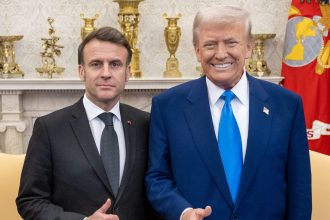
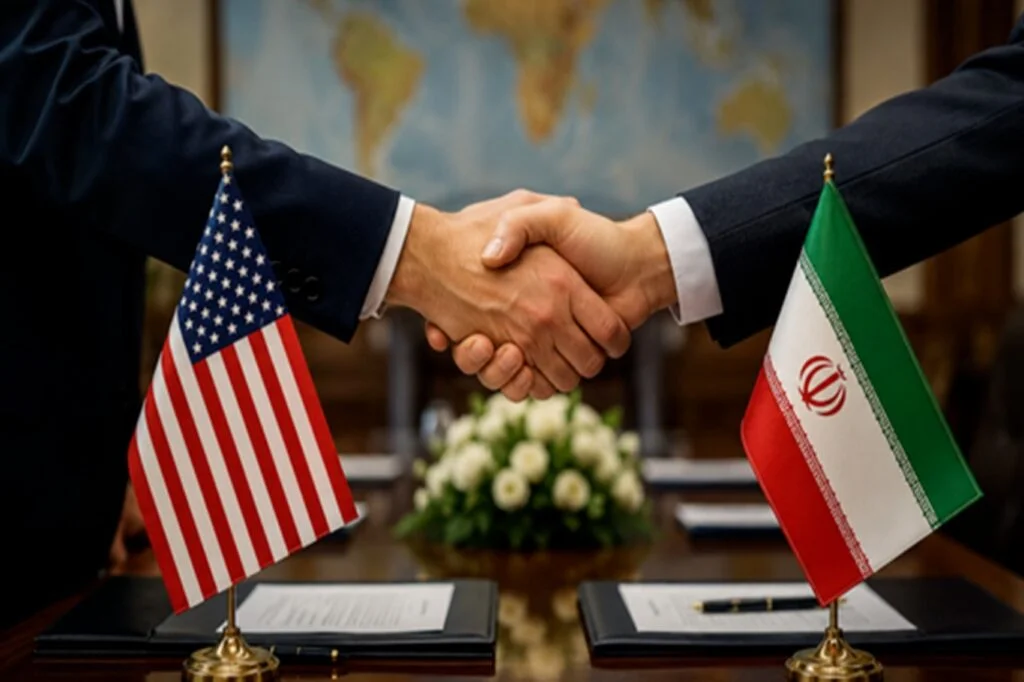
It is not often that a major geopolitical agreement appears to materialise in two places at once. Yet on Wednesday, a US–Iran framework deal was simultaneously signed in two capitals that rarely share diplomatic space: Donald Trump endorsed the document during a dinner with Emmanuel Macron at the Palace of Versailles, while in Tehran President Masoud Pezeshkian affixed his signature under the gaze of state television cameras.
The choreography was striking, but so too was the uncertainty surrounding what had actually been agreed. Competing accounts from Washington, Tehran and unnamed officials suggest not only differing interpretations of the same text, but potentially divergent understandings of its core purpose. At its centre lies the reopening of the Strait of Hormuz the world’s most strategically sensitive energy chokepoint and a 60-day window for renewed nuclear negotiations.
If the optics suggested symmetry, the substance points elsewhere. Early reporting and leaked summaries indicate that Tehran has secured significant economic relief, including a reconstruction mechanism reportedly worth up to $300 billion, alongside a gradual restoration of oil revenues. In return, Washington has obtained little more than a return to talks and a tentative commitment to maritime de-escalation. That imbalance is already shaping a familiar question in Middle Eastern diplomacy: whether the United States has negotiated a stabilising framework, or merely bought time inside a deteriorating strategic environment.
Who stands to gain the most?
The leaked text of the agreement, if accurate, suggests that Tehran has emerged from the conflict in a stronger strategic position than the framing of the deal would imply, according to the latest analysis by the Institute for the Study of War think tank (ISW).
The ISW said the reported terms would grant Iran significant economic relief that it would likely use to try to reconstitute its missile, drone and nuclear programmes, as well as its regional network of proxies.
The think tank said it had observed no indication that Iranian decision-makers were willing to make concessions on the nuclear issues that would need to be resolved in any final agreement, despite the prospect of further economic relief tied to reaching one.
NEW: Multiple sources published what appears to be the text of the US-Iran agreement. Neither the United States nor Iran has officially published the text of the agreement at this time. The leaked text of the agreement, if accurate, indicates that Iran has emerged from the… pic.twitter.com/9LMy1VZwJn— Institute for the Study of War (@TheStudyofWar) June 17, 2026
Iranian officials and state media are largely framing the agreement as a victory that formalises Iran’s military gains.
Iran’s English-language outlet Press TV argued on Tuesday that the signed memorandum represents “the political codification of a battlefield reality,” according to ISW.
Oil freely flowing again?
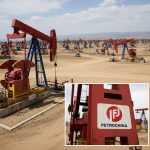
Get the oil flowing again Under the agreement, the Strait of Hormuz will reopen, and the US will lift its blockade of Iranian ports — both of which should push gas prices down. Passage through the waterway will be toll-free for 60 days, and the deal does not preclude fees after that, according to U.S. officials who spoke on the condition of anonymity to read details of the draft, which has not yet been officially released by Washington. Iran’s closure of the strait, through which around a fifth of the world’s traded oil passed before the war, proved to be perhaps its strongest weapon. It drove up global petrol prices, made food and other products such as fertiliser more expensive, and raised concerns about a possible air travel crisis ahead of the summer holiday season.
The ISW assessed that Iran will likely try to exploit ambiguous language in the agreement to maintain effective control over shipping through the strait. The think tank said the reported text does not explicitly bar Iran from “managing” the waterway, meaning Tehran could continue to insist vessels use its traffic separation scheme in Iranian territorial waters and pay fees to the IRGC Navy, the same arrangement Washington has previously sanctioned as unlawful. With the deal in place, the Islamic Republic has survived the most serious attempt ever by Israel and the US to topple its regime, despite the thundering opening volleys of the war that killed Iran’s Ayatollah Ali Khamenei and other top officials.
Iran to sell oil freely, ‘downblend’ its uranium
The deal waives but does not remove Trump-era sanctions on Iran’s oil exports, allowing Tehran to return to global markets and regain billions in revenue. Iran previously earned around $45 billion annually but, under sanctions and a reliance on a single buyer (China) and a shadow tanker network, its exports had sharply declined since April. The agreement also requires Iran to “downblend” highly enriched uranium under IAEA supervision, though details remain unclear and broader nuclear restrictions are still to be negotiated.
The deal goes further than the 2015 nuclear accord by promising the eventual lifting of all sanctions and a proposed $300 billion reconstruction fund, alongside the unfreezing of Iranian assets abroad though funding sources remain uncertain. Analysts say the framework appears designed to ease pressure on Iran during a 60-day negotiating window, limiting Washington’s leverage while talks continue toward a final agreement.
Teheran to stop supporting proxies in the region
Iran’s missiles and support for proxies not on the table The Trump administration repeatedly said its war aims were to “obliterate” Iran’s missile arsenal, “sever its support” for armed proxies in the region, “annihilate its navy,” and ensure it never acquires a nuclear weapon.
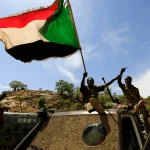
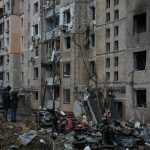
The seven weeks of US-Israeli bombardment are believed to have heavily damaged Iran’s missile arsenal and production facilities as well as other parts of its military, though the extent remains unclear. Iran, however, continued to fire on Israel as recently as last week. Meanwhile, its regional network of armed partners — Hezbollah in Lebanon, the Houthis in Yemen, Hamas in Gaza, and Shiite militias in Iraq appears to remain largely intact and operational.
Washington–Jerusalem Rift Deepens Over Lebanon Clause
The deal calls for an end to the war in Lebanon, where Israel has been fighting Hezbollah. However, Israel and Hezbollah are not parties to the agreement. Iran insists Israel must withdraw from the large swath of southern Lebanon it is occupying, but the interim deal does not explicitly require that and only ensures Lebanon’s “territorial integrity.” ISW said Tehran interprets the “ceasefire on all fronts” clause as requiring Israel to halt operations and withdraw from Lebanon, while Israel rejects that interpretation. Israel has vowed to keep troops in place, while Hezbollah says it will continue resisting until full withdrawal is achieved.
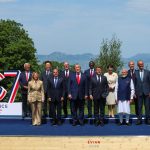
Israel was effectively excluded from the talks, prompting strong criticism across its political spectrum, with blame directed at Prime Minister Benjamin Netanyahu. Tensions between Trump and Netanyahu have also surfaced publicly, including Trump calling the Israeli leader “crazy,” while urging restraint on Lebanon during the G7 summit. Netanyahu now faces domestic political pressure ahead of elections, with the deal complicating Israel’s military strategy in Lebanon and its alignment with Washington.