




A 60-day ceasefire and tentative reopening of the Strait of Hormuz marks the boldest US–Iran diplomatic reset in years, but its unresolved nuclear questions and transactional architecture risk turning de-escalation into a new cycle of leverage politics.
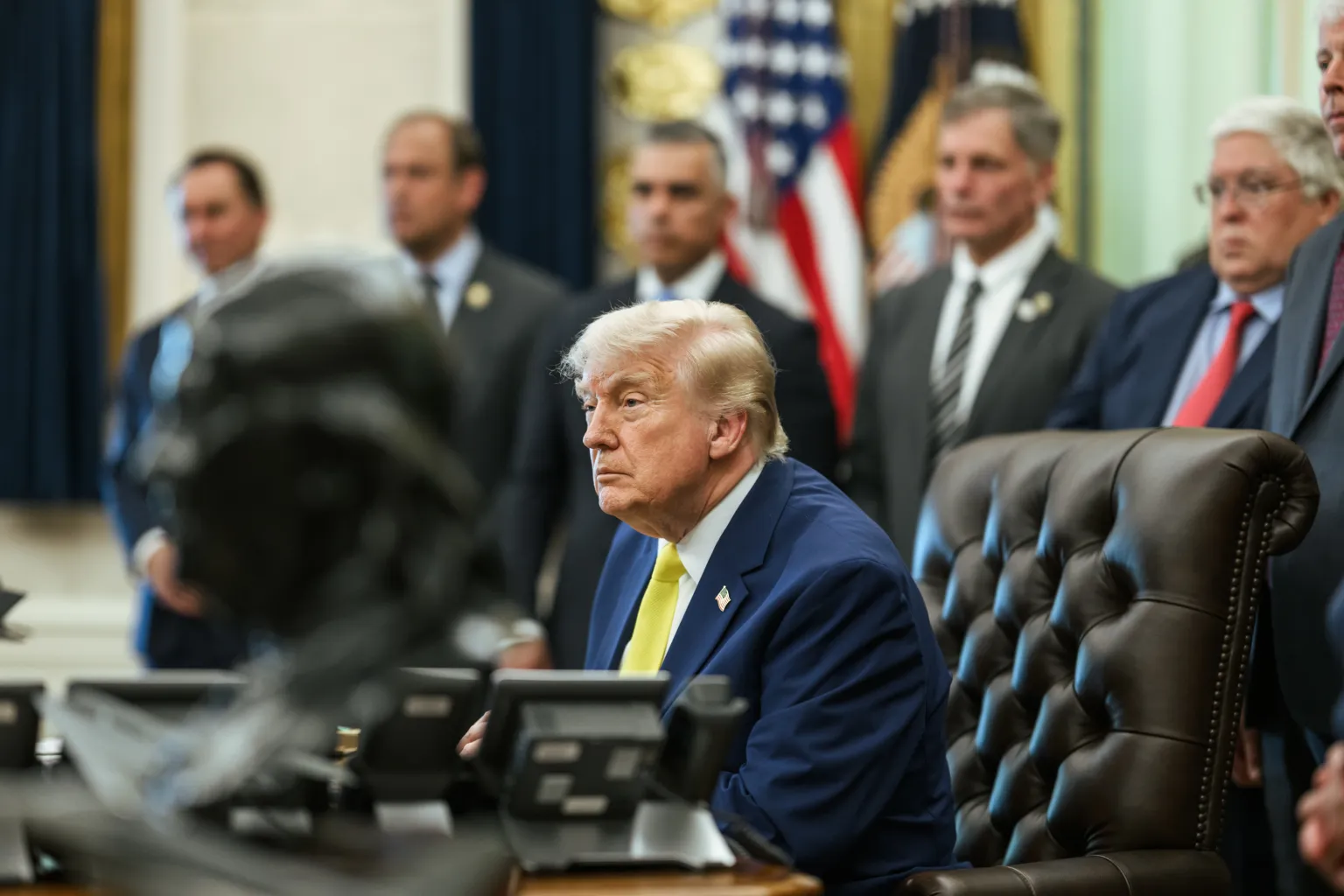
The memorandum of understanding between the United States and Iran, reportedly signed electronically by President Donald Trump and Vice President JD Vance ahead of a formal Swiss ceremony, represents one of the most consequential and fragile diplomatic openings in the Gulf in over a decade. Framed as a 60-day ceasefire paired with the phased reopening of the Strait of Hormuz, the agreement temporarily freezes military escalation while deferring its most intractable disputes above all Iran’s nuclear programme to future negotiations.
At first glance, the deal appears to signal de-escalation after years of shadow conflict across the Gulf, Lebanon, and maritime corridors. Yet its structure reveals something more complex: a high-risk attempt to substitute immediate crisis management for strategic resolution. In exchange for temporary calm, Washington is offering sanctions relief, asset unfreezing, and a proposed $300 billion reconstruction package, while Iran commits to restraining enrichment activity and ensuring maritime passage.
For policymakers in Washington, Tehran, Brussels, and Gulf capitals, the agreement is less a settlement than a controlled pause inside a wider geopolitical confrontation. Its success hinges not on the signing ceremony in Switzerland, but on whether two adversaries with deeply incompatible security doctrines can convert tactical de-escalation into a durable political framework.
A Ceasefire Built on Strategic Ambiguity
At its core, the memorandum is not a peace treaty but a sequencing mechanism. It front-loads immediate de-escalation cessation of military operations, partial naval de-blockade, and reopening of commercial shipping routes while deferring structural disputes to a 60-day negotiation window.
This design reflects a familiar pattern in US–Iran diplomacy or crisis containment without resolution. What distinguishes this iteration is its geographic and strategic scope. Unlike previous nuclear focused frameworks, the agreement explicitly links maritime security in the Strait of Hormuz, regional proxy theatres such as Lebanon, sanctions architecture, and nuclear restrictions into a single negotiating envelope.
The logic is clear. Washington seeks to stabilise energy markets and prevent escalation in a chokepoint that handles nearly a fifth of global oil trade. Tehran, meanwhile, is securing phased sanctions relief and a pathway to frozen asset recovery at a moment of severe economic strain.
Yet the breadth of the deal is also its fragility. By attempting to resolve multiple strategic dossiers simultaneously nuclear, sanctions, maritime security, and regional force posture the memorandum multiplies the number of potential failure points. Each paragraph effectively functions as a separate negotiation track, and any breakdown in one risks collapsing the entire structure.
The reopening of the Strait of Hormuz is arguably the most immediate geopolitical gain embedded in the agreement. For global energy markets, even partial stabilisation of shipping routes would reduce risk premiums that have surged during periods of confrontation.
However, the operational mechanics remain deliberately vague. Iran assumes responsibility for “safe passage” and demining operations, while also engaging Oman and Gulf littoral states on future administration. The United States, meanwhile, commits to withdrawing forces from proximity to Iran and removing maritime blockades within 30 days.
This creates a paradox: de-escalation in physical military presence without clarity on enforcement authority. In effect, maritime security in one of the world’s most militarised waterways is being temporarily outsourced to a political understanding that lacks institutional enforcement mechanisms.
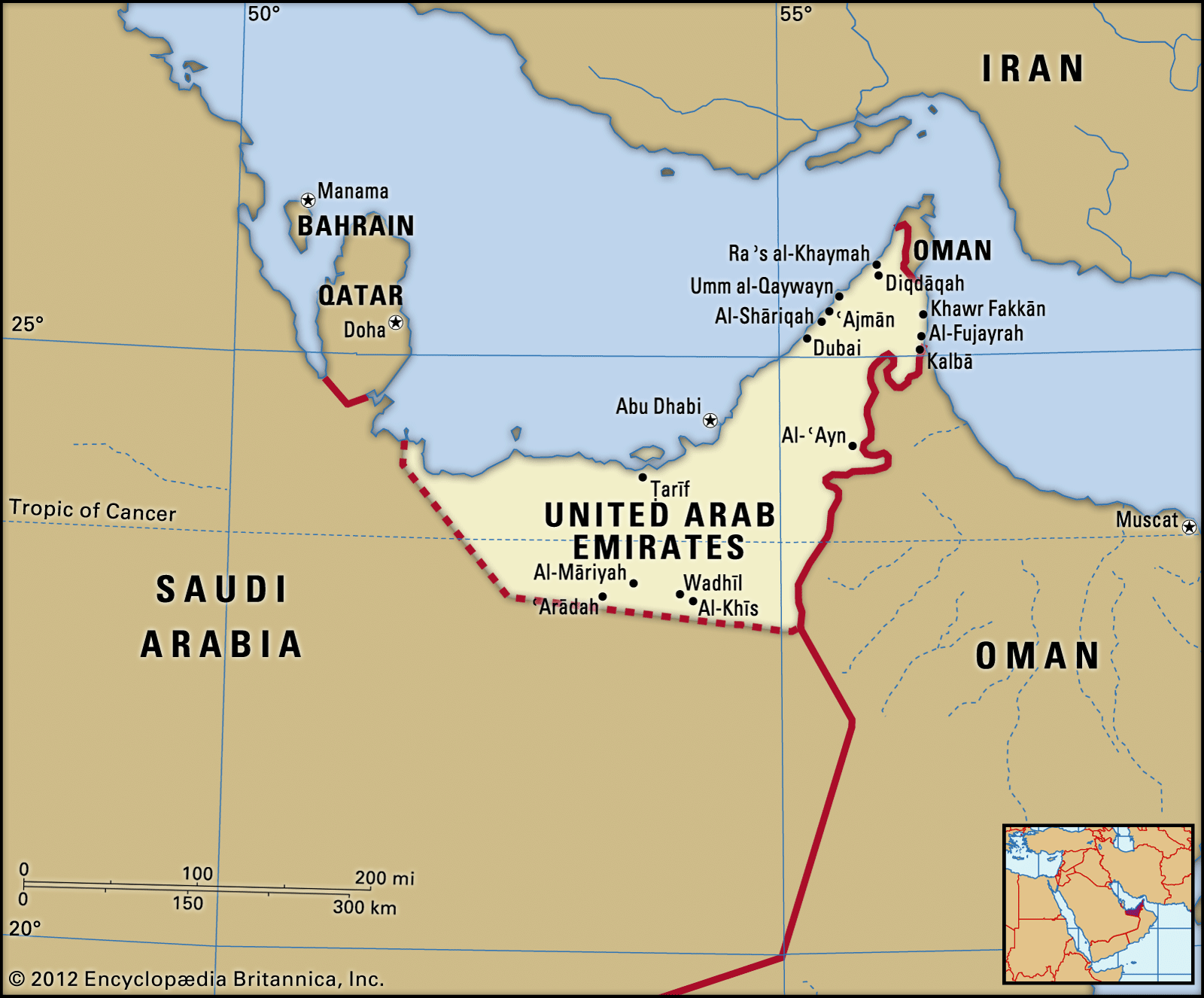
For Gulf states, particularly Saudi Arabia and the United Arab Emirates, this introduces a dual uncertainty. On one hand, reduced tensions lower immediate risks to energy infrastructure. On the other, the absence of a robust security architecture raises concerns about future volatility if the agreement collapses.
Sanctions Relief as Strategic Currency
The most consequential dimension of the memorandum lies not in military de-escalation but in economic architecture. Washington’s commitment to terminate sanctions including secondary sanctions and selected UN Security Council resolutions represents a structural shift in US leverage strategy.
Coupled with the promise of $300 billion in reconstruction and the release of frozen Iranian assets, the agreement effectively positions economic reintegration as the primary incentive for Iranian compliance.
This reflects a broader evolution in US foreign policy under the current administration: transactional diplomacy anchored in rapid de-escalation and economic inducements rather than prolonged containment strategies.
Yet the risks are significant. Sanctions relief at this scale would immediately reshape regional economic balances, particularly if Iranian crude exports re-enter global markets under relaxed restrictions. Energy producers across the Gulf would face downward pressure on pricing power, while European and Asian importers would welcome short-term stabilisation.
The unresolved question is sequencing. Iran receives immediate partial economic relief, while sanctions termination is tied to a future “final deal.” This asymmetry creates leverage disputes: Tehran may seek to lock in gains before nuclear concessions are fully defined, while Washington retains the option to reverse measures if negotiations fail.
The Nuclear Question Deferred, Not Resolved
Despite its scope, the memorandum carefully avoids resolving the central strategic issue: Iran’s nuclear programme. Paragraph 8 restates Iran’s commitment not to pursue nuclear weapons and introduces limited technical arrangements on enriched material, but defers key decisions on enrichment capacity and stockpile management.
This reflects a familiar diplomatic tension. Iran insists on retaining civilian nuclear capabilities under sovereign rights, while Washington and its allies have historically sought strict limitations on enrichment levels and verification regimes.
The result is a familiar structure: verification without resolution. The International Atomic Energy Agency is implicitly positioned as a technical arbiter, yet the political parameters of compliance remain undefined.
Without binding constraints on enrichment thresholds or long-term inspection frameworks, the agreement risks replicating earlier cycles of partial compliance followed by escalation.
Regional and International Implications
For the wider Middle East, the agreement introduces a temporary reordering of risk calculations. Israel, which has consistently viewed Iran’s nuclear programme as an existential threat, is notably absent from the text. This omission alone could generate friction within US alliance management frameworks, particularly if Israel perceives the deal as insufficiently constraining.
Gulf monarchies face a more ambiguous outcome. Reduced immediate risk of escalation is offset by uncertainty over long-term US security guarantees. If Washington pivots toward economic engagement with Tehran, traditional deterrence structures in the Gulf may require recalibration.
Internationally, the agreement tests the coherence of sanctions regimes that have defined Western policy toward Iran for more than a decade. European governments, already divided over enforcement and energy exposure, may struggle to align policy if US sanctions architecture is dismantled rapidly.
China and Russia, meanwhile, are likely to interpret the deal as validation of a multipolar negotiation space in which US leverage is no longer absolute. Both actors may seek to deepen economic engagement with Iran during the transition period.
Policy Outlook: Fragile De-escalation, High Reversal Risk
Three scenarios dominate the outlook over the next 6–12 months.
First, a managed transition toward a final agreement would require sustained compliance on maritime security, partial sanctions relief implementation, and incremental nuclear transparency. This remains the preferred outcome but demands unusually high political discipline on both sides.
Second, partial breakdown is arguably the most likely trajectory. Disputes over sanctions timing, nuclear verification, or proxy activity in Lebanon could quickly unravel trust, reverting the situation to a managed confrontation rather than open conflict.
Third, full collapse remains a low-probability but high-impact scenario. In this case, unresolved enforcement mechanisms in the Strait of Hormuz could trigger rapid militarisation and renewed US–Iran confrontation, with immediate global energy consequences.
Decision-makers should therefore monitor three critical indicators: compliance with maritime provisions, pace and scope of sanctions relief implementation, and early signals from nuclear verification processes under the IAEA framework.
However the US–Iran memorandum represents less a diplomatic breakthrough than a strategic pause embedded in a system of mutual vulnerabilities. It temporarily reduces the probability of immediate military escalation while embedding unresolved contradictions into a tightly sequenced negotiation framework.
Its most significant feature is not what it resolves, but what it postpones: the status of Iran’s nuclear programme, the durability of sanctions relief, and the future governance of one of the world’s most critical maritime chokepoints.
In that sense, the agreement reflects a broader trend in contemporary geopolitics the substitution of comprehensive settlement with managed instability. Whether this becomes a foundation for durable de-escalation or merely a prelude to the next crisis will depend less on the text signed in Switzerland than on the political will to sustain it under pressure.