


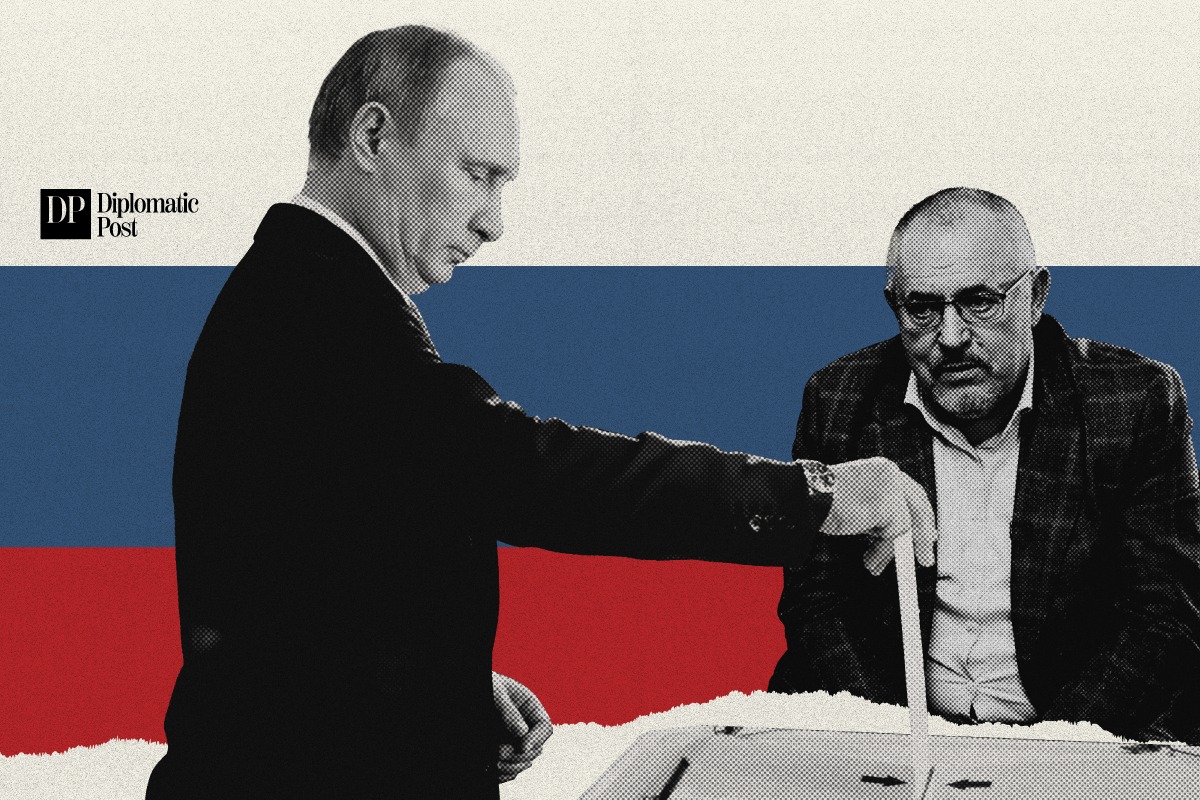
United Russia will win in September; that part isn’t in question. What’s contested is whether the war Putin started is now costing him the public he needs to keep fighting it
Russians head to the polls on September 18 to 20 to elect a new State Duma and regional officials, in a vote the ruling United Russia party is all but guaranteed to win. The more interesting question is what the campaign reveals about a country four years into a war that is now visibly straining its economy, its fuel supply, and the public mood, according to a media report. President Vladimir Putin signed the decree formally scheduling the vote on June 16, setting in motion preparations for a new Duma convocation, according to a media report.
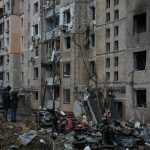
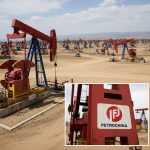
The vote lands at a genuinely difficult moment. Long-range Ukrainian drone strikes have triggered a widespread fuel crisis inside Russia, and half of Russians now describe the political climate as tense, a media report noted. Regions have reportedly been instructed to secure high turnout and a comfortable win for United Russia, underscoring how much the Kremlin still needs this election to project popular legitimacy, even as both Putin’s and the party’s approval ratings show signs of erosion.
What’s actually on the ballot
The vote is larger than just the Duma. State Duma and regional lawmakers, along with the heads of 11 regions, will be elected on September 20, Russia’s Unified Voting Day, a media report explained.
The centrepiece is the three-day State Duma election running September 18 to 20, which will choose 225 lawmakers in single-member constituencies and another 225 through party lists. This year marks the first time residents of Russian-occupied regions of Ukraine will take part in the parliamentary vote.
Gubernatorial elections will run alongside it in 11 regions, with direct votes in Tver, Belgorod, Bryansk, Penza and Ulyanovsk, along with the republics of Mordovia, Tyva and Chechnya. In the North Caucasus republics of Dagestan, North Ossetia and Karachayevo-Cherkessia, regional leaders will instead be chosen by local legislatures rather than by popular vote. Voters in 39 regions will also elect regional parliaments, and municipal elections, including city duma contests, are expected in nearly a dozen regions.
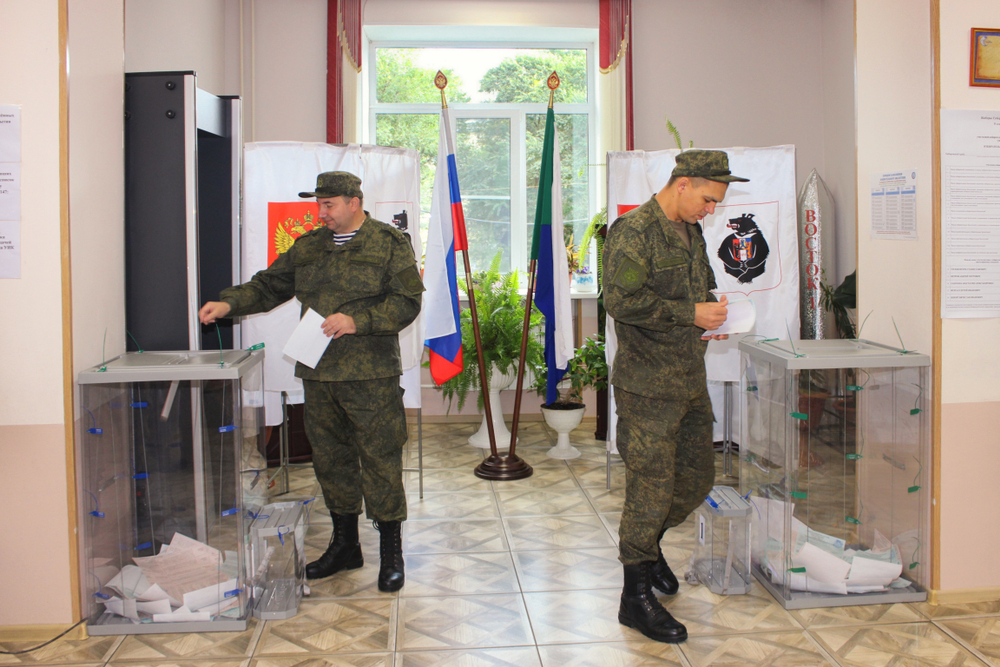
Russia has around 111 million registered voters. State pollster VTsIOM found 66 per cent of respondents said they planned to vote, rising to 73 per cent among young people, though that same 66 per cent admitted in May they did not actually know when the election would take place, the same media report found. Regional officials have reportedly been instructed to keep turnout around 50 per cent, according to a media report citing the Vedomosti newspaper. Electronic voting, which critics have long accused of enabling vote rigging, has been approved in 33 regions covering roughly 48 million eligible voters.
A Kremlin bracing for what comes after the vote
The stakes extend beyond the ballot itself. Reports suggest the Kremlin could announce a new round of mobilisation once the election is over, making a convincing United Russia win politically important heading into that decision. Other reports claimed senior officials had urged Putin to postpone the vote entirely because of the Ukrainian drone campaign, though the Kremlin has denied this, according to the same media report.
Ukrainian President Volodymyr Zelensky addressed exactly this dynamic at the Ukraine-Southeast Europe Summit in Kyiv on July 15.
He said the election results themselves would not affect the war’s trajectory, arguing the outcome is essentially predetermined, but warned they could accelerate mobilisation efforts inside Russia once the vote concludes, according to a media report. “
The election results will have no impact on this escalation, because the results will be known before the election,” Zelensky said, adding that support for the war itself has fallen sharply, most visibly in regions bordering Ukraine where residents have felt the conflict most directly.
Putin cannot easily expand his contract soldier program without spending heavily, Zelensky argued, which leaves mobilisation as the more likely lever if Moscow needs more troops. “He might resort to increasing mobilisation,” Zelensky said.
“We’re thinking about this. We need to be prepared for such steps.” Russia has ordered only one partial mobilisation since its full-scale invasion began, in September 2022, a move that triggered protests nationwide and sent thousands of Russians fleeing the country. Analyst Max Bergmann of the Centre for Strategic and International Studies described a second mobilisation as a sign the regime is under real strain, calling it “a huge gamble for Putin, a bet that could put himself and his regime at risk,” the same media report noted.
A CSIS analysis from January estimated Russia had sustained roughly 1.2 million battlefield casualties by December 2025, including as many as 325,000 killed, and calculated Moscow would need more than 30,000 recruits every month to offset those losses. Ukrainian intelligence estimated only around 70,500 Russians signed military contracts in the first three months of 2026, about 30,000 short of the Defence Ministry’s own recruitment target.
Here is what you need to know about the political parties
Seventeen political parties are eligible to contest the parliamentary election, according to Russia’s Central Election Commission, cited in a media report. Five of them, the parties already sitting in the Duma, United Russia, the Communist Party, LDPR, A Just Russia – For Truth, and New People, automatically qualify without needing to collect voter signatures. The rest of the field must clear that bar to appear on the ballot at all.
United Russia remains the dominant force by a wide margin, holding 321 of the Duma’s 450 seats, but it is entering this campaign visibly uncertain of itself. Support for the party currently sits at almost 34 per cent, and fell as low as 29.3 per cent in March, down from around 40 per cent shortly after the invasion began, according to VTsIOM figures cited in the same media report. Independent polling by the late Alexei Navalny’s Anti-Corruption Foundation put the party’s real support at just 16 per cent. Putin’s own approval has softened too, though even the least favourable polling never puts it below 65 per cent, prompting authorities to quietly lower United Russia’s performance targets in regions where its support runs weaker, according to a media report citing Vedomosti.
The party has struggled publicly with direction. It did not finalise its candidate list until after its pre-election congress, a delay one political strategist overseeing regional campaigns called “complete idiocy” in remarks to exiled outlet Meduza, cited in the same media report, noting that in past cycles candidates would already be engaging voters by November. “The entire election cycle has been disrupted,” the strategist said. The list itself is led by Foreign Minister Sergei Lavrov, Moscow Mayor Sergei Sobyanin, Ukraine war veteran and Yunarmiya youth movement head Vladislav Golovin, children’s rights commissioner Maria Lvova-Belova, and war correspondent Yevgeny Poddubny.
Former President Dmitry Medvedev, the party’s formal leader, was notably left out of the top five despite earlier reports suggesting he intended to head the list. Medvedev has instead outlined what he called challenges facing the party, demographics, economic and technological pressures, uneven regional development and security, and said the party’s election platform, the People’s Program, will be built by an expert council with proposals also accepted from ordinary citizens, an approach one source close to the presidential administration described to Meduza as turning “we still haven’t come up with anything” into “we’ve decided to consult you.”
Behind United Russia, the real contest is over second place, a result carrying no legislative weight but offering a useful gauge of public sentiment. New People, founded in 2020, has overtaken the Communist Party to become Russia’s second most popular parliamentary party, polling around 12 per cent according to VTsIOM, the media report found. It is not an antiwar or opposition party in any meaningful sense, but it has distinguished itself by criticising internet shutdowns, tax increases and anti-abortion measures, positions analysts say have broadened its appeal beyond the usual opposition base, alongside a focus on mortgages, small business support and domestic violence. The party unveiled its leading candidates in March, headed by chairman Alexei Nechaev, State Duma Deputy Speaker and former presidential candidate Vladislav Davankov, and lawmaker Sardana Avksentieva.
The remaining parliamentary parties are polling within a few points of each other. VTsIOM put the Communist Party at 10.7 per cent, LDPR at 9.4 per cent, and A Just Russia – For Truth at 5.7 per cent as of last week, according to the same media report. Experts say the Communist Party has struggled to define its role since the invasion, losing ground with both nationalist hardliners and civic activists alike. Political expert Alexander Kynev said the party has blurred its own opposition identity and leaned too heavily on the past at a moment when the public wants a clear vision for the future, even as it faces direct pressure from United Russia in regions where Communist support has traditionally run strong.
LDPR has struggled with a similar identity crisis since the death of longtime leader Vladimir Zhirinovsky in 2022. His successor, Leonid Slutsky, has been described as considerably less charismatic and has faced allegations of sexual harassment. Internal reshuffles, including the removal of influential figures, and the party’s failure to defend members like Sergei Furgal, the popular jailed former governor of Khabarovsk, have further weakened its standing. Kynev said LDPR now suffers from “a loss of brand distinctiveness and increasing difficulty in explaining how the party differs from others, particularly as its campaign increasingly resembles a copy of the Communist Party’s and A Just Russia’s social agenda.”
A Just Russia has followed its own arc, leaning toward the opposition in the early 2010s before steadily aligning itself with the Kremlin in the years since. Its leader, Sergei Mironov, became a symbol of that shift when he posed with a sledgehammer given to him by the Wagner Group, shortly after footage surfaced showing Wagner mercenaries using the same weapon to brutally kill a suspected deserter in Ukraine. Experts note the party has significantly lost ground in the regions due to what they describe as campaign difficulties and a series of unsuccessful organisational and financial efforts.
Outside parliament entirely sits Yabloko, a liberal party planning to campaign on calls for an immediate ceasefire in Ukraine, freedom of information, and an end to political repression, while highlighting cases like the persecution of politician Lev Shlosberg and journalist Mikhail Afanasyev. Experts say Yabloko has little realistic chance of winning seats, not least because it must first collect 200,000 voter signatures just to qualify for the ballot. Even so, analysts note that participation itself carries strategic weight for the party, since Russian law allows political parties to be dissolved if they fail to contest elections for seven consecutive years.
The one antiwar candidate the Kremlin wouldn’t allow to run
If the party contest shows how narrow the Kremlin’s tolerance for dissent has become, one individual case shows exactly how it enforces that limit. Boris Nadezhdin, a liberal figure from Russia’s political establishment, entered the race presenting himself as the only openly antiwar candidate opposed to the conflict in Ukraine. It cost him almost immediately. As soon as signature gathering for his candidacy began, the Kremlin moved against him, according to a media report. On July 10, the Justice Ministry added his name to Russia’s foreign agents registry. Three days later, a court in Dolgoprudny, the Moscow suburb where he lives, convicted him of displaying extremist symbols, a conviction that bars him from running entirely.
Nadezhdin is no fringe figure. He came up through the establishment “democrats” of late 1990s Russia, served as an adviser to former deputy prime minister Boris Nemtsov, and later as an assistant to Sergei Kiriyenko, now the powerful head of the presidential administration. He sat in the Duma from 1999 to 2003, and became widely known in 2024 for an unsuccessful attempt to challenge Putin directly as a pro-peace candidate in the presidential race. That someone with this exact resume, establishment credentials, prior parliamentary service, no history of radical politics, still could not survive the signature gathering stage once he ran on an antiwar platform says plainly how narrow the Kremlin’s tolerance for genuine dissent has become, even as the public mood on the war itself appears to be shifting.
A vote that measures more than it decides
Taken together, these threads describe an election whose outcome is not really in question, but whose undercurrents are worth watching closely. A ruling party visibly unsure of its own message and losing ground in the polls. A president whose approval, while still high by most standards, is softening under the weight of a fuel crisis and mounting casualties.
A field of second-tier parties each struggling to define what they stand for four years into a war that has scrambled Russia’s usual political categories. And a Kremlin willing to use foreign agent designations and extremism convictions to ensure that even a lone, establishment-credentialed antiwar candidate never reaches the ballot at all.
None of that will change who wins in September. But it may say a great deal about how much longer the Kremlin can keep managing a public that, according to Zelensky and independent pollsters alike, is growing steadily less willing to keep paying the price of a war with no clear end in sight, and about what Putin decides to do, mobilisation included, once this vote is safely behind him.