


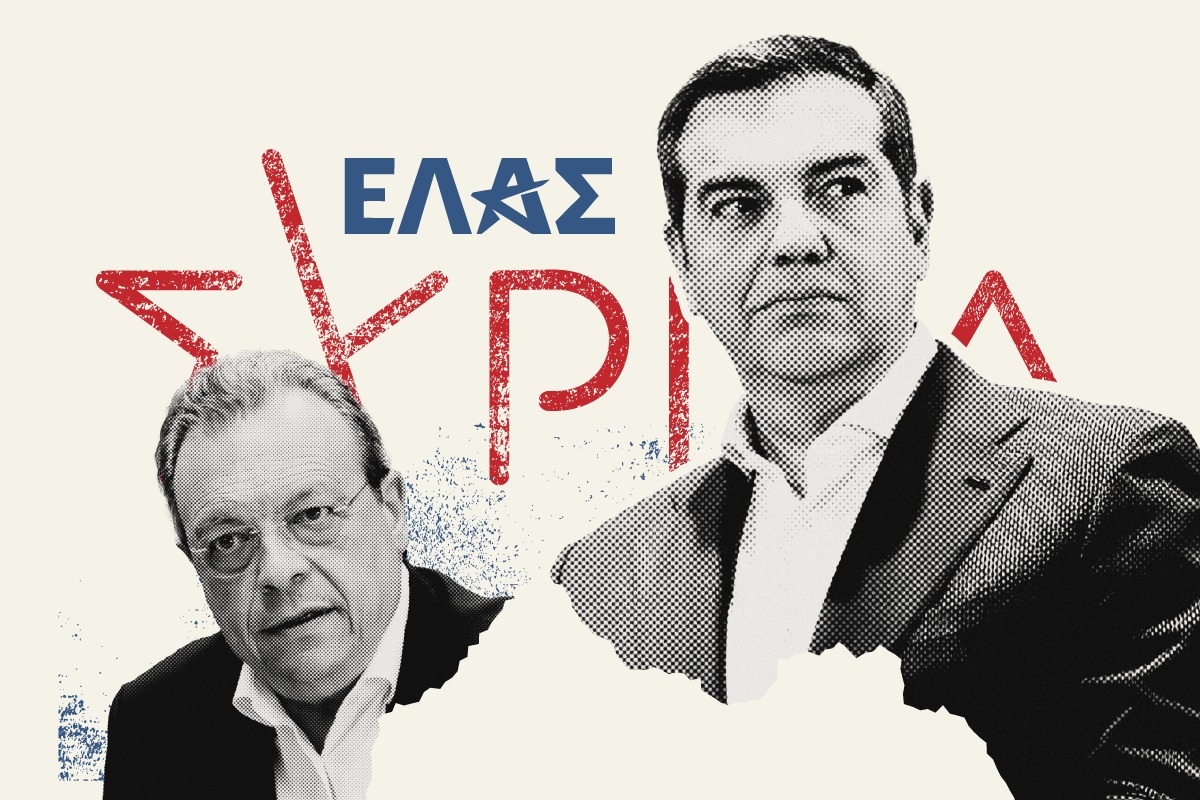
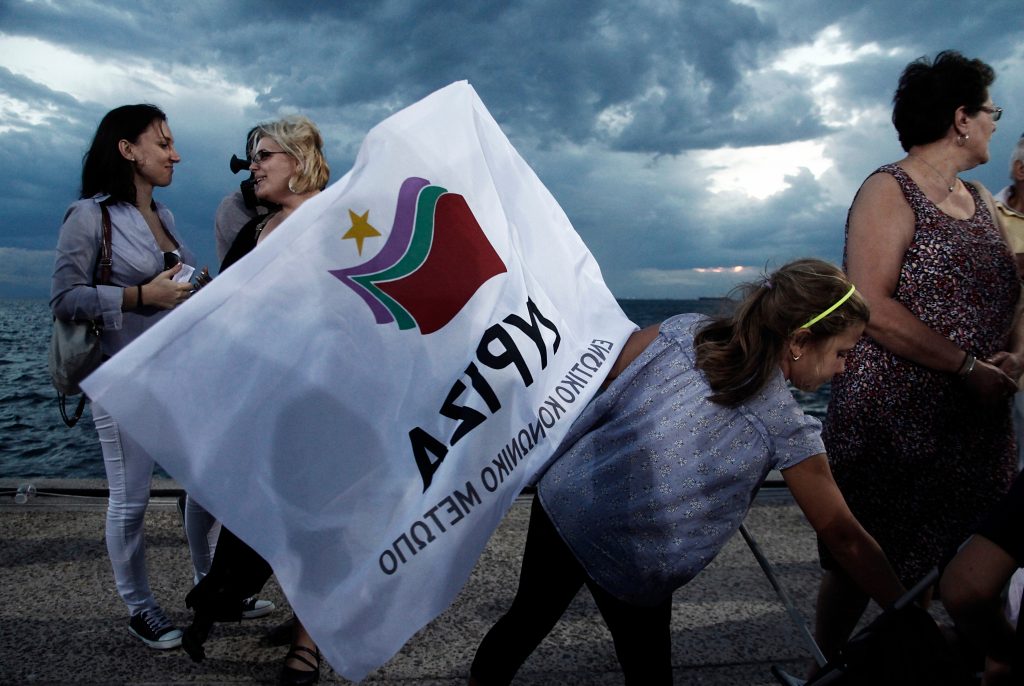
The party that once frightened Europe’s finance ministers and forced an entire continent to rethink how it treats its most indebted members has, within the space of a single week, come apart at the seams. SYRIZA, the radical left movement that swept to power in Athens in January 2015 and briefly turned Greece into the epicentre of a continental struggle over austerity, sovereignty and the future of the eurozone, is now fighting not for government but for its own survival. Its leader has resigned, its lawmakers are abandoning ship in a steady stream, and the man who built the party from nothing, Alexis Tsipras, has already moved on to found a rival movement that is drawing away the voters, donors and officials SYRIZA needs to remain relevant.
This is not a routine reshuffle. It is the unravelling of the political force that governed Greece through its most dangerous economic years, negotiated with the International Monetary Fund and the European Central Bank, and came to symbolise, for supporters and critics alike, the idea that a small country could stand up to Brussels and Berlin. Its disintegration matters well beyond Athens, because it removes a coherent opposition from a country that sits on one of the most sensitive fault lines in European security, wedged between an increasingly assertive Turkey, a volatile migration route from the Middle East, and a Western alliance that needs its southeastern flank to hold steady.
A party consumed by the ghost of its own founder
Sokratis Famellos, who had led SYRIZA for barely eighteen months, resigned the party presidency on 9 July after a phone call to Tsipras asking whether the two men’s parties might cooperate met with a flat refusal. According to official statements from Famellos, he had staked his leadership on a strategy of convergence with Tsipras’s new movement, the Greek Left Alliance, known by its Greek acronym ELAS, which the former prime minister launched earlier this year after quitting SYRIZA altogether. Famellos told supporters that despite significant concessions on his side, ELAS had publicly rejected any form of cooperation, leaving him isolated ahead of a Central Committee meeting he knew he could not survive politically. He insisted he was stepping down only from the leadership, not from Parliament or from the party itself, but the damage was already done. Within hours, senior officials including the secretary of SYRIZA’s parliamentary group and at least one sitting MP had resigned in turn, and reports from Greek media described a rush of departures towards ELAS that has left the party’s headquarters on Koumoundourou Street in a state described by insiders as close to institutional paralysis.
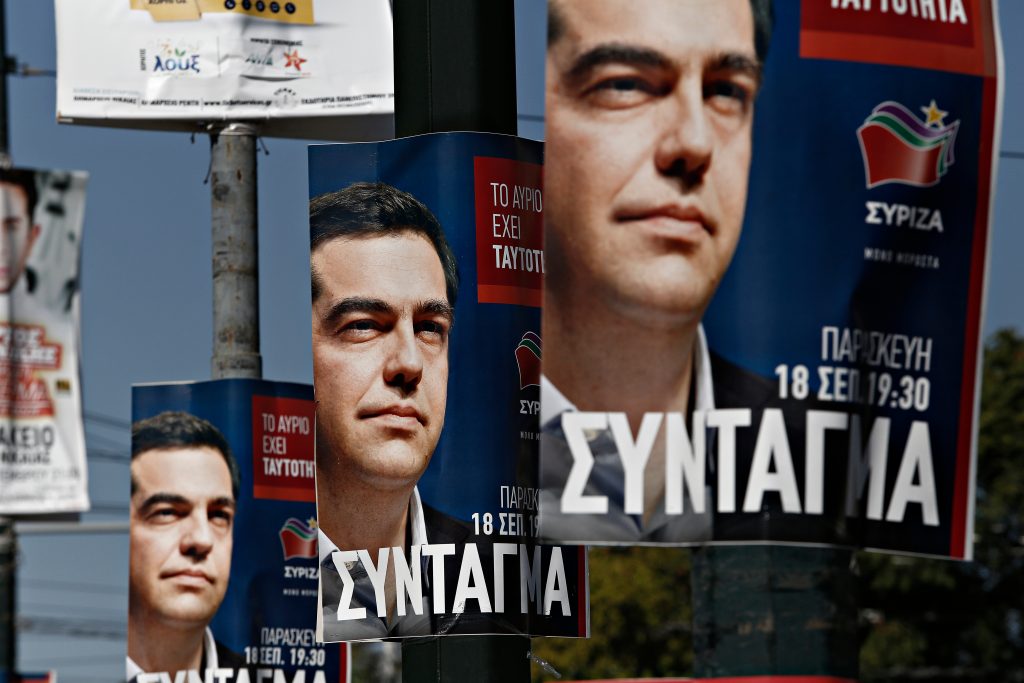
The roots of this collapse run deep. Tsipras himself resigned as SYRIZA leader back in 2023 after the party suffered a crushing defeat in that year’s general election, a result that confirmed New Democracy under Kyriakos Mitsotakis as the dominant force in Greek politics. What followed was a chaotic search for identity. Party members elected Stefanos Kasselakis, a Greek American former Goldman Sachs banker with no prior political experience, who was ousted barely a year later after a vote of no confidence triggered by his erratic style of leadership. Famellos, a more conventional figure from the party’s institutional wing, was meant to stabilise things. Instead, his tenure has ended as the latest casualty of a deeper problem, namely that the party’s most talented and recognisable politician, Tsipras, decided the SYRIZA project itself was finished and built something new in its place. According to defence and political analysts tracking Greek polling, ELAS has stabilised at around 17 to 18 per cent support, roughly matching Tsipras’s old party at its European election peak, while what remains of SYRIZA has fallen into low single figures, in some surveys perilously close to the three percent threshold required to enter Parliament at all.
Why a divided Greek left is a problem beyond Greece
It would be easy to treat this as a domestic curiosity, a soap opera of egos and factions playing out in Athens newspapers. That would be a mistake. Greece occupies a genuinely difficult strategic position. It shares the Aegean Sea with Turkey, a fellow NATO member with which it has repeatedly clashed over maritime boundaries, airspace violations and continental shelf claims, and it remains, according to security analysts, the alliance’s most tension prone bilateral relationship. It is also the European Union’s principal eastern maritime entry point for migrants and asylum seekers arriving from Turkey and the wider Middle East, a role that keeps Athens permanently entangled in disputes over EU burden sharing. On top of that, Greece has become one of Washington’s more reliable partners in the region, buying American F-35 fighter jets and hosting a growing American military presence, even as the wider relationship between the United States and the EU has been strained by trade disputes and arguments over defence spending.
https://greekreporter.com/2026/07/09/famellos-syriza-resign/A country facing that combination of pressures generally benefits from having a functioning opposition capable of holding the government to account on foreign and defence policy, offering a credible alternative and forcing a genuine public debate about strategic choices. What Greece has instead, at least for now, is a governing party enjoying a commanding and largely unchallenged position, not because its own popularity is overwhelming but because the opposition has spent the past three years consuming itself. Recent polling shows New Democracy hovering close to thirty per cent, comfortably ahead of every rival, while the rest of the political spectrum fragments into a long tail of smaller parties, from a resurgent PASOK to Tsipras’s new ELAS to assorted right-wing and populist formations. That level of dominance without serious contestation is not necessarily healthy for a democracy managing sensitive questions about troop deployments, defence procurement and how far to push back against Ankara.
The immediate consequence inside SYRIZA will be a leadership contest, with figures such as Pavlos Polakis, Rena Dourou and Nikos Pappas, all founding members from the party’s early radical years, now manoeuvring for control of whatever remains. Some want the party to stand independently in the next general election even at the risk of falling out of Parliament altogether, while others favour eventual convergence with Tsipras on terms more favourable than those Famellos was offered.
either path looks likely to restore SYRIZA to relevance in the near term. What seems far more probable is that ELAS consolidates its position as the genuine standard bearer of the Greek left, that SYRIZA either merges into it or fades into irrelevance, and that Mitsotakis heads into the next election with an opposition too fractured to seriously threaten his majority. For a government that has increasingly framed itself as the guarantor of stability in a difficult neighbourhood, that outcome is a political gift. For a democracy that will soon need to make hard choices about its relationship with Turkey, its posture inside NATO and its role on Europe’s migration frontline, a coherent opposition would have served the country rather better than a decade-long feud finally reaching its bitter end.