


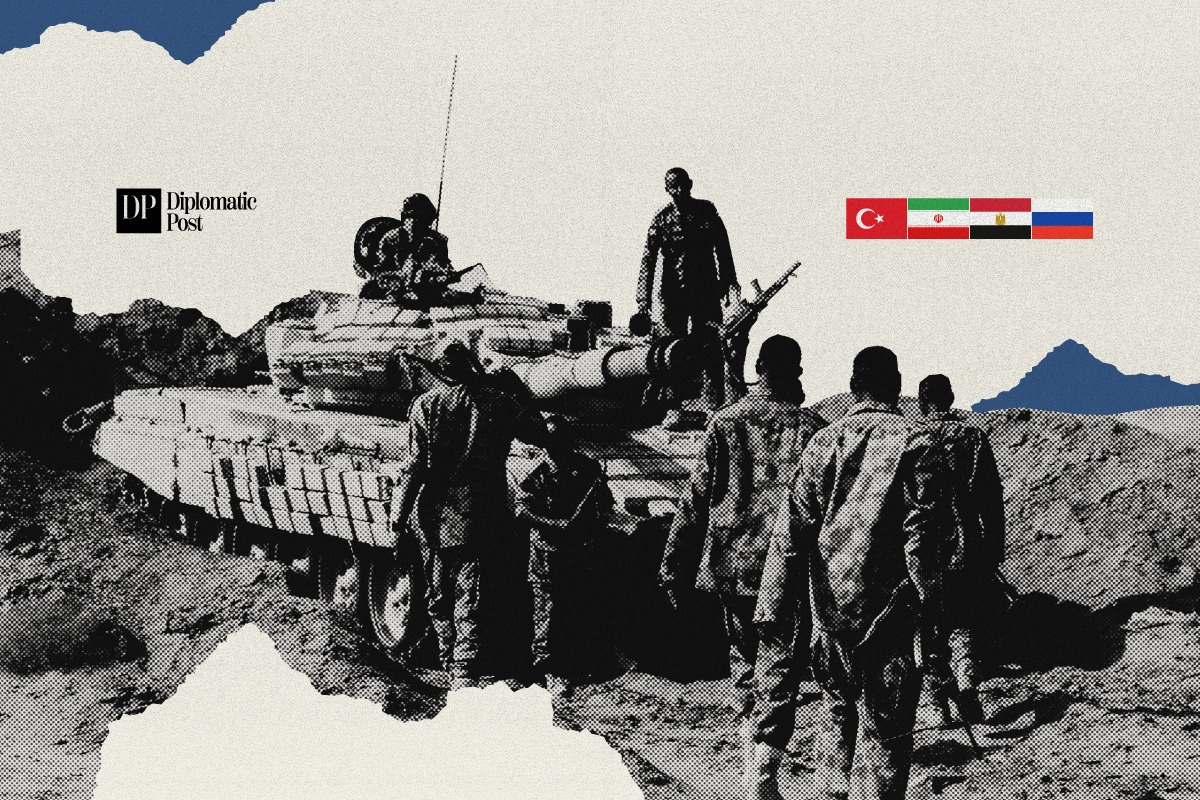


Second in a series on the proxy war in Sudan, drawing on field research in Darfur and international investigations
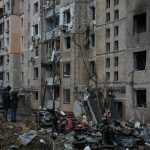
It was the first evening of Eid al-Fitr, March 20th, 2026, and the wards of El Da’ein’s teaching hospital were full. In a region stripped of nearly everything, this was the last real hospital for some 3.5 million people in East Darfur the place where mothers came to give birth and children came to be saved. At around half past eight, a drone released its first bomb. It found the emergency ward, the maternity ward and the children’s ward. “The scene was catastrophic,” said Mazin, a 29-year-old human rights activist who arrived within minutes.
Then, roughly half an hour later as neighbours and nurses clawed through the rubble for the living, the drone came back and bombed the rescuers. Up to 70 people died that night, among them 13 children, two nurses and a doctor, according to the World Health Organisation. “We sifted through the bodies,” recalled Elhaj, a first responder, “finding nothing but mutilated remains, clothing, and blood.”
Here is what makes El Da’ein more than one more atrocity in a war full of them: the wreckage can be read like a signature. Satellite analysis by Yale University’s Humanitarian Research Lab found “multiple, precise impacts” within the hospital compound the work not of a clumsy barrel bomb but of laser-guided munitions of the kind carried by the long-range Bayraktar Akıncı. That aircraft is not made in Sudan. It is the flagship of Baykar, the crown jewel of Turkey’s defence industry, a company run by the son-in-law of President Recep Tayyip Erdoğan. The drone that hunted rescuers in a children’s ward was conceived, built and sold by a NATO ally.
The sale was no accident of the grey market. Investigative reporting, first by The Washington Post, traced a covert deal agreed in November 2023 under which Baykar funnelled at least $120 million in drones and munitions to the Sudanese Armed Forces (SAF): Bayraktar TB2s and Akıncı systems, three ground-control stations, some 600 warheads and dozens of Baykar technicians sent into Sudan to keep the fleet flying.
The United Nations, the European Union and the United States all maintain arms embargoes that such shipments appear to violate. Six hundred warheads is not an export line; it is six hundred appointments with towns like El Da’ein. In December 2024, one of them reportedly kept an appointment with the weekly market at Kabkabiya, North Darfur, where a strike killed more than 100 civilians.
“El Kuma is not a military base; it is a transit point. Ninety per cent of the victims of the aerial bombardment are civilians.”
Turkey is not only the most precise of the army’s patrons. Iran was among the first. From late 2023, Tehran supplied the SAF with Mohajer-6 combat drones built by Qods Aviation Industries, a US-sanctioned firm; flight-tracking data identified at least seven cargo flights between Iran and Sudan in the months that followed.
The Mohajer’s precision strikes helped the army claw back Khartoum, and the pipeline has not closed. In April 2026, US authorities arrested an Iranian-born woman at Los Angeles airport for allegedly brokering a $70 million deal to ship Mohajer-6 systems and bomb fuses to Sudan’s defence ministry. What does Tehran want for its trouble?
Analysts and leaked negotiations point to the same prize: a naval foothold on Sudan’s Red Sea coast, a permanent Iranian shadow over one of the world’s busiest shipping lanes. The mothers of El Da’ein are, in this ledger, a down-payment on a harbour.
Egypt’s stake is older and closer to home. Cairo has backed General Abdel Fattah al-Burhan’s army from the war’s first hours, and by 2026 the support had shed its disguises. In February,
The New York Times revealed a secret drone facility at East Oweinat, deep in Egypt’s southern desert, from which Turkish-made Akıncıs were being flown against RSF targets inside Sudan; Reuters reported Egyptian drones deployed along the border, raising the stakes of the war. After Burhan’s December 2025 visit to Cairo, a joint operations room was reportedly established in North Kordofan.
Egypt’s motive is not sentiment but water: with Ethiopia’s Grand Renaissance Dam squeezing the Nile from upstream, Cairo needs a dependent, indebted Khartoum and has declared Sudan’s state institutions a “red line” of its own national security. When a drone strike killed more than 70 worshippers at dawn prayer in an El Fasher mosque, Egypt joined the chorus of condemnation. Its drones stayed on the border all the same.
And then there is Russia, the war’s most candid shopper. Moscow spent the war’s first phase profiting from both sides: Wagner’s successors in the RSF’s goldfields, diplomats courting the army before settling on Port Sudan, where the generals had something no one else could sell: a coastline.
The proposed bargain, confirmed by Sudan’s foreign minister in February 2025, would give Russia its first naval base in Africa in 25 years, four warships, up to 300 personnel, plus mining concessions in Africa’s third-largest gold producer, in exchange for weapons and air-defence systems. In November 2024, when the UN Security Council voted on a resolution demanding protection of civilians in Sudan, one country vetoed it: Russia. The base deal has since been frozen, unfrozen and dangled again as a bargaining chip auctioned between Moscow, Riyadh and Washington while the bombs keep falling.
What the patrons purchase in ports, water and influence, Darfur pays for in flesh. Field researchers who interviewed 31 survivors of air and drone strikes across the region documented what the army’s borrowed air force actually does. In the town of El Kuma alone, local responders count over 142 air strikes and at least 174 dead since the war began, among them 34 people killed in a single December night when an Antonov circled for two hours, making nine passes, and 16 people, mostly children between 12 and 18, killed by a drone as they gathered to welcome an elderly sheikh home from medical treatment.
“I can categorically assure you that ninety per cent of the victims of the aerial bombardment in El Kuma are civilians,” one first responder said. “El Kuma is not a military base; it is a transit point. If the air force truly did not intend to harm civilians, it should have targeted the Rapid Support Forces out in the desert.”
The pattern repeats with numbing regularity. At Tora, on the last Monday of Ramadan 2025, three bombs from an Antonov killed around 450 people in a packed market. The identified dead included 39 children and 79 women. At Katila, a drone bombed a market, waited ten minutes for a crowd to gather, and returned; more than 100 died. At a wedding in Kutum, a single missile killed as many as 56 guests, 17 of them children. In four documented incidents, Nyala, El Kuma, Katila, El Da’ein- the aircraft struck twice, the second blow timed for the rescuers.
To every allegation, the army has responded with blanket denial or silence. The arithmetic answers for it: according to UN figures, drones killed 880 civilians in Sudan in the first four months of 2026 alone, more than 80 per cent of all conflict deaths, and the UN’s human rights chief now ranks armed drones as the leading cause of civilian death in the war. Not one of those drones was built in Sudan.
None of this absolves the RSF, whose Emirati-fed war machine has carried out horrors of its own scale, from the fall of El Fasher to the massacres of El Geneina. But the army has long marketed itself abroad as the legitimate state, the responsible party, the address for future normalisation and its suppliers hide behind that fiction.
Turkey sells to a “government.” Iran is a “state.” Egypt defends “institutions.” Russia negotiates with a “sovereign.” Strip away the vocabulary, and the transaction is the same on every invoice: advanced aircraft, delivered in violation of a two-decade-old embargo, to a force whose documented targets include markets at their busiest hour, a hospital’s maternity ward, a wedding, and the men who run toward the wounded. The SAF manufactures none of these weapons.
What it manufactures is the willingness to point them at civilians and its patrons, who possess satellites and intelligence services and can read the same casualty lists as everyone else, keep the deliveries coming.
In El Kuma, a man named Ahmed has documented dozens of strikes in his town. He no longer needs to see the aircraft. “Whenever I hear the sound of aerial bombardment,” he says, “that image returns: bodies torn into shreds, the smell of blood, and the screams of survivors.”
Somewhere, in procurement offices in Ankara and Tehran, in an operations room in the Egyptian desert, in a draft agreement in Moscow, Darfur’s dead appear as something else entirely: market share, deterrence, water security, a harbour on the Red Sea. Four capitals are in a buying position in the ruins of a fifth country. The invoice is written in their currencies. It is settled, every day in Darfur.