




The delisting removes the last major legal barrier to Western investment in Syria, but it also exposes a widening gap between Washington’s embrace of Damascus and Israel’s continued military operations against it.
The United States this week will delist Syria as a state sponsor of terrorism, a decades-old designation that severely impeded investment, in a new vote of confidence in leader Ahmad Al-Sharaa. Secretary of State Marco Rubio notified Congress of the decision, which takes effect in 45 days unless lawmakers act to block it, an outcome regional officials consider unlikely.
The state sponsor of terrorism designation is a distinct and more consequential legal barrier than the broader sanctions regime the Trump administration had already begun easing earlier this year. Even after those initial sanctions relief measures, businesses operating in Syria continued to face legal exposure inside the United States specifically because of the terrorism designation, which is why its removal, rather than the earlier sanctions moves, is what Rubio described as capable of unlocking international trade and investment. With Syria’s removal, only Iran, North Korea and Cuba remain on the list, a group Cuba joined during the first Trump administration as part of pressure on its communist government.
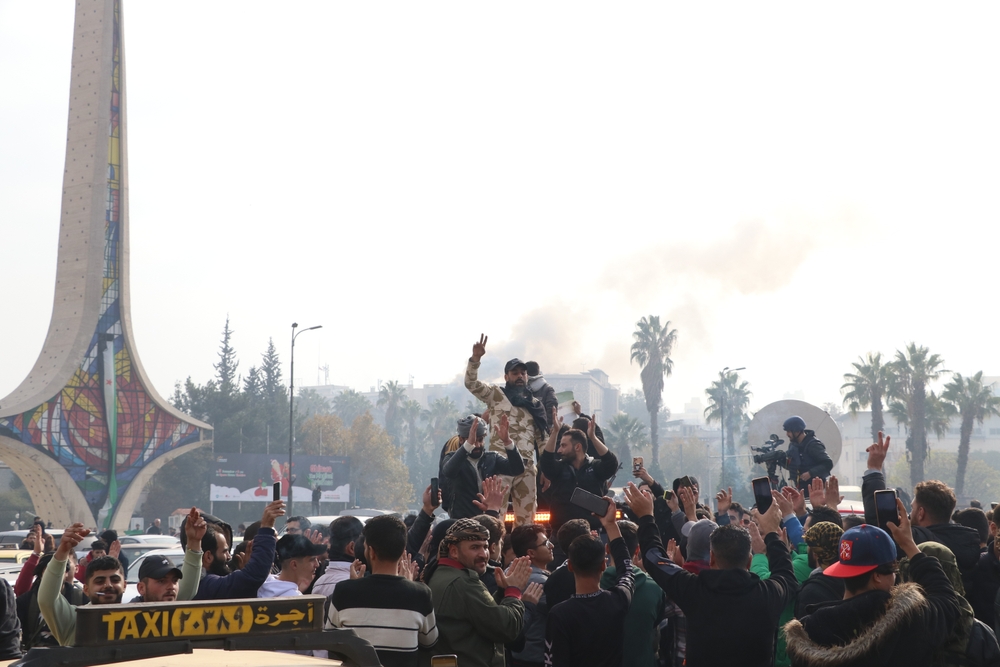
Rubio said the decision followed formal assurances from Al-Sharaa that Syria would not support international terrorism going forward. Syria’s foreign ministry welcomed the move as closing what it called a dark chapter tied to the policies of the country’s former government, while Foreign Minister Asaad Hassan Al-Shaibani said the delisting formally severed Syria’s legal association with the ousted Assad dynasty, in power for roughly half a century until its fall in 2024.
The history behind the designation
Syria’s terrorism listing originated under Hafez Assad in 1979 and was sustained through his son Bashar’s rule based on Damascus’s support for Palestinian militant groups and alleged direct involvement in attacks abroad, including a 1986 attempted bombing of an Israeli El Al flight. In more recent years, the designation was tied primarily to the Assad government’s alignment with Iran and its material support for Hezbollah, the Lebanese Shia militant movement that fought a sustained war with Israel through the spring of this year. Removing that legal architecture now, less than two years after Assad’s fall, reflects Washington’s judgment that Al-Sharaa’s government represents a genuine break from that pattern rather than a continuation of it under new leadership, a judgment that remains untested against Syria’s actual conduct over time.
The delisting was announced alongside a meeting between President Donald Trump and Al-Sharaa on the sidelines of the NATO summit in Ankara, where Trump praised the Syrian leader’s efforts to unify the country following what he described as the disorder of the Assad years.
Al-Sharaa, a former jihadist commander who has since presented himself in Western diplomatic settings in a suit rather than the fatigues of his insurgent past, has been positioning his government as a partner for reconstruction financing and regional stability since taking power. Trump had previously pressed publicly for Syria to normalise relations with Israel and proceeded with the delisting despite the absence of visible progress on that front, indicating Washington is treating economic reintegration and Syrian-Israeli normalisation as separate tracks rather than conditioning one on the other.
Israel has repeatedly conducted airstrikes inside Syria since Assad’s fall, treating the country as one of its historic adversaries regardless of the change in government in Damascus, and has expressed reservations about Washington’s rapid embrace of Al-Sharaa.
That divergence surfaced again last month, when Trump suggested Syria under Al-Sharaa could take over from Israel in a campaign to degrade Hezbollah’s remaining capabilities inside Lebanon, a proposal Al-Sharaa publicly declined, saying he did not intend to intervene militarily in a country Syria itself occupied for decades under the Assads. The distance between Washington’s diplomatic and economic outreach to Damascus and Israel’s continued military posture toward it represents an unresolved seam in the administration’s regional strategy, one that neither side has yet been forced to reconcile directly.
Removing the terrorism designation is less a single policy adjustment than a marker of how far Washington is willing to go in underwriting Syria’s post-Assad reconstruction, at a moment when the country is attempting to rebuild after a war that both produced the Islamic State’s rise and displaced millions of Syrians across the region.
Rubio’s stated rationale, that a stable and unified Syria benefits the wider region rather than only Damascus, reflects an explicit bet that economic normalisation will reinforce Al-Sharaa’s government more effectively than continued isolation would, a bet regional partners will be watching closely given Syria’s central position in the security architecture of the Levant.
Whether the delisting translates into meaningful reconstruction investment will depend on factors beyond Washington’s control, including whether Israel’s continued strikes inside Syrian territory persist, escalate, or ease as Al-Sharaa’s government consolidates authority. For now, the 45-day countdown to formal delisting proceeds against a backdrop in which Syria’s most consequential neighbour has yet to signal it shares Washington’s assessment of the new government in Damascus.