


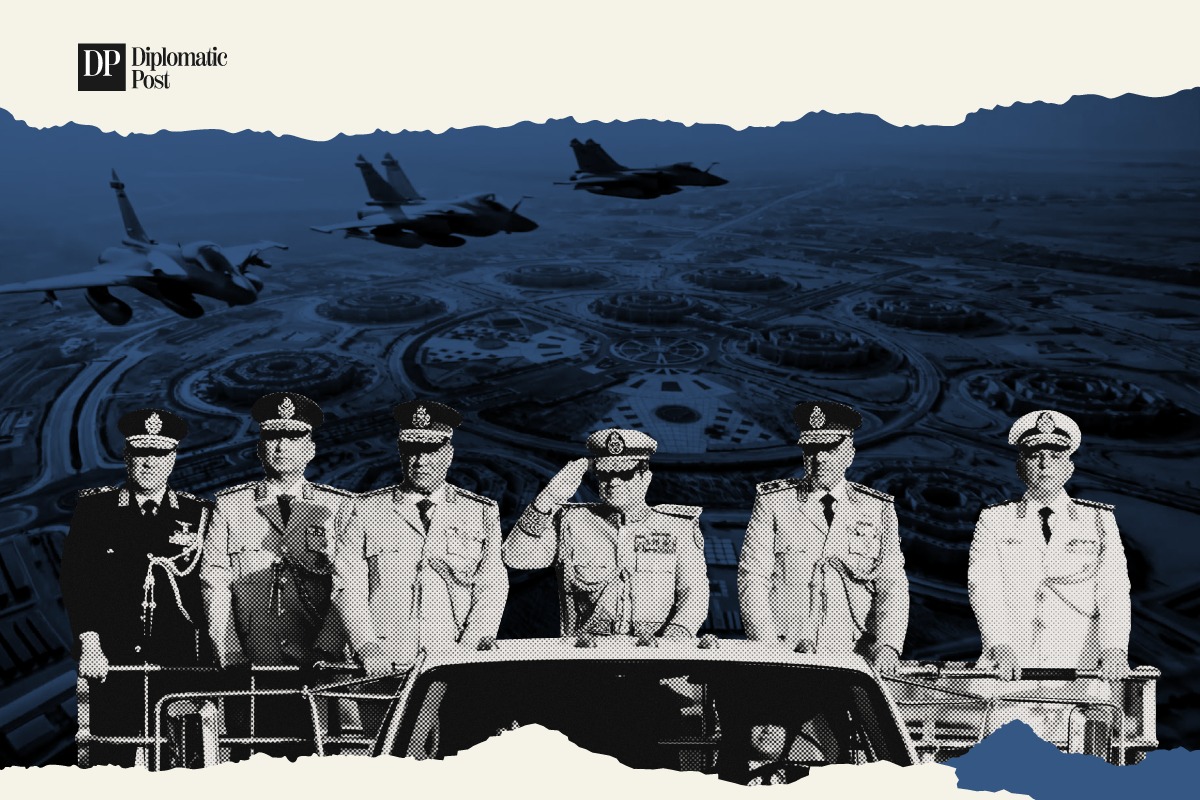


Egypt’s president dons a uniform to open the defence complex in the new administrative capital in the desert
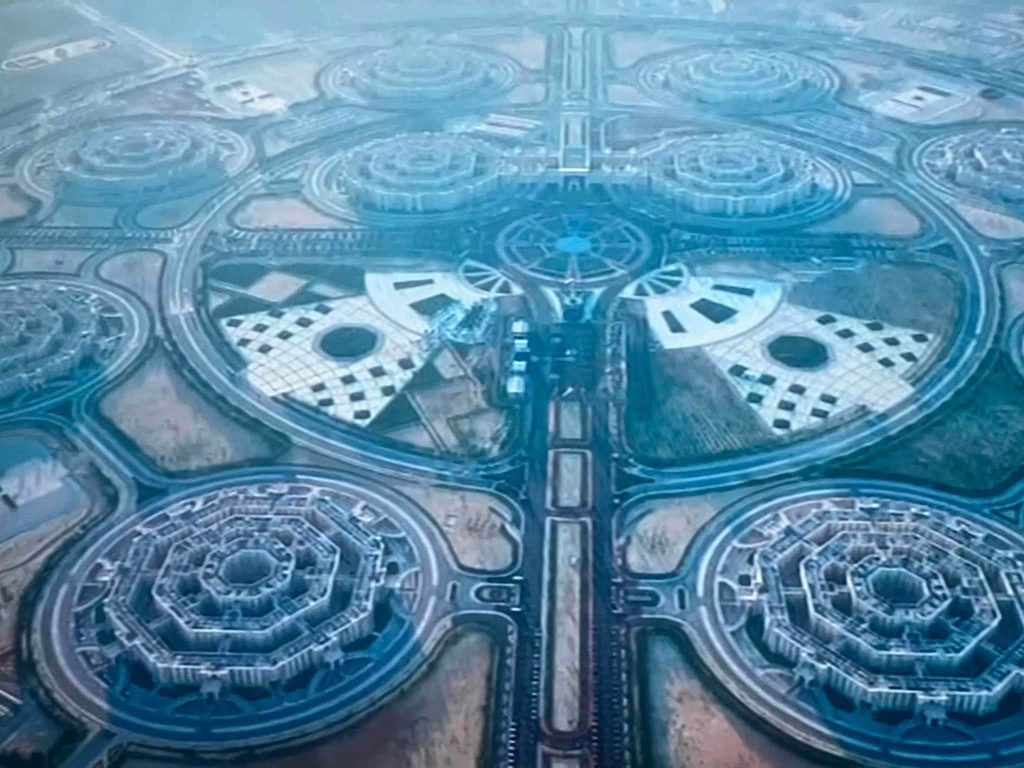
The Egyptian desert has gained a new landmark that is impossible to ignore. Stretching across vast expanses east of Cairo, the Octagon is not simply another government building or military base. It is one of the largest defence headquarters ever constructed, designed to become the operational heart of Egypt’s armed forces and a powerful symbol of President Abdel Fattah el Sisi’s vision of national strength.
Its inauguration comes at a time when the Middle East is experiencing one of its most volatile periods in decades. War in Gaza continues to reshape regional security, instability persists in Sudan and Libya, tensions remain high in the Red Sea, and competition among regional powers has intensified. Against that backdrop, Egypt’s decision to unveil a military headquarters reportedly larger than the Pentagon is about far more than architecture. It reflects Cairo’s determination to position itself as a central military and strategic power capable of managing crises across several fronts.
According to official statements, the Octagon forms the centrepiece of Egypt’s new Strategic Command complex inside the country’s New Administrative Capital, approximately 45 kilometres east of Cairo. The headquarters is intended to house the leadership of the Egyptian Armed Forces while integrating command, intelligence, communications and operational planning within a single modern facility. Officials describe it as one of the world’s largest military command centres, capable of directing military operations across every branch of the armed forces.
The project forms part of the broader development of Egypt’s new administrative city, one of the government’s most ambitious infrastructure programmes. Designed to reduce pressure on overcrowded Cairo, the new capital hosts ministries, parliament, diplomatic missions and major government institutions. By placing military command alongside the country’s emerging political centre, Egyptian authorities are creating a highly centralised decision-making structure that reflects both administrative efficiency and national security priorities.
The symbolism is equally important. Naming the headquarters the Octagon immediately invites comparisons with the Pentagon, the iconic headquarters of the United States Department of Defence. While Egyptian officials have not formally presented the project as a direct rival, the comparison underlines Cairo’s desire to project confidence, organisational sophistication and regional influence.
Military symbolism has long played an important role in Egypt’s political culture. Since the armed forces became the dominant institution following the 1952 revolution, they have remained deeply involved not only in national defence but also in economic development, infrastructure projects and domestic governance. Under President el Sisi, himself a former army chief, the military has expanded its role even further, overseeing major construction projects while remaining the country’s most influential state institution.
A Fortress in an Unstable Region
The timing of the inauguration reflects the increasingly complex security environment surrounding Egypt. Few countries face such a broad range of strategic challenges simultaneously.
To the east, the war between Israel and Hamas has generated continuing concerns over the humanitarian situation in Gaza and the stability of Egypt’s border with the Palestinian territory. Cairo has maintained its role as a mediator while reinforcing security around the Rafah crossing and closely monitoring developments that could affect national security.
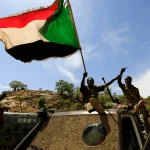
To the south, Sudan’s civil war has created one of the world’s largest displacement crises. Fighting between rival military factions has pushed hundreds of thousands of refugees towards neighbouring countries while raising concerns about arms trafficking, organised crime and regional instability along Egypt’s southern frontier.
Western Libya remains another persistent concern. Although large scale fighting has subsided compared with previous years, political fragmentation and the continued presence of armed groups leave uncertainty close to Egypt’s western border. Cairo has long viewed stability in Libya as essential to its own national security.
The Red Sea has emerged as another area of growing importance. Attacks on commercial shipping have disrupted one of the world’s busiest maritime trade routes, affecting global supply chains and reducing traffic through the Suez Canal. For Egypt, whose economy depends heavily upon canal revenues, maritime security has become an increasingly urgent national priority.
These overlapping challenges explain why Egypt has invested heavily in modernising its armed forces over the past decade. According to defence analysts, Cairo has acquired advanced fighter aircraft, naval vessels, submarines, helicopters, air defence systems and surveillance technologies from a diverse range of international suppliers. Rather than relying predominantly on one strategic partner, Egypt has pursued procurement relationships with the United States, France, Germany, Italy, South Korea and other countries.
This diversification reflects a broader strategic objective. Egyptian planners increasingly seek flexibility rather than dependence. Access to multiple suppliers allows Cairo to reduce political risks while ensuring continued access to advanced military technology even during periods of diplomatic tension.
The Octagon therefore represents far more than office space. Modern military operations depend upon integrated command systems capable of processing enormous amounts of intelligence while coordinating land, air, naval, cyber and special forces operations in real time. Centralised command facilities have become essential for responding rapidly to multiple simultaneous crises, particularly in regions where threats evolve quickly across several theatres.
Official descriptions suggest that the headquarters incorporates advanced digital communications, secure command networks and facilities designed to support complex joint operations. Although many technical details remain confidential, military experts note that contemporary command centres increasingly rely upon sophisticated information systems capable of integrating intelligence from satellites, drones, surveillance aircraft and frontline units.
Power Projection Beyond Egypt
The Octagon also carries significant diplomatic implications. Egypt has consistently presented itself as a pillar of regional stability and an indispensable security partner for both Western governments and Arab states. A headquarters of this scale reinforces that message by demonstrating institutional capacity alongside military capability.
For neighbouring countries, the project sends several signals simultaneously. Allies may view it as evidence of Egypt’s ability to contribute to regional security and multinational operations. Potential adversaries may interpret it as a reminder of Cairo’s determination to defend its interests across an increasingly unstable neighbourhood.
At the same time, the project inevitably raises questions about national priorities. Egypt continues to face substantial economic pressures, including inflation, high public debt and the continuing impact of regional instability upon tourism and Suez Canal revenues. Some observers therefore question whether enormous prestige projects represent the best allocation of public resources during difficult economic conditions.
Government officials reject that criticism, arguing that national security cannot be separated from economic development. They maintain that stable institutions, secure borders and modern military capabilities remain essential foundations for attracting investment and protecting long term economic growth. According to official statements, the new administrative capital itself is intended to support future development by creating a more efficient centre of government.
The Octagon also reflects changing patterns across the Middle East, where several regional powers have invested heavily in military modernisation, domestic defence industries and advanced command infrastructure. Rather than focusing exclusively on conventional warfare, governments increasingly prepare for hybrid threats that combine cyber attacks, drone operations, terrorism, maritime disruption and information warfare.
Egypt’s strategic geography makes that transformation particularly relevant. Positioned between Africa, the Middle East and the Mediterranean, while controlling the Suez Canal, the country occupies one of the world’s most important geopolitical crossroads. Events unfolding hundreds of kilometres beyond its borders frequently carry direct consequences for Egyptian security.
Whether the Octagon ultimately proves as influential as its symbolic name suggests will depend less upon its impressive scale than upon the effectiveness of the institution operating inside it. Modern headquarters cannot by themselves resolve regional conflicts, secure borders or guarantee strategic influence. Those outcomes depend upon political leadership, military professionalism, diplomatic engagement and sustained economic resilience.
Yet the inauguration marks an important moment in Egypt’s long term strategic evolution. It illustrates how Cairo increasingly sees itself not simply as a country defending its own territory but as a regional security actor preparing for a more unpredictable era. As conflicts continue to reshape the Middle East and North Africa, Egypt appears determined to strengthen both the physical infrastructure and institutional capacity required to respond. Over the coming years, the Octagon is likely to stand not only as one of the world’s largest military headquarters but also as a visible expression of Egypt’s ambition to remain one of the defining strategic powers in an increasingly contested region.