


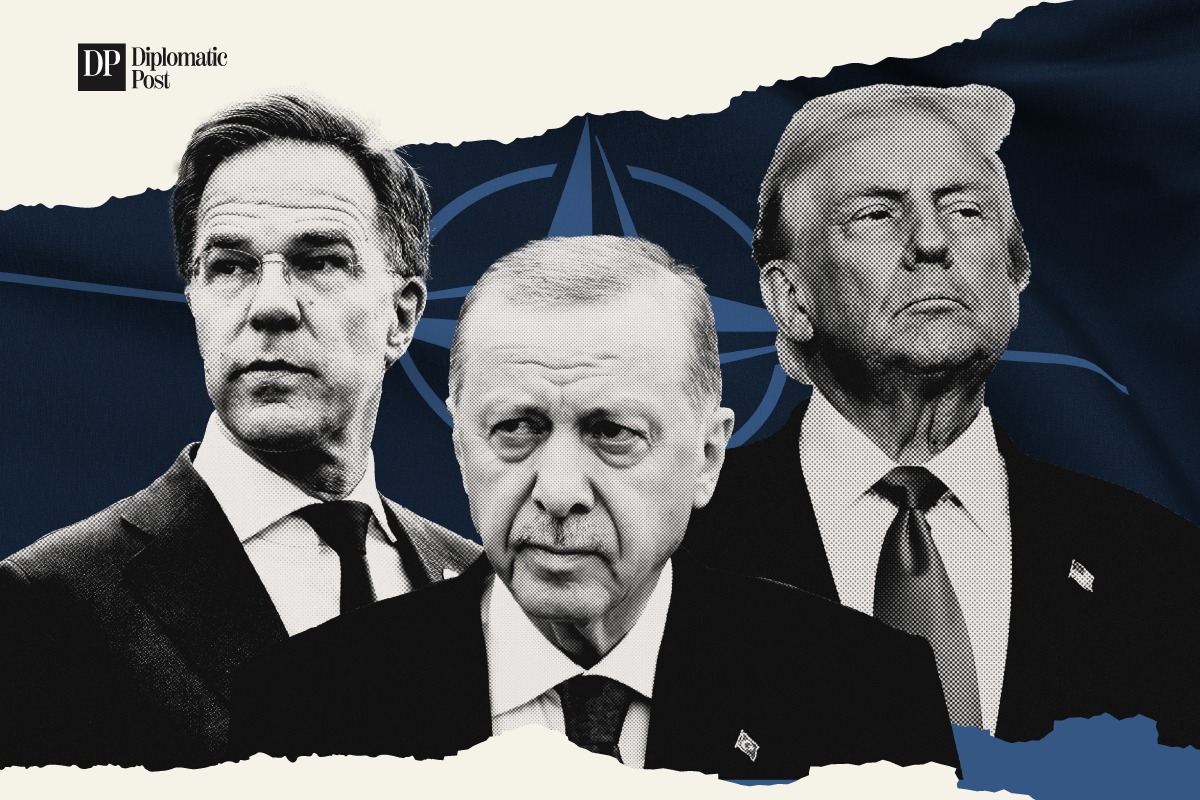


What Turkey wanted from NATO has changed and so has what NATO is and represents. The 36th NATO Summit underscores both developments.
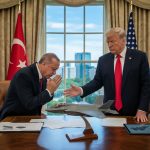
When leaders gather in Ankara for NATO’s thirty sixth summit this week, the focus will extend far beyond defence spending, military production or the war in Ukraine. The meeting has become a test of whether the Atlantic alliance can preserve its political cohesion at a moment when its most powerful member has repeatedly questioned its future. United States President Donald Trump has spent years casting doubt on NATO, threatening to withdraw Washington from the alliance and arguing that European members have relied too heavily on American security guarantees. His decision to attend the summit, after making clear that his personal relationship with Turkish President Recep Tayyip Erdogan influenced that choice, has placed Turkey at the centre of NATO politics in a way few would have predicted only a few years ago.
The symbolism is striking. Turkey was recently viewed by many allies as one of NATO’s most difficult members after delaying Sweden’s accession and pursuing an increasingly independent foreign policy. Today Ankara finds itself acting as a bridge between a sceptical White House and European governments anxious to preserve alliance unity. That transformation says as much about the changing nature of NATO as it does about Turkey’s growing diplomatic leverage.
The summit agenda reflects the alliance’s evolving priorities. According to official statements, leaders will review progress towards higher defence investment targets, strengthen defence industrial cooperation, reaffirm support for Ukraine and discuss security challenges stretching from the Black Sea to the Middle East. Media reports also indicate that the meeting will seek to reassure allies after months of uncertainty surrounding Washington’s long term military commitment to Europe.
A bargain forged in war
Turkey’s relationship with NATO has always rested on more than shared democratic values or political affinity. It has been built upon strategic exchange. The conventional account of Turkey’s accession in February 1952 emphasises Soviet pressure following the Second World War and the security guarantees offered by the United States through the emerging Atlantic alliance. While that explanation remains valid, it tells only part of the story.
Turkey’s path into NATO was far from straightforward. It was rejected twice before eventually gaining admission. Security concerns alone failed to persuade several Western governments that Turkey should become a member. The decisive moment came after Ankara deployed around four thousand five hundred troops to fight alongside United Nations forces in the Korean War during 1950. It marked the first overseas combat operation in the history of the Turkish Republic and demonstrated Turkey’s willingness to contribute directly to Western security.
That decision established a pattern that would shape relations for decades. Turkey offered military capability, strategic geography and political commitment. In return it received security guarantees, international status and recognition as an equal member of the Western alliance.
Turkey’s geographic importance was difficult to overstate during the Cold War. Control of the Bosphorus and Dardanelles restricted Soviet naval access to the Mediterranean. Turkish territory became a key platform for intelligence gathering and military planning. The Incirlik air base evolved into one of Washington’s most important military facilities in the region and has hosted United States nuclear weapons since the Cold War. Turkey also maintained one of NATO’s largest armed forces, protecting the alliance’s southeastern frontier against the Soviet Union.
Membership also carried political significance. Ankara viewed NATO as confirmation that Turkey belonged within the Western political community rather than the Middle East. Throughout accession negotiations Turkish leaders resisted proposals that would have placed the country within regional defence arrangements dominated by Britain alongside Arab states. Instead they insisted on full membership as a European ally, reinforcing a national identity that looked westward despite Turkey’s unique geography.
From dependable ally to indispensable partner
The end of the Cold War transformed this carefully balanced relationship. Once the Soviet threat disappeared, the strategic logic that had underpinned NATO’s southern flank became less obvious. New disagreements emerged that proved far more difficult to manage than the shared challenge once posed by Moscow.
The first Gulf War created lasting resentment in Ankara. Turkish officials argued that economic losses resulting from sanctions on Iraq and regional instability were far greater than anticipated while promised international compensation failed to match expectations. Those frustrations deepened during the run up to the United States invasion of Iraq in 2003 when the Turkish parliament refused permission for American forces to launch operations through Turkish territory. The decision surprised Washington and marked a turning point in bilateral relations.
The Syrian conflict widened those divisions. The United States armed and trained Kurdish fighters as part of the campaign against the Islamic State group. Turkey viewed many of those same groups as inseparable from the Kurdistan Workers Party, which Ankara and several Western governments classify as a terrorist organisation. The disagreement was never simply tactical. It reflected fundamentally different assessments of regional security and national interest.
Relations deteriorated further after Turkey purchased the Russian made S four hundred air defence system in 2017. Defence experts warned that integrating Russian technology into a NATO member’s military infrastructure created unacceptable intelligence and interoperability risks. The dispute led to Turkey’s removal from the United States F thirty five fighter programme and prompted sanctions under American legislation. Although military cooperation continued in other areas, trust within the alliance suffered a significant blow.
Yet despite repeated crises, neither side has found a practical alternative to continued cooperation. NATO cannot easily replace Turkey’s strategic location overlooking the Black Sea, the Eastern Mediterranean, the Caucasus and the Middle East. Turkey, meanwhile, cannot replicate the collective security guarantee contained in Article Five of the North Atlantic Treaty. The result is a relationship characterised by both mutual dependence and persistent disagreement.
That reality explains why Ankara occupies such a prominent position at this week’s summit. Turkey has increasingly presented itself as the alliance’s gateway to its southern neighbourhood while simultaneously expanding its own diplomatic influence across the Middle East, North Africa and the Black Sea region. Turkish mediation efforts in regional conflicts, combined with a rapidly growing domestic defence industry, have strengthened Ankara’s claim to play a broader strategic role.
According to official statements, discussions in Ankara will include deeper engagement with partners across the alliance’s southern periphery. For Turkey this agenda carries clear geopolitical value. It allows Ankara to position itself as the essential intermediary connecting NATO with neighbouring regions where security challenges increasingly overlap with migration, terrorism, maritime security and energy infrastructure.
For European allies, Turkey’s role is both reassuring and uncomfortable. Ankara remains indispensable for managing access to the Black Sea under the Montreux Convention, controlling key migration routes into Europe and contributing substantial military capabilities. At the same time, its increasingly autonomous foreign policy often diverges from broader alliance preferences.
Muddled future
Trump’s relationship with Erdogan adds another layer of complexity. Personal diplomacy has become a defining feature of the current United States administration, making individual relationships more influential than traditional institutional processes. That dynamic has elevated Erdogan’s importance within NATO even as longstanding policy differences remain unresolved.
The Ankara summit therefore represents more than another gathering of allied leaders. It highlights the extent to which NATO has entered a new phase where political cohesion depends less upon shared ideology than shared necessity. The alliance no longer enjoys the strategic clarity that defined the Cold War. Instead it must reconcile different national priorities while confronting simultaneous challenges from Russia, instability across the Middle East, rising defence demands and uncertainty over future American leadership.
Over the coming months the durability of that model will become clearer. If Ankara succeeds in strengthening its position as NATO’s principal southern partner while maintaining constructive ties with Washington and European capitals, Turkey’s influence inside the alliance is likely to expand further. If disagreements over Syria, defence procurement or regional strategy return to the forefront, familiar tensions could quickly resurface. The central lesson from Ankara is that NATO’s future may depend less upon eliminating those contradictions than upon managing them, with Turkey increasingly occupying the pivotal position where the alliance’s competing interests meet.