


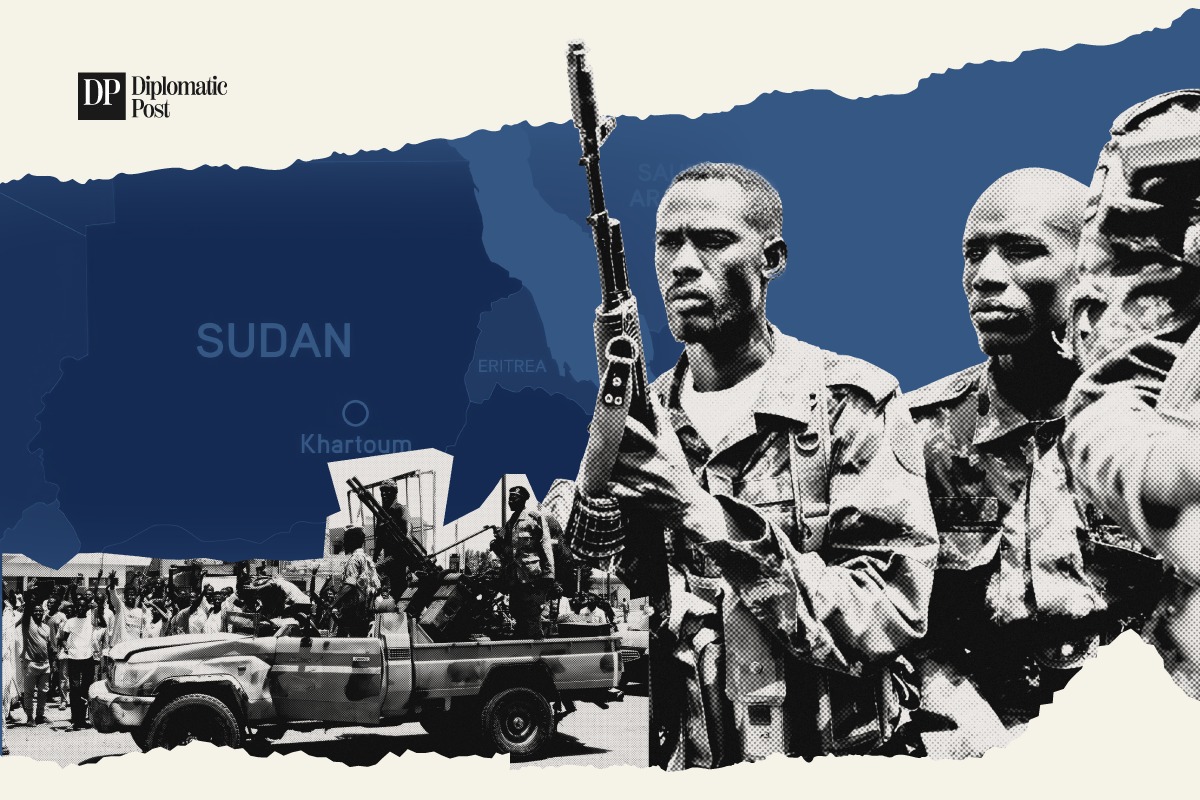


The latest allegations emerging from Sudan are more than another grim entry in the catalogue of a brutal civil war. They represent a stark warning that the conflict has entered a phase where systematic violence against civilians is no longer simply a byproduct of fighting but an apparent military strategy.
As international investigators, humanitarian organisations and United Nations officials raise increasingly urgent alarms, the question confronting governments is no longer whether atrocities are taking place. It is whether the international community is prepared to act before another catastrophe unfolds.
A major investigation released this week concluded that the Rapid Support Forces carried out crimes against humanity and acts consistent with ethnic cleansing during their assault on El Fasher in North Darfur. The findings are based on months of research involving hundreds of interviews with survivors, satellite imagery, video evidence and forensic analysis.
Researchers documented widespread murder, torture, rape, sexual slavery, forced displacement and persecution directed particularly against non Arab communities. Children were among those deliberately targeted during the campaign.
The report presents one of the most detailed accounts yet of how violence unfolded during the lengthy siege and eventual capture of El Fasher in late twenty twenty five. According to investigators, entire communities were attacked in a coordinated campaign designed to eliminate civilian populations regarded as hostile to the Rapid Support Forces.
Witnesses described executions, systematic abuse and destruction of homes on a vast scale. Officials from the organisation behind the report argued that these actions were neither isolated incidents nor the behaviour of undisciplined fighters. Instead, they reflected organised operations carried out under military command.
The accusations reinforce concerns already expressed by United Nations investigators who earlier concluded that events surrounding El Fasher bore the hallmarks of genocide. International legal bodies have also continued gathering evidence concerning alleged war crimes committed during Sudan’s conflict, while several governments have imposed sanctions on senior figures linked to the Rapid Support Forces.
A war that keeps slipping from global attention
Sudan’s civil war began in April twenty twenty three after a power struggle between the Sudanese Armed Forces and the Rapid Support Forces erupted into open fighting. What initially appeared to be a contest for political control rapidly evolved into one of the world’s largest humanitarian disasters.
Millions have been displaced across the country and neighbouring states. Entire cities have been devastated while basic services have collapsed across large areas. Food shortages, disease outbreaks and repeated attacks on medical facilities have compounded the suffering of civilians already trapped by constant fighting. International agencies estimate that tens of millions now require humanitarian assistance while famine conditions threaten several regions.
Yet despite the scale of the crisis, Sudan has struggled to command sustained international attention. Global diplomatic efforts have repeatedly been overshadowed by conflicts elsewhere. Ceasefire initiatives have broken down while external mediation has failed to establish a credible political process capable of ending hostilities.
Security analysts increasingly argue that this diplomatic vacuum has created space for both military factions to intensify operations without meaningful international pressure. The latest findings concerning El Fasher illustrate how quickly that absence of accountability can translate into even greater violence against civilians.
According to the investigation, attacks were characterised by deliberate efforts to terrorise local populations through widespread sexual violence, torture and public executions. Researchers concluded that these methods served not only military objectives but also sought to permanently alter the demographic composition of contested areas through forced displacement and intimidation.
International concern is now extending beyond Darfur. United Nations officials recently issued what they described as a red alert over the strategic city of El Obeid, warning that similar patterns of violence could soon emerge there. Human rights officials have highlighted mounting reports of drone attacks, civilian casualties, deteriorating humanitarian conditions and growing fears that another large scale assault could be imminent if diplomatic efforts fail.
The warnings carry particular weight because many of the indicators now visible around El Obeid resemble those that preceded the assault on El Fasher. Humanitarian workers report increasing restrictions on aid deliveries while civilians continue to flee surrounding areas in anticipation of further fighting.
The wider geopolitical struggle behind the battlefield
Sudan’s conflict cannot be understood solely as an internal civil war. It has evolved into a regional power struggle involving competing political interests, security calculations and external military support.
Several international investigations and expert assessments have examined allegations that outside powers continue supplying weapons, financial assistance and logistical support to rival factions despite repeated calls for restraint. These accusations have fuelled diplomatic tensions while complicating efforts to negotiate a durable ceasefire.
Particular scrutiny has focused on allegations concerning support reaching the Rapid Support Forces through regional networks. Although governments accused of involvement have consistently rejected these claims, international observers argue that continued external assistance has enabled both sides to sustain military operations far longer than would otherwise have been possible.
The geopolitical implications extend well beyond Sudan itself. The country occupies a strategically important position linking North Africa, the Sahel, the Horn of Africa and the Red Sea. Prolonged instability therefore threatens regional trade routes, migration patterns and wider security dynamics affecting several neighbouring countries.
Defence experts also warn that Sudan increasingly demonstrates how modern conflicts combine conventional warfare with organised campaigns targeting civilian populations. Satellite imagery, digital investigations and survivor testimony have become central tools for documenting abuses in real time. While such evidence strengthens future legal accountability, it has so far proved insufficient to prevent atrocities while they are unfolding.
The latest report names senior commanders allegedly responsible for overseeing operations around El Fasher and urges international institutions to pursue accountability through existing legal mechanisms. Researchers also call for stronger protection of civilians and renewed diplomatic engagement aimed at ending hostilities before violence spreads further across central Sudan.
Whether these recommendations produce meaningful action remains uncertain. Previous investigations into atrocities committed during Sudan’s conflict have generated widespread international condemnation without fundamentally changing conditions on the ground.
The coming months may therefore represent a decisive moment. If warnings surrounding El Obeid prove accurate, Sudan risks witnessing another cycle of mass killings before diplomatic efforts gather momentum. Such an outcome would further weaken confidence in international mechanisms designed to prevent crimes against humanity while reinforcing the perception that prolonged conflicts can continue with limited consequences for those directing them.
For policymakers, Sudan has become more than a humanitarian emergency. It is increasingly a test of whether international institutions retain the ability to deter organised atrocities once credible evidence emerges. Every new investigation deepens the historical record. Whether it also changes the political reality will determine not only Sudan’s future but the credibility of the wider international system built to prevent such crimes from recurring.