


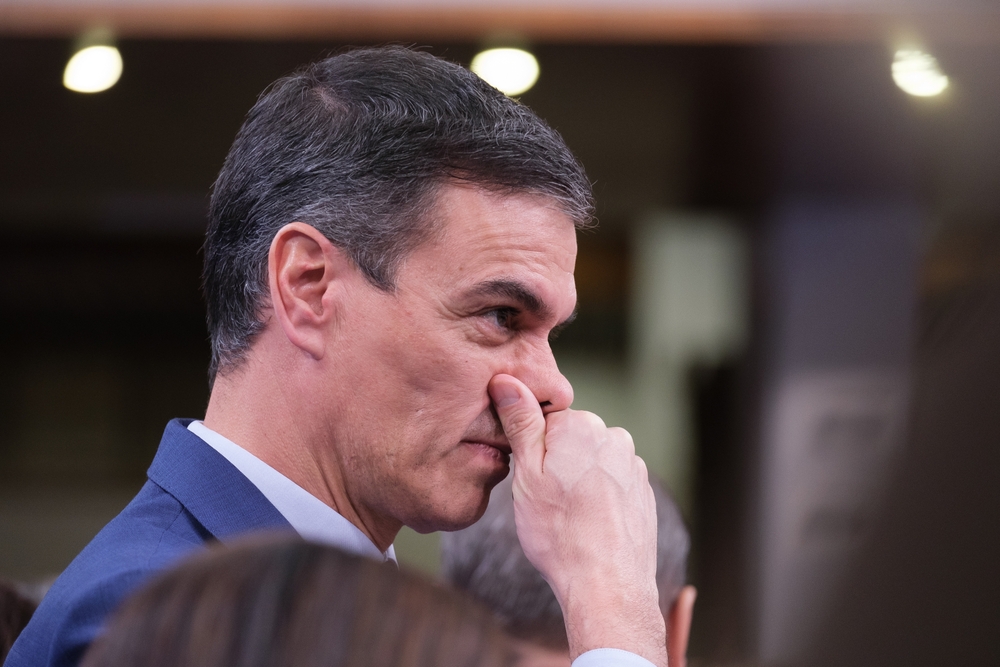


Pedro Sánchez dealt a fresh blow after his former right-hand man was jailed for embezzlement and bribery
In 2018, José Luis Ábalos stood in the Spanish parliament and delivered what observers at the time described as the most devastating speech of the debate on the motion of no confidence against Prime Minister Mariano Rajoy. He condemned the People’s Party’s corruption in language designed to be remembered.
Eight years later, a court in Madrid has sentenced that same Ábalos to 24 years in prison for rigging public contracts for face masks and medical supplies during the Covid pandemic, accepting in exchange a payment of ten thousand euros per month, a flat for his mistress and a range of additional kickbacks.
He received the longest sentence ever handed to a minister in modern Spanish political history. The man who delivered the most scathing attack on conservative corruption has become its defining example from the socialist side of the aisle.
The timing, for Pedro Sánchez, could not be worse. His wife, Begoña Gómez, is heading to trial on charges of influence-peddling linked to her role at a Madrid university. His brother David faces allegations that he leveraged family connections to obtain a position on a city council.
His former mentor and ideological ally, ex-Prime Minister José Luis Rodríguez Zapatero, is under investigation for influence-peddling related to a 53 million euro government bailout of the airline Plus Ultra, in which prosecutors allege Zapatero received up to two million euros for facilitating the rescue of a company that operates just four aircraft.
Sánchez insists he knew nothing of Ábalos’s activities, that the cases against his wife and brother are politically motivated, and that Zapatero is innocent. Whether the Spanish public accepts any of these positions is a different question from whether the legal arguments are sound.
The Anatomy of a Political Crisis
The Ábalos case has a specific quality that makes it particularly damaging for Sánchez personally. Ábalos was not a peripheral figure in the Socialist Workers’ Party machine.
He was its secretary for organisation from 2017 to 2021, the internal administrative position responsible for the party’s day-to-day operations, alongside his role as transport minister. He and his aide Koldo García, who has also been convicted and sentenced in the same scandal, operated at the centre of the governing apparatus.
The argument that Sánchez was unaware of what his transport minister and party organisation secretary was doing has struck even sympathetic Spanish commentators as difficult to sustain.
The Ábalos case is not, as Sánchez’s supporters have attempted to frame the cases involving his wife and brother, a politically motivated investigation by a hostile judiciary. It is a criminal conviction with specific financial transactions, identified contracts, documented kickbacks and a 24-year sentence handed down by a Spanish court.
Sánchez’s position has been further complicated by the judge overseeing the case involving his wife, whose 84-page ruling described the government in language that gave Sánchez’s critics a gift they did not expect. The judge compared the administration to an “absolutist regime” and suggested that the last comparable instance was during the reign of Ferdinand VII in the early 19th century.
The ruling allowed the prime minister’s allies to portray the judicial proceedings against his family as a “deeply flawed hit job by an obsessed judge,” and the involvement of the right-wing pressure group Manos Limpias in filing the original complaints against both his wife and his brother has added weight to the narrative that those specific cases are legally motivated.
But the Ábalos conviction was not filed by Manos Limpias. It was prosecuted by the state, decided by a court, and concerned documented criminal behaviour by the prime minister’s closest political ally.
The Limits of the Greyhound
Sánchez has survived more than most European leaders would recognise as survivable. His own party removed him as its leader in 2016. He ran a primary campaign from a hired car, won the leadership back, and became prime minister within two years.
His nickname, “the greyhound,” reflects an acknowledged ability to outrun situations that would have ended other political careers. Spain’s economy has been among the fastest-growing in the European Union during his tenure, and his government has pointed to that performance as evidence that whatever the corruption scandals involve, they concern individuals rather than the direction of policy.
The structural problem is that the succession of cases has begun to produce a cumulative effect that individual explanations cannot address.
When a prime minister must simultaneously explain that his transport minister, his wife, his brother and his political mentor are all either convicted, on trial or under investigation, the claim that he personally is above reproach becomes harder to sustain with each new development.
His party is trailing the conservative People’s Party in current polling. The elections scheduled for next year are approaching. And the question that Spanish political commentary is now asking openly is not whether Pedro Sánchez will eventually face electoral defeat, but whether the stench of corruption around the government he leads will have become the defining story of his tenure before that election arrives.