




As Russia tests the limits of Ukraine’s air defences, Zelenskyy is pushing for the right to produce American Patriot interceptors on Ukrainian soil.
On the night of 2 June 2026, Russia launched one of its most devastating bombardments of the war. According to Ukrainian authorities, 656 drones and 73 missiles struck cities across the country, killing at least 23 people and injuring 151 in Kyiv and Dnipro alone. Among the most chilling details that emerged was a figure that had nothing to do with the attack itself.
Ukraine was receiving just 60 to 65 Patriot interceptor missiles each month, Zelenskyy told reporters. Russia had just fired more ballistic missiles in a single night than it had in all of the previous month combined. The mathematics of Ukraine’s air defence crisis could not have been made plainer.
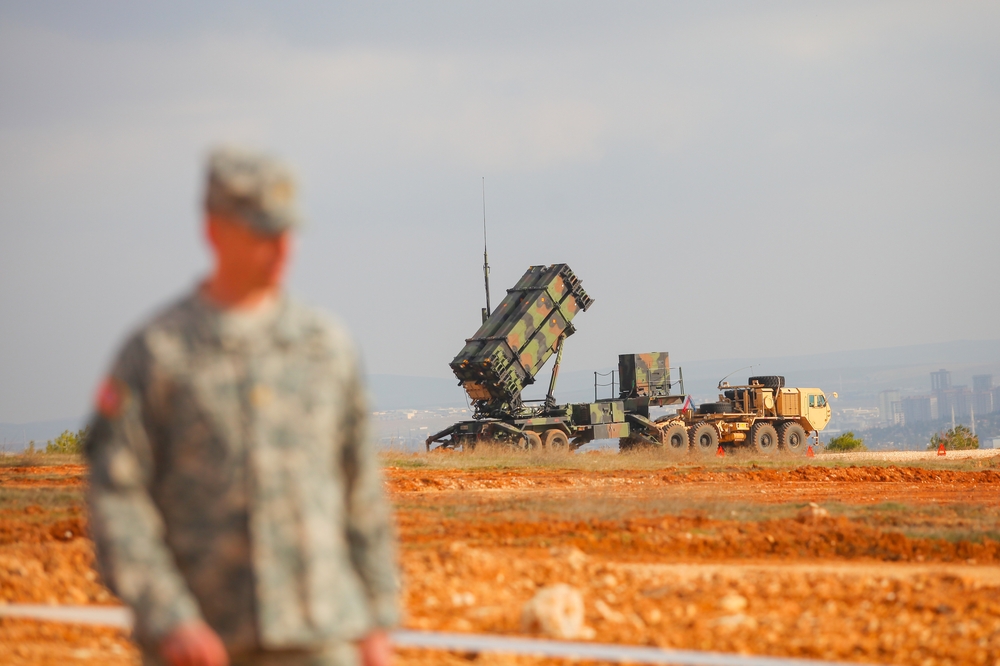
The Patriot system is currently the only weapon in Ukraine’s arsenal capable of reliably intercepting Russian ballistic missiles, the fast-descending weapons that give air defence operators as little as a few minutes to respond. Without sufficient PAC-3 interceptors, the rockets get through.
The problem is that global supply has been catastrophically strained by simultaneous demand from multiple theatres at once. The United States has been consuming Patriot missiles at a remarkable rate during operations involving Iran, with internal Pentagon reports indicating the US military alone burned through more than 1,300 interceptors during that conflict.
Gulf states, including Kuwait, Bahrain and the UAE, collectively fired around 600 Patriot missiles in the same period, three full years of American production exhausted in a matter of weeks. American manufacturers currently produce approximately 650 PAC-3 interceptors per year, though plans to expand that to around 2,000 annually by 2030 are underway.
Russia, meanwhile, has read these numbers clearly. Security analysts note that Moscow deliberately structures its attacks to drain Ukrainian interceptor stocks, opening with waves of cheap drones to force Patriot batteries to fire, then following with fast ballistic missiles and hypersonic Zircon weapons against targets where defences are now thinner.
The 2 June attack reportedly included eight Zircon hypersonic missiles, the most used in any single strike, alongside 41 ballistic missiles, a sign Moscow is consciously targeting the gap between what Ukraine has and what it needs.
Faced with this arithmetic, President Zelenskyy has been pursuing a proposal that would represent the most significant transfer of American military technology in the war’s history.
Since at least May 2026, Kyiv has been formally requesting that Washington grant Ukraine a licence to produce PAC-3 interceptors domestically, writing directly to President Trump and the US Congress to make the case.
The argument is straightforward: if America cannot manufacture enough interceptors to cover both its own needs and Ukraine’s, then Ukraine should be allowed to manufacture them itself, and in time supply them to other allied nations as well. In April 2026, Zelenskyy had already announced an ambition to develop a European anti-ballistic missile system within a year, framing the Patriot licence as an immediate bridge to that longer-term goal.
The obstacles are both technical and political, and they are considerable. The United States has granted co-production licences for Patriot missiles to only two countries, Germany and Japan, both of which navigated years of complex legal requirements, information security guarantees and strict end-use agreements before qualifying.
Ukraine, fighting an active war against a nuclear-armed adversary with factories that sit within range of Russian precision strikes, presents a categorically different risk environment. Recent assessments from Western policy circles suggest that any production facility established on Ukrainian soil would immediately become a top-priority target for Russian missiles, potentially requiring Ukraine to divert scarce Patriot interceptors from civilian protection to defend the very plant building them.
There are also concerns about reverse engineering, given that skilled professionals with access to a production line could potentially extract sensitive technical knowledge about a system that remains the gold standard of mobile ballistic missile defence.
Ukraine has meanwhile begun developing a domestic alternative. Tests of the FP-7.X missile, developed by the Ukrainian firm Fire Point, are intended to pave the way toward a cheaper and faster-to-produce interceptor, though military planners acknowledge the system would be significantly less capable against the most demanding threats than a genuine Patriot.
The critical pressure points in the coming weeks are whether Trump responds to Zelenskyy’s licence request before the next major Russian bombardment cycle, whether Ukraine can clinch the delayed contracts for additional Patriot systems it says were politically agreed in 2025, and whether Germany can accelerate interceptor deliveries from its own stocks under the forward-purchase arrangement Kyiv has proposed.
Russia’s strategy is transparent, and the countdown is visible: drain Ukraine’s shields faster than they can be replenished, then strike when the sky is open. Whether Washington’s answer comes in time is the question on which the survival of Ukrainian cities may ultimately depend.