


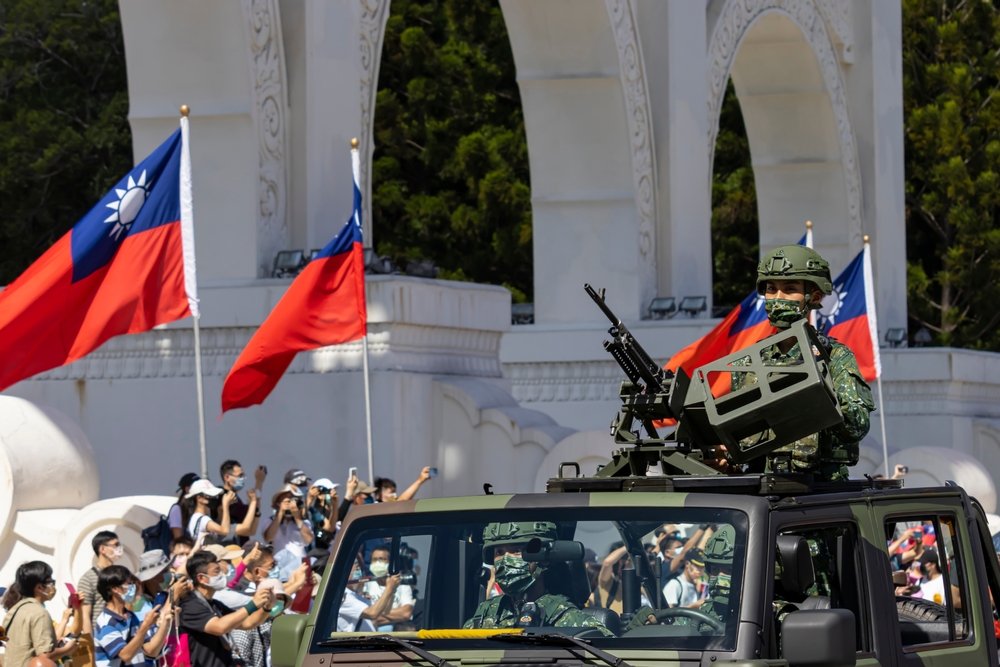


Would China now think twice about invading Taiwan, having seen the economic and reputational cost to the US with its campaign against Iran? Or would it make a Taiwan invasion more likely, given the US’s strategic failure to achieve its objectives?
The war with Iran has given Beijing something rare: a live test of American power under pressure.
China is not watching the Middle East only as a distant crisis. It is studying the weapons used, the political pressure on Washington, the strain on US stockpiles and the way allies react when America is pulled into another major fight. For Beijing, every lesson has a Taiwan angle.
The first lesson is simple. America can still hit hard. US and Israeli strikes showed that Washington can move fast, coordinate with partners and destroy high-value targets far from home. That matters to China. Any plan for Taiwan must now assume that US forces could strike Chinese radar sites, missile launchers, ports and command centres if a war begins.
But the second lesson may be more useful to Beijing. The US military is powerful, but not unlimited. Analysis by CSIS says the Iran war placed new pressure on US stocks of long-range missiles and air-defence interceptors, including Tomahawks, JASSMs, Patriot and THAAD missiles. These are exactly the kinds of weapons Washington would need in a Taiwan conflict.
That is why China may see a clear opening. A war over Taiwan would not be a short missile exchange. It could become a long fight across the Pacific, with US bases in Japan, Guam and the Philippines under threat. CSIS has warned that in several Taiwan war games, the US ran out of some long-range missiles within the first week. Taiwan also used up its anti-ship missiles quickly.
Iran also showed the value of saturation. Missiles and drones do not need to be perfect if they arrive in large numbers. They force defenders to spend expensive interceptors. They stretch radar systems. They create fear around ports, airports and energy sites. China has far more industrial depth than Iran. If Iran could create pressure, Beijing may believe the People’s Liberation Army could create far more.
The danger for Taiwan is obvious. China could try to overwhelm the island before US help arrives in strength. It could attack air bases, ports, power systems and communications. It could also target American bases across the region to slow Washington down. That does not mean an invasion is likely tomorrow. It means Beijing is studying how to make the first days of a war decisive.
The political lesson is just as important. The Iran war gave China a chance to present America as distracted and unstable. Brookings argued that Beijing has used the conflict to question whether Washington can still protect Taiwan and its Asian allies while managing crises elsewhere.
China also gained from the wider economic shock. The Middle East crisis hurt energy markets, but it also allowed Beijing to offer itself as a steadier partner. Brookings noted that China helped some Asian countries deal with energy shortfalls and used the crisis to strengthen its image as a supplier of stability.
Still, Beijing did not see only American weakness. It also saw warning signs. Iran was damaged despite distance, geography and hardened targets. China knows Taiwan is not Iran. The Taiwan Strait is smaller, more watched and packed with US and allied sensors. A Chinese attack would be visible early. It would also risk a direct war with the United States, Japan and possibly others.
So the lesson from Iran is not that China can easily take Taiwan. It is sharper than that. Beijing may believe America can be hurt, slowed and drained. But it also knows America can still punish any state that miscalculates.
For Taiwan, the message is urgent. The island needs more drones, more mobile missiles, more air defence and deeper stockpiles. It needs weapons that can survive the first wave and keep fighting after runways and bases are hit.
For Washington, the message is even clearer. Deterrence in Asia cannot rest on speeches. It rests on full arsenals, protected bases and fast production lines.
Iran did not give China a blueprint for Taiwan. It gave China a warning, a temptation and a test case. That may be more dangerous.