


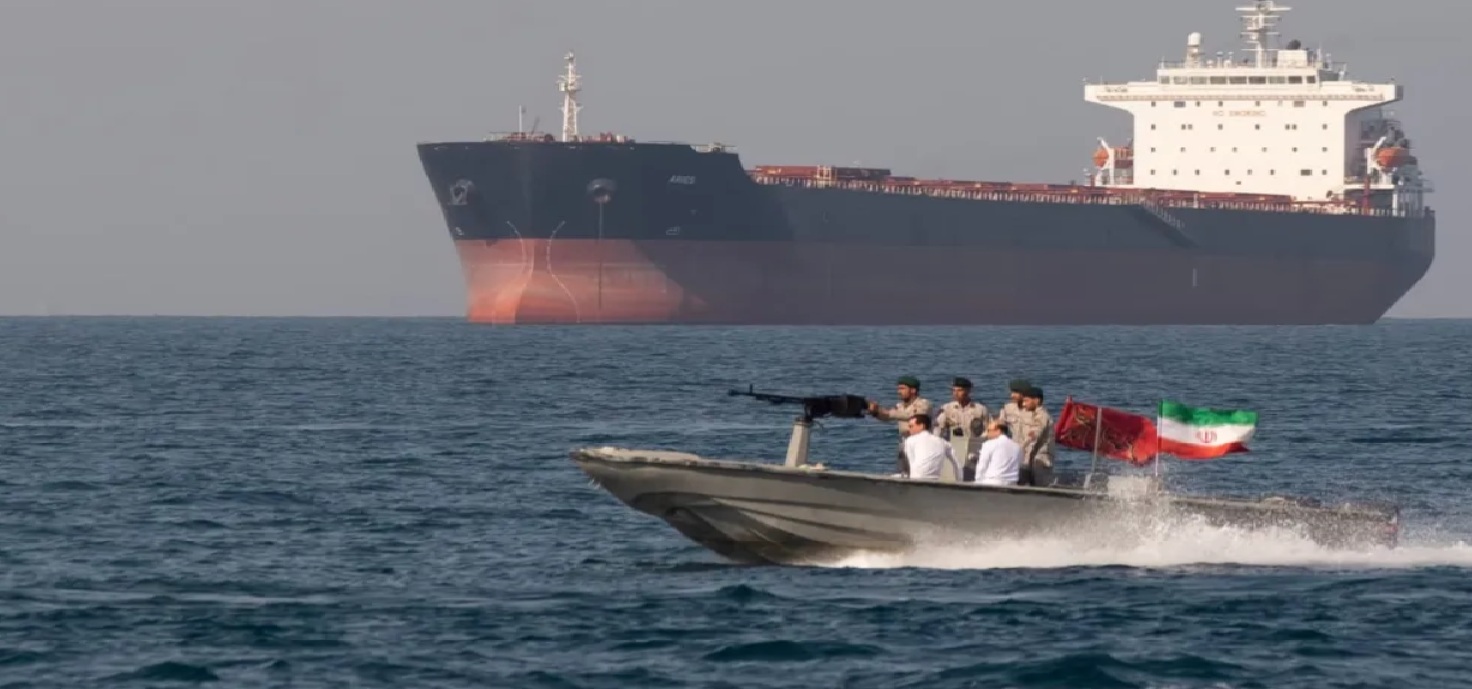


A rapid cycle of strikes and counterstrikes between Washington and Tehran underscores how easily contested maritime chokepoints can spiral into broader regional confrontation.
According to the situation described in recent reports, the uneasy understanding between the United States and Iran has rapidly deteriorated into a cycle of strikes, counterstrikes, and mutual accusations of ceasefire violations. The latest escalation began with a drone attack on a Panama-flagged commercial vessel in the Strait of Hormuz, a waterway through which nearly a fifth of global oil shipments pass. Washington, through the United States Central Command (United States Central Command), responded with airstrikes on targets inside Iran, citing continued aggression against commercial shipping. Tehran, in turn, claimed it had struck U.S. infrastructure in Kuwait and Bahrain, alleging retaliation for American attacks on Iranian military positions.
The central issue is no longer simply maritime security in the Gulf. It is the erosion of deterrence frameworks and the collapse of trust in a fragile memorandum of understanding signed earlier this month between Washington and Tehran. What is unfolding, if the reported sequence of events is accurate, is a rapid transformation of the Strait of Hormuz from a managed flashpoint into an active theater of indirect and direct military signaling. The question facing regional capitals and global markets is whether this remains a contained escalation or the opening phase of a broader regional confrontation.
From maritime harassment to cross-border strikes
The reported sequence suggests a classic escalation ladder, but compressed into hours rather than weeks. The initial trigger an alleged drone strike on the MT Kiku, a Panama-flagged tanker fits a long established pattern of maritime pressure in the Gulf. However, the U.S. response marks a qualitative shift. Strikes on multiple Iranian military sites, including air defense systems, drone facilities, and communications infrastructure, signal an intent not merely to deter maritime interference but to degrade operational capacity onshore.
The involvement of Islamic Revolutionary Guard Corps introduces an additional layer of complexity. Iranian statements, as described, frame the U.S. strikes as violations of a ceasefire embedded in a broader memorandum of understanding. Tehran’s reported retaliation missile and drone strikes against facilities in Kuwait and Bahrain expands the geographic scope of the confrontation beyond Iran’s borders and into Gulf Cooperation Council territory.
Notably, the reported targeting of U.S. facilities in Kuwait and Bahrain both long-standing logistical hubs for American forces signals an attempt by Tehran to demonstrate reach without directly striking the U.S. homeland or initiating full-scale war. This calibrated escalation reflects a familiar Iranian strategic logic: pressure dispersion across multiple theaters to avoid decisive retaliation while sustaining coercive leverage.
Signaling, deterrence, and internal constraints
Both Washington and Tehran appear to be operating within constrained strategic environments.
For the United States, the response if accurately described serves multiple purposes. First, it signals credibility in defending freedom of navigation through the Strait of Hormuz, a principle central to global energy security. Second, it reinforces deterrence against further maritime attacks, particularly after repeated incidents involving commercial vessels. Third, it demonstrates domestic political resolve, especially in the context of heightened scrutiny over Middle East military engagement.
For Iran, the logic is more defensive but equally layered. Tehran’s reported framing of the escalation as a response to violations of a ceasefire agreement suggests an effort to preserve diplomatic legitimacy while continuing coercive pressure. The emphasis on controlling maritime passage through the Strait of Hormuz reflects long-standing Iranian doctrine: the waterway is both a strategic asset and a bargaining chip.
The statement attributed to Iranian officials that “the Strait of Hormuz remains under total oversight and management of Iran” underscores this posture. It signals an assertion of sovereign control over a critical global chokepoint, even as such claims directly challenge international maritime norms.
The Strait of Hormuz: A structural vulnerability in global security
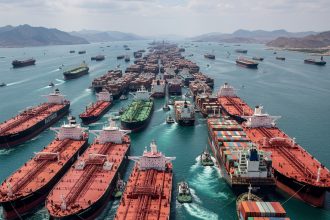
The Strait of Hormuz linking the Persian Gulf to the Arabian Sea is not merely a regional flashpoint. It is a structural vulnerability in the global economy. Any sustained disruption affects oil prices, insurance markets, shipping routes, and energy-import-dependent economies across Europe and Asia.
The reported shutdown or restriction of the strait following earlier escalations has already demonstrated how quickly energy markets react to perceived instability. Even limited interference in shipping lanes can trigger price volatility, increase freight premiums, and force rerouting through longer and more expensive maritime corridors.
If the current cycle of attacks continues, the strategic risk is not only military escalation but systemic economic disruption. Unlike conventional battlefields, maritime chokepoints create global spillover effects almost immediately. This makes restraint by external actors including Gulf states, China, and European importers—an essential stabilizing factor.
Gulf states caught in the middle
The reported activation of air defense systems in Kuwait and Bahrain highlights the vulnerability of Gulf states hosting U.S. military infrastructure. These countries are not direct belligerents in the U.S.–Iran confrontation, yet they are among the first to absorb its kinetic consequences.
For Gulf Cooperation Council members, the escalation reinforces a longstanding strategic dilemma: reliance on U.S. security guarantees versus the risk of becoming a battlefield in proxy or direct exchanges. The reported Iranian strikes, even if limited or symbolic, signal that neutrality is increasingly difficult to maintain in a polarized regional security environment.
Israel is also indirectly implicated, given its historical role in shaping U.S.–Iran tensions, though it is not directly mentioned in the current sequence of events. Meanwhile, European states—heavily dependent on Gulf energy flows face renewed exposure to energy price shocks and supply uncertainty.
China, as a major importer of Gulf oil, would also have strong incentives to push for de-escalation, potentially through backchannel diplomacy or maritime security initiatives. Russia, conversely, could benefit from higher energy prices but also risks further destabilization of global markets.
Contained escalation or strategic rupture?
Three broad scenarios emerge from the reported developments.
First, managed escalation: Both Washington and Tehran continue calibrated strikes while maintaining indirect communication channels. Maritime disruptions persist but remain limited, and diplomatic intermediaries attempt to restore the memorandum framework. This is the most stable outcome but requires immediate de-escalation incentives.
Second, cyclical retaliation: A tit-for-tat pattern becomes entrenched, with periodic strikes on maritime assets and regional infrastructure. This would create persistent instability in the Strait of Hormuz without full-scale war, but with sustained economic disruption.
Third, strategic rupture: One side miscalculates, leading to significant casualties or large-scale damage to naval or energy infrastructure. This scenario risks broader regional war, potential closure of the strait, and severe global economic shock.
Key indicators to watch include: continuity of maritime traffic through the Strait of Hormuz, U.S. force posture adjustments in the Gulf, Iranian missile deployment patterns, and the role of intermediaries such as Oman in re-establishing dialogue.
A fragile order built on contested waters
The reported escalation between the United States and Iran underscores a fundamental reality of contemporary geopolitics: maritime chokepoints are no longer passive transit zones but active arenas of strategic competition. The Strait of Hormuz, already one of the world’s most sensitive energy corridors, is once again at the center of a contest where military signaling, economic pressure, and diplomatic fragility intersect.
What makes the current situation particularly dangerous is not only the exchange of strikes, but the erosion of the very frameworks designed to prevent escalation. Ceasefire agreements and memoranda of understanding appear increasingly conditional, interpreted differently by each side, and enforced through military rather than diplomatic means.
Whether this episode stabilizes or accelerates into a wider confrontation will depend less on rhetoric than on restraint something that appears increasingly scarce on both sides of the Gulf for eventually total escalation.