


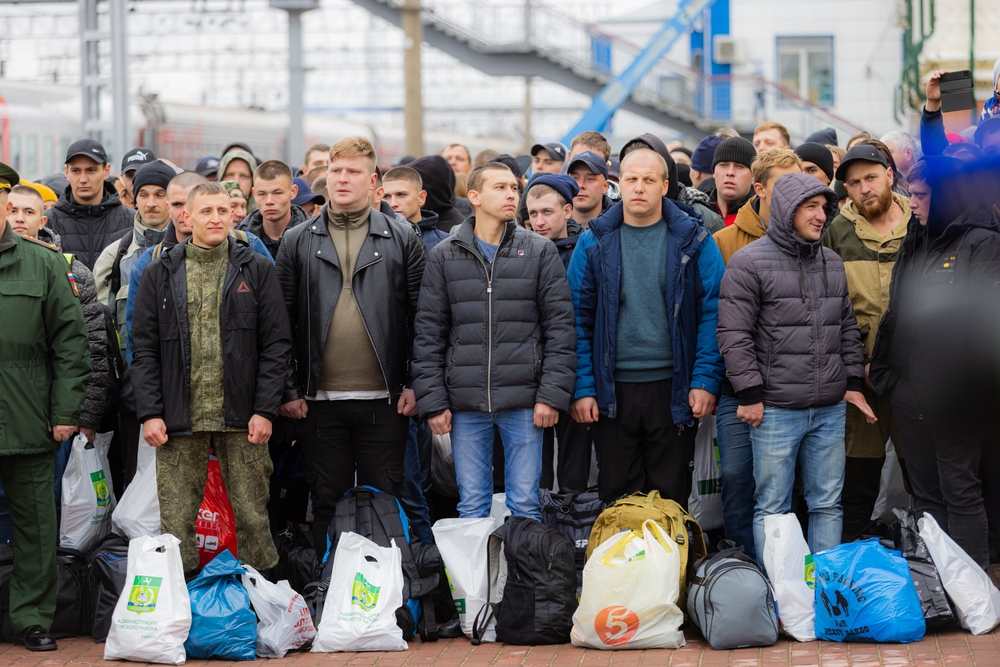


As recruitment falters and battlefield losses mount, the Kremlin faces a choice between political stability at home and sustaining its war in Ukraine.
More than four years into Russia’s full-scale invasion of Ukraine, the Kremlin may be approaching one of the most politically consequential decisions of the war: whether to order another large-scale mobilisation. Reports from independent Russian media suggest officials are weighing fresh measures to replenish depleted ranks after September’s State Duma elections, reflecting growing concerns that voluntary recruitment is no longer sufficient to sustain military operations. While the Kremlin has not confirmed such plans, the very discussion highlights mounting pressure on Russia’s wartime manpower model.
- Russia’s Recruitment Model Is Showing Signs of Fatigue
- Attrition Has Become the Decisive Battlefield
- Mobilisation Would Solve One Problem—And Create Several Others
- Ukraine and NATO Are Watching the Political Dimension
- The Kremlin Still Has Alternatives
- Policy Outlook
- Russia’s manpower model is reaching its political and military limits
The question extends far beyond troop numbers. A second mobilisation would test the resilience of Russia’s economy, the durability of Vladimir Putin’s domestic legitimacy and the Kremlin’s ability to wage a prolonged war while avoiding significant public unrest. It would also shape Ukraine’s military calculations, NATO’s planning assumptions and the prospects for future negotiations. The manpower issue is becoming not merely a military challenge but one of Russia’s defining strategic vulnerabilities.
Russia’s Recruitment Model Is Showing Signs of Fatigue
Since the partial mobilisation announced in September 2022, the Kremlin has deliberately avoided another nationwide call-up. The political cost of that decision was immediate: hundreds of thousands of Russians left the country, labour shortages intensified and public anxiety spread across urban centres that had largely remained insulated from the war.
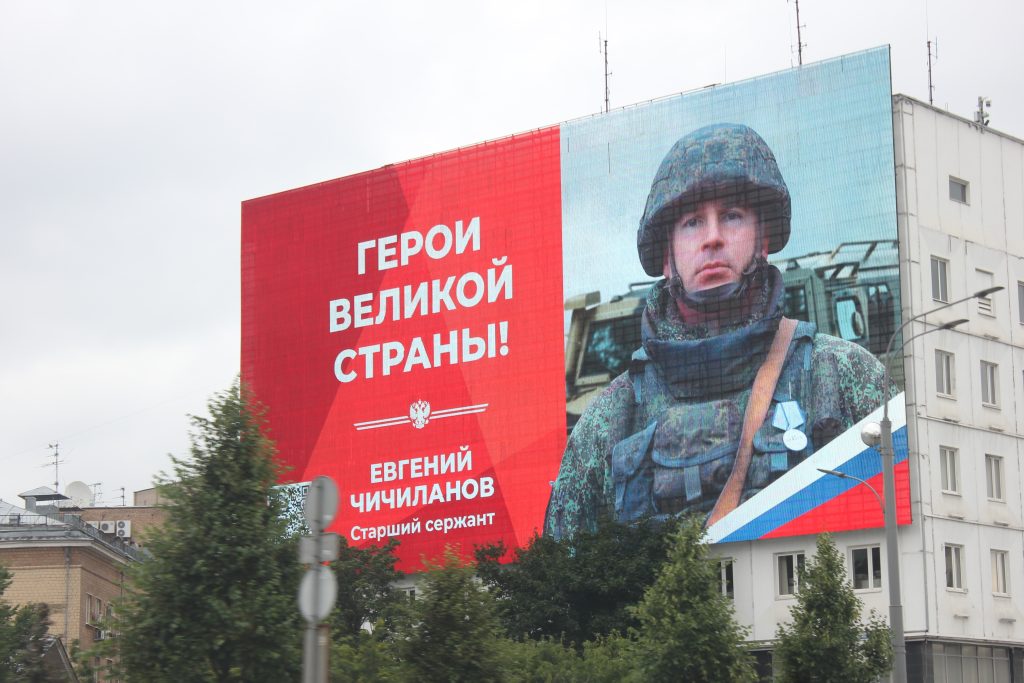
Instead, Moscow built a more politically sustainable recruitment system based on financial incentives. Regional governments dramatically increased signing bonuses, while military recruiters targeted prisoners, indebted citizens, migrant workers and economically depressed regions. This approach enabled the Kremlin to sustain offensive operations without formally acknowledging the scale of Russia’s manpower challenge.
That model, however, appears to be losing momentum. Independent reporting indicates that voluntary enlistment has declined sharply despite ever-larger financial incentives, suggesting that the pool of willing recruits is shrinking. At the same time, Russian authorities have reportedly expanded increasingly coercive recruitment practices, including aggressive contract campaigns and intensified pressure on reservists.
The challenge is structural rather than temporary. Every additional volunteer is becoming more expensive to recruit while often bringing less military experience than earlier waves of personnel.
Attrition Has Become the Decisive Battlefield
Russia continues to possess overwhelming advantages in industrial production, missile manufacturing and manpower reserves. Yet these advantages are increasingly offset by the extraordinary human cost of sustained offensive operations.
Open-source analysts and Western intelligence assessments suggest Russian advances have slowed considerably in recent months despite continued assaults across multiple sectors of the front. Ukrainian long-range strikes against logistics hubs, oil infrastructure and military facilities have complicated Russian operations while increasing the cost of maintaining offensive momentum.
This reflects a broader evolution of the war. Territorial gains are no longer determined primarily by dramatic breakthroughs but by each side’s ability to replace personnel, sustain logistics and maintain industrial output over time.
In this environment, manpower has become a strategic resource comparable to ammunition production or missile inventories. Even if Russia continues making incremental territorial gains, maintaining that pace requires a constant flow of replacement troops. Without adequate reinforcement, offensive operations become increasingly expensive while delivering diminishing strategic returns.
Mobilisation Would Solve One Problem—And Create Several Others
From a purely military perspective, another mobilisation could replenish depleted formations and provide commanders with greater operational flexibility. It could also reduce dependence on increasingly costly recruitment incentives.
Politically, however, the calculus is far more complicated.
The 2022 mobilisation demonstrated that compulsory service carries consequences extending well beyond military recruitment. It accelerated capital flight, encouraged emigration among younger professionals and undermined the Kremlin’s longstanding effort to shield much of Russian society from the direct costs of war.
Putin has carefully cultivated an image that the “special military operation” requires sacrifice from professional soldiers rather than ordinary families. A nationwide mobilisation would fundamentally alter that social contract.
The economic implications could prove equally significant. Russia’s labour market is already constrained by demographic decline, wartime production demands and previous waves of emigration. Removing tens or hundreds of thousands of additional working-age men from civilian employment would deepen labour shortages across manufacturing, transport and construction while increasing inflationary pressures.
Such costs are manageable during a short conflict. They become progressively harder to absorb during a prolonged war of attrition.
Ukraine and NATO Are Watching the Political Dimension
For Kyiv, reports of mobilisation discussions reinforce a broader assessment that Russian offensive operations are becoming more difficult to sustain than official Kremlin messaging suggests.
Ukraine’s strategy increasingly focuses on raising Russia’s long-term costs rather than attempting rapid territorial breakthroughs. Long-range drone strikes targeting logistics, energy infrastructure and military production aim to complicate Russia’s ability to sustain prolonged offensive operations rather than simply destroy equipment.
NATO governments are likely to interpret any future mobilisation as evidence that Russia remains committed to a prolonged confrontation rather than preparing for meaningful negotiations.
For European policymakers, this would reinforce arguments for accelerating defence production, expanding ammunition manufacturing and maintaining long-term military support for Ukraine. Rather than signalling Russian strength, mobilisation could be interpreted as evidence that Moscow’s existing force-generation model has reached its limits.
The Kremlin Still Has Alternatives
Despite growing speculation, compulsory mobilisation is not the Kremlin’s only option.
Russian authorities could expand reserve call-ups, further increase financial incentives, recruit additional foreign nationals or widen the use of prisoners and migrants. These measures carry lower immediate political risks than another nationwide mobilisation, even if they produce fewer troops.
The Kremlin also retains significant capacity to adapt administratively, gradually tightening recruitment mechanisms without formally announcing mobilisation. Such incremental approaches would be more consistent with Putin’s preference for avoiding politically disruptive decisions whenever possible.
Nevertheless, each alternative suffers from diminishing returns. Higher bonuses increase fiscal costs. Foreign recruitment remains limited in scale. Prison recruitment cannot expand indefinitely. Coercive recruitment risks generating public resentment even without a formal mobilisation decree.
Policy Outlook
The next six to twelve months will reveal whether Russia can sustain its current military strategy without fundamentally altering its domestic political model.
Three scenarios appear plausible.
The firstb and perhaps most likely is continued incremental mobilisation through expanded contract recruitment, reservist call-ups and administrative pressure while avoiding a politically explosive nationwide announcement.
The second is a limited mobilisation introduced after September’s parliamentary elections, allowing the Kremlin to spread political responsibility while presenting the decision as a necessary response to evolving battlefield conditions.
The third, though less likely in the near term, would involve a broader restructuring of Russia’s wartime economy if military setbacks become sufficiently severe to require much larger force generation.
Each scenario carries costs. The central question is no longer whether Russia can recruit more soldiers, but whether it can do so without undermining the political stability that has become one of Putin’s greatest strategic assets.
Russia’s manpower model is reaching its political and military limits
The debate over mobilisation reflects a deeper reality about the war in Ukraine. Russia is not simply fighting for territory; it is managing the growing tension between military necessity and domestic political stability.
For more than four years, the Kremlin has sought to wage a major conventional war while insulating most Russians from its human costs. That balancing act is becoming increasingly difficult. Whether Putin ultimately orders another mobilisation or continues relying on more gradual recruitment measures, the underlying challenge will remain the same: sustaining a long war of attrition without eroding the political foundations that have enabled it.
The coming months will therefore be shaped not only by developments on the battlefield but by decisions made inside the Kremlin about how much additional sacrifice Russian society is willing or prepared to bear.