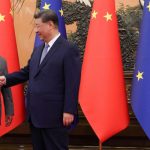



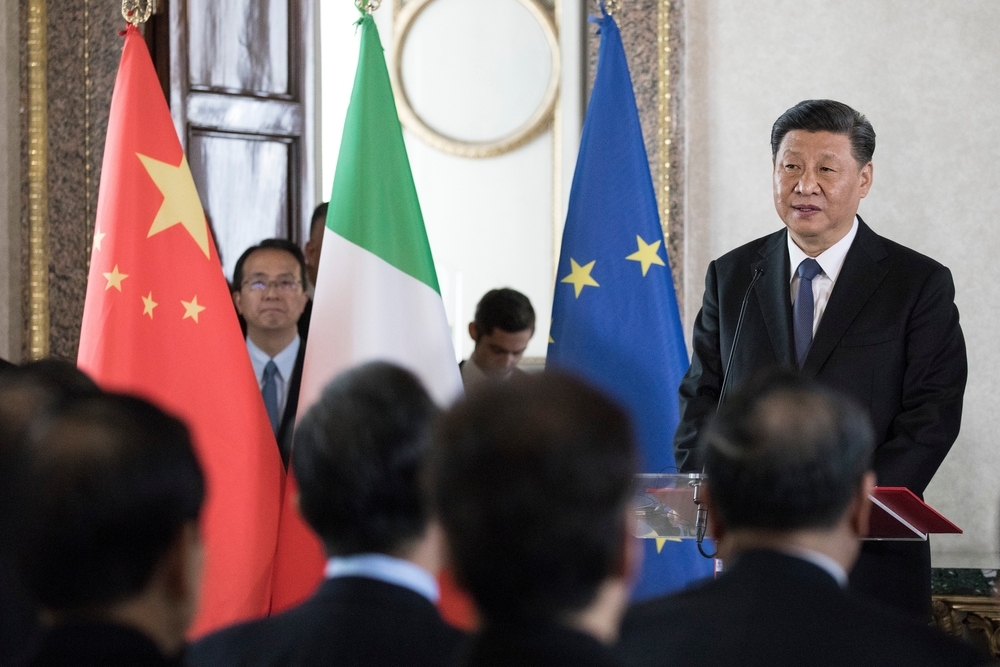


Chinese President Xi Jinping is seeking to position Beijing as one of the key centres of global diplomacy, while an increasing number of countries particularly so-called middle powers are looking for support outside the traditional framework of US influence, the Guardian writes in an analytical piece on China’s expanding diplomatic role.
According to the newspaper, Xi has hosted more than ten world leaders in Beijing this year, aiming to strengthen economic ties, expand China’s political influence, and promote a vision of an international order in which the West no longer plays a dominant role. The Chinese president met Bangladesh’s new prime minister, Tarique Rahman, on Friday, which the Guardian describes as the latest in a series of visits by foreign leaders to Beijing. The meeting followed less than two weeks after Xi hosted Myanmar’s military leader Min Aung Hlaing, who has since assumed the presidency. In May, Xi also welcomed the leaders of Russia, Brunei, Serbia, Tajikistan, and Pakistan, while numerous foreign ministers attended lower-level meetings. According to the same source, Russian President Vladimir Putin, British Prime Minister Keir Starmer, and US President Donald Trump also visited China this year.
“The long list of world leaders travelling to Beijing to meet Xi Jinping reflects growing recognition of China’s expanding global influence,” said William Yang, senior analyst at the International Crisis Group.
According to him, many countries outside the major power blocs see such visits as an opportunity to build more independent relations with Beijing, particularly at a time when the United States is increasingly perceived as an unpredictable partner. Yang argues that China can use these engagements to promote a multipolar world order while gradually reducing other states’ reliance on Washington.
The Guardian assesses that China is seeking to present itself as a source of stability and, for many poorer countries, an important provider of credit and investment. At the same time, there is a growing perception in parts of the world that the United States is losing its former dominant position on the international stage.
Although Trump’s visit to Beijing carried strong symbolic significance, Chinese leadership, according to the report, pays particular attention to leaders from the Global South. This approach is most evident in relations with Myanmar. Min Aung Hlaing was received in Beijing with full honours, and Xi expressed China’s firm support for his regime, invoking the principle of non-interference in internal affairs. Professor Chong Ja Ian of the National University of Singapore said such treatment effectively signals Beijing’s recognition of the legitimacy of Myanmar’s military authorities. On the other hand, Steve Tsang, director of the China Institute at the University of London, argues that this is part of Xi Jinping’s broader strategy aimed at reshaping the international order.
According to Tsang, Beijing is promoting the principle that no country has the right to dictate how others organise their internal affairs.
“Engaging with less attractive leaders from less wealthy countries is in many respects the essence of that strategy,” he said, adding that Xi is shifting the centre of global power away from developed democracies toward a Global South led by China.
A similar approach, the Guardian notes, is visible in Beijing’s relations with Pyongyang. During Xi Jinping’s recent visit to North Korea, he reportedly avoided publicly addressing the country’s nuclear programme, despite China’s previous strong opposition to its development. Instead, the emphasis was placed on stabilising relations, with Beijing’s silence interpreted as tacit acceptance of a new reality.
Chinese state media seek to present such diplomatic activity as evidence that Beijing is becoming the new centre of global politics. Global Times argued in May that the successive visits by Trump and Putin demonstrate both the intensity of China’s diplomatic calendar and its growing global influence.
However, the Guardian points out that diplomatic visibility does not always translate into decisive influence in resolving international crises. Although China initially pressured Iran to negotiate a ceasefire with the United States, it did not play the role of a key peacemaker. Similarly, while it helped mediate the 2023 détente between Saudi Arabia and Iran, Beijing still lacks decisive leverage over Tehran.
Despite these limitations, the growing number of foreign leaders visiting Beijing suggests that China is capitalising on shifts in global politics, presenting itself as an alternative to the Western model of international relations.