



The upcoming summit in Ankara is shaping up as a test of whether NATO can adapt to a new era defined by American impatience, European uncertainty, and an increasingly fragmented global security environment.
With fewer days remaining before NATO leaders gather in Ankara, the Alliance is confronting a paradox. On paper, NATO appears stronger than at any point since the Cold War. Defense spending is rising, European militaries are rearming, and Russia remains bogged down in Ukraine. Yet beneath the surface, political tensions between Washington and Europe threaten to undermine the very unity that NATO claims as its greatest strength.
The 2026 summit will not be remembered for a single transformative declaration. Unlike last year’s landmark commitment to spend 5 percent of GDP on defense, Ankara is shaping up as a test of whether NATO can adapt to a new era defined by American impatience, European uncertainty, and an increasingly fragmented global security environment.
The central question is no longer whether Europe should spend more on defense. It is whether the Alliance can survive the transition from an American-led security order to a more balanced transatlantic partnership.
Trump Wants Results, Not Rhetoric
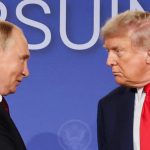
For President Donald Trump, NATO’s future is increasingly measured by burden-sharing rather than values or historical solidarity.
His criticism of European reluctance to support military action against Iran, combined with renewed questions about the Alliance’s usefulness, signals that Washington’s patience is wearing thin. The message from the White House is straightforward: allies must not only spend more but also assume greater operational responsibility.
This reality explains why issues such as Greenland and the Strait of Hormuz could unexpectedly dominate discussions in Ankara.
What may appear as separate disputes are, in fact, symptoms of a larger debate about who carries the burden of Western security. If European allies can offer practical initiatives in the Arctic and maritime security missions in the Gulf, they may provide Trump with visible evidence that NATO is evolving rather than merely preserving the status quo.
Europe’s Biggest Challenge Is Not Russia—It’s Replacing America
The most strategically important proposal on the table may be the creation of a NATO transition mechanism to manage Europe’s gradual assumption of capabilities long provided by the United States.
For decades, European security has depended on American strategic lift, intelligence assets, missile defense systems, air refueling capabilities and command structures. While European governments are increasing defense budgets, replacing these assets cannot happen overnight.
The danger is not American withdrawal itself. The danger is a mismatch between Washington’s desire to reduce its military footprint and Europe’s ability to fill the resulting gaps.
If the United States moves faster than European militaries can adapt, NATO could enter a period of strategic vulnerability precisely when deterrence against Russia remains essential.
Ankara therefore represents more than a summit. It may become the starting point for a managed transfer of responsibilities that will define transatlantic relations for the next decade.
The Eastern Flank Remains NATO’s Credibility Test
While political attention often focuses on summit communiqués, NATO’s credibility is ultimately measured on its eastern frontier.
Today, American forces still account for the majority of NATO’s military presence in Central and Eastern Europe. Countries such as Poland, Romania and the Baltic states continue to rely heavily on U.S. military deployments as the backbone of deterrence against Russia.
This creates an uncomfortable reality for Western Europe.
If Washington is prepared to station tens of thousands of troops thousands of miles from home, European powers can no longer justify limited contributions to frontline defense. The credibility of Europe’s strategic autonomy will ultimately be judged not by speeches in Brussels but by troops, equipment and readiness levels on NATO’s eastern flank.
The pressure on countries such as Germany and France to assume larger military roles is therefore likely to intensify in Ankara.
NATO’s Future May Depend on Delivering a Political Victory
Ankara could also reveal an uncomfortable truth about modern alliance politics: strategic success increasingly requires political theater.
Proposals to showcase newly purchased American military equipment are not merely symbolic. They are designed to demonstrate to Trump that his pressure campaign has produced tangible results. In an era where domestic political narratives shape foreign policy, visible proof of European rearmament may matter as much as the rearmament itself.
The challenge for NATO leaders will be balancing substance and symbolism. A summit that offers only political spectacle risks reinforcing doubts about the Alliance’s strategic direction. Yet a summit that ignores political realities may fail to secure continued American commitment.
The Real Summit Question
The most important outcome from Ankara may not be a new defense target, military initiative or strategic declaration.
Instead, success will depend on whether NATO can answer a more fundamental question: can the Alliance remain united while power inside it is being redistributed?
For decades, NATO’s strength came from overwhelming American leadership. The coming decade will test whether it can remain effective as Europe assumes greater responsibility and Washington demands greater returns.
Ankara is therefore more than another summit on the diplomatic calendar. It is the first major checkpoint in NATO’s transition from dependence to partnership—and potentially the moment that determines whether the Alliance emerges stronger from that transition or becomes increasingly vulnerable to internal division.
The road to Ankara is not about spending targets or summit communiqués. It is about redefining the transatlantic bargain. If NATO can translate Europe’s rearmament into real military capability while convincing Washington that burden-sharing is becoming reality, the summit could mark the beginning of a stronger Alliance. If it fails, Ankara may be remembered as the moment when questions about NATO’s future