




As Moscow complains about a fading understanding with Washington, the Kremlin’s push for negotiations reveals growing concern over the trajectory of the war rather than confidence in its outcome.
For much of the war in Ukraine, the Kremlin portrayed time as its greatest ally. Russian officials argued that Western unity would fracture, military aid would decline, and Ukraine would eventually be forced into negotiations on Moscow’s terms. Three years after Russia’s full-scale invasion, that assumption is increasingly being tested.
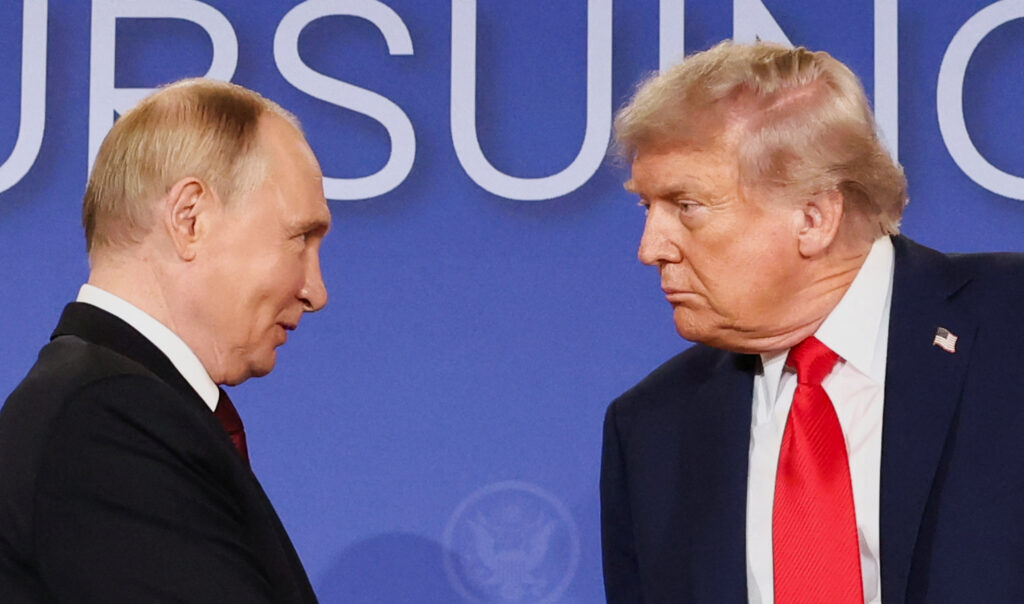
Recent appeals from President Vladimir Putin for renewed peace negotiations, coupled with unusually public complaints from senior Russian officials that Washington has failed to honor unspecified “understandings” allegedly reached with U.S. President Donald Trump during last year’s Alaska summit, point to a notable shift in Moscow’s messaging. At the same time, Ukraine has intensified long-range strikes against Russian military and energy infrastructure, placing pressure on logistics networks far from the front lines.
The significance of these developments lies not in the immediate military balance but in what they reveal about Russia’s strategic calculations. Moscow continues to occupy substantial Ukrainian territory and retains significant military resources. Yet the Kremlin’s growing emphasis on diplomacy suggests concern that the war is becoming more costly, less predictable, and increasingly difficult to shape politically. The question confronting policymakers is no longer whether Russia can sustain the war, but whether Moscow can achieve its objectives before the strategic environment turns further against it.
The Return of Negotiations as a Strategic Weapon
Calls for negotiations are often interpreted as signs of moderation. In the context of the Ukraine war, they are better understood as instruments of strategy.
Russia’s references to previous discussions in Istanbul and reported understandings reached during the Alaska summit appear designed to revive a diplomatic framework favorable to Moscow. The Kremlin continues to seek international acceptance of territorial gains while limiting Ukraine’s military capabilities and future security partnerships.
What has changed is the urgency behind these appeals.
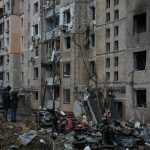
For much of 2023 and 2024, Russian officials projected confidence that battlefield momentum was moving in their favor. Today, Moscow faces a more complex reality. Ukrainian strikes increasingly target refineries, fuel depots, logistics hubs, military airfields, and transport infrastructure inside Russia and occupied territories. While these attacks have not fundamentally altered the front line, they have increased the economic and political costs of the war.
Military success is not measured solely by territorial advances. It is also measured by the ability to sustain operations. Ukraine’s strategy increasingly focuses on degrading Russia’s capacity to wage war rather than attempting immediate large-scale territorial liberation. That shift mirrors broader trends in modern warfare, where logistics, energy systems, and industrial resilience often matter as much as battlefield maneuver.
The Kremlin understands this dynamic. Its renewed emphasis on negotiations may therefore reflect a desire to freeze the conflict before these cumulative pressures become more severe.
The Real Battlefield Is Russia’s War Economy
The most important front in the war may no longer be located in eastern Ukraine.
Russia has successfully adapted to Western sanctions, redirecting energy exports toward Asia and expanding wartime industrial production. Yet adaptation is not the same as sustainability. The Russian economy remains heavily dependent on hydrocarbon revenues, while defense spending consumes an increasing share of state resources.
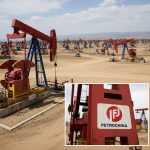
Repeated attacks on energy infrastructure threaten one of Moscow’s most important economic lifelines. Damage to refineries affects not only export revenues but also domestic fuel supplies and military logistics. Combined with labor shortages, inflationary pressures, and rising military expenditures, the long-term costs are becoming harder to conceal.
The Kremlin has thus far insulated much of the Russian population from the war’s consequences. However, wars become politically dangerous when economic strains become visible in daily life.
This helps explain why Russian officials have increasingly framed Ukrainian strikes as attempts to “destabilize society.” Such rhetoric reflects concern that public patience may not be unlimited, particularly if disruptions to transport, energy supplies, or consumer markets become more widespread.
The challenge for Putin is not immediate political collapse. Russia’s political system remains highly centralized and repressive. Rather, the challenge is preserving the perception that the war remains manageable and ultimately winnable.
Trump, Europe, and Moscow’s Strategic Miscalculation
Another factor shaping Russian behavior is uncertainty regarding American policy.
For much of the past year, Moscow appeared convinced that political developments in Washington would eventually produce a settlement favorable to Russian interests. Trump’s skepticism toward military aid for Ukraine, combined with tensions between the United States and several European allies, reinforced those expectations.
Recent Russian criticism of Washington suggests those assumptions may no longer hold.
Whether or not formal understandings were reached during discussions between Trump and Putin, Russian officials clearly expected greater diplomatic movement. Instead, they see continued Western support for Kyiv, closer coordination between the United States and European allies, and no meaningful pressure on Ukraine to accept territorial concessions.
For the Kremlin, this represents a strategic disappointment.
Russia’s broader objective has always extended beyond Ukraine itself. Moscow seeks recognition of a revised European security order in which Russia enjoys privileged influence over its neighbors and limits on NATO’s role in Eastern Europe. The failure to secure such recognition through diplomacy leaves Russia increasingly dependent on military coercion.
That dependency carries risks. The longer the war continues, the more Europe adapts to a prolonged confrontation with Russia.
Europe’s Strategic Test
For Europe, the current moment presents both an opportunity and a challenge.
The opportunity stems from evidence that Russia is not achieving the decisive victory many feared at various points during the conflict. Ukraine has demonstrated remarkable military adaptability, particularly in long-range strike capabilities, drone warfare, and maritime operations in the Black Sea.
The challenge is maintaining political cohesion.
European governments face growing fiscal pressures, domestic political polarization, and competing security priorities. Defense spending has increased significantly across NATO, yet sustaining support for Ukraine requires long-term political commitment rather than short-term emergency measures.
Moscow understands this vulnerability. Russian strategy increasingly combines military pressure with information operations, cyber activities, energy leverage, and efforts to exploit political divisions within Western democracies.
The Kremlin does not necessarily need to defeat NATO militarily. It merely needs to convince Western publics that continued support for Ukraine is too costly.
This makes the political dimension of the war as important as the military one.
The Risks of a Russian Setback
Western policymakers should also be cautious about assuming that a weakened Russia automatically produces greater stability.
History demonstrates that military setbacks can generate unpredictable political consequences inside authoritarian systems. A prolonged erosion of Russian military effectiveness could intensify elite rivalries, increase tensions between Moscow and regional authorities, and deepen social pressures created by casualties and economic strain.
Such developments would not necessarily result in democratization or a more cooperative Russia. They could just as easily produce greater nationalism, internal instability, or escalation abroad.
This is one reason why many European governments continue to balance support for Ukraine with efforts to avoid direct confrontation with Russia.
The objective is not regime change in Moscow. It is the restoration of deterrence and the preservation of European security.
Policy Outlook
Over the next twelve months, three scenarios appear plausible.
The first is a negotiated freeze of the conflict. This remains the Kremlin’s preferred outcome, provided it can retain occupied territory while securing limits on Ukraine’s future military development.
The second is a prolonged war of attrition. This remains the most likely scenario. Neither side currently possesses the military capacity necessary for a decisive breakthrough, making sustained pressure on logistics, infrastructure, and economic resilience increasingly important.
The third is strategic deterioration for Russia. Continued attacks on energy infrastructure, combined with economic pressures and military attrition, could significantly weaken Moscow’s bargaining position. While not guaranteeing Ukrainian victory, such a scenario would strengthen Kyiv’s leverage in any future negotiations.
For Western governments, the key question is whether they can maintain unity long enough for these pressures to produce meaningful strategic effects.
Conclusion
The Kremlin’s renewed calls for negotiations should not be mistaken for evidence that peace is near. Rather, they reflect a growing recognition that the war is entering a more uncertain and potentially dangerous phase for Russia.
Moscow still possesses significant military power and remains capable of sustaining the conflict. Yet its increasingly vocal frustration with Washington, concerns about Ukrainian strikes, and emphasis on reviving earlier diplomatic frameworks suggest that the strategic environment is becoming less favorable than the Kremlin anticipated.
The broader lesson extends beyond Ukraine. The war is increasingly a contest of endurance, economic resilience, political cohesion, and strategic patience. Whether Russia’s latest diplomatic offensive succeeds will depend less on events in Moscow than on whether Ukraine and its Western partners can maintain the pressure that has prompted the Kremlin to seek negotiations in the first place.