




A narrowly passed Senate resolution to halt hostilities marks an unusual institutional pushback — but its legal force may matter less than the political signal it sends.
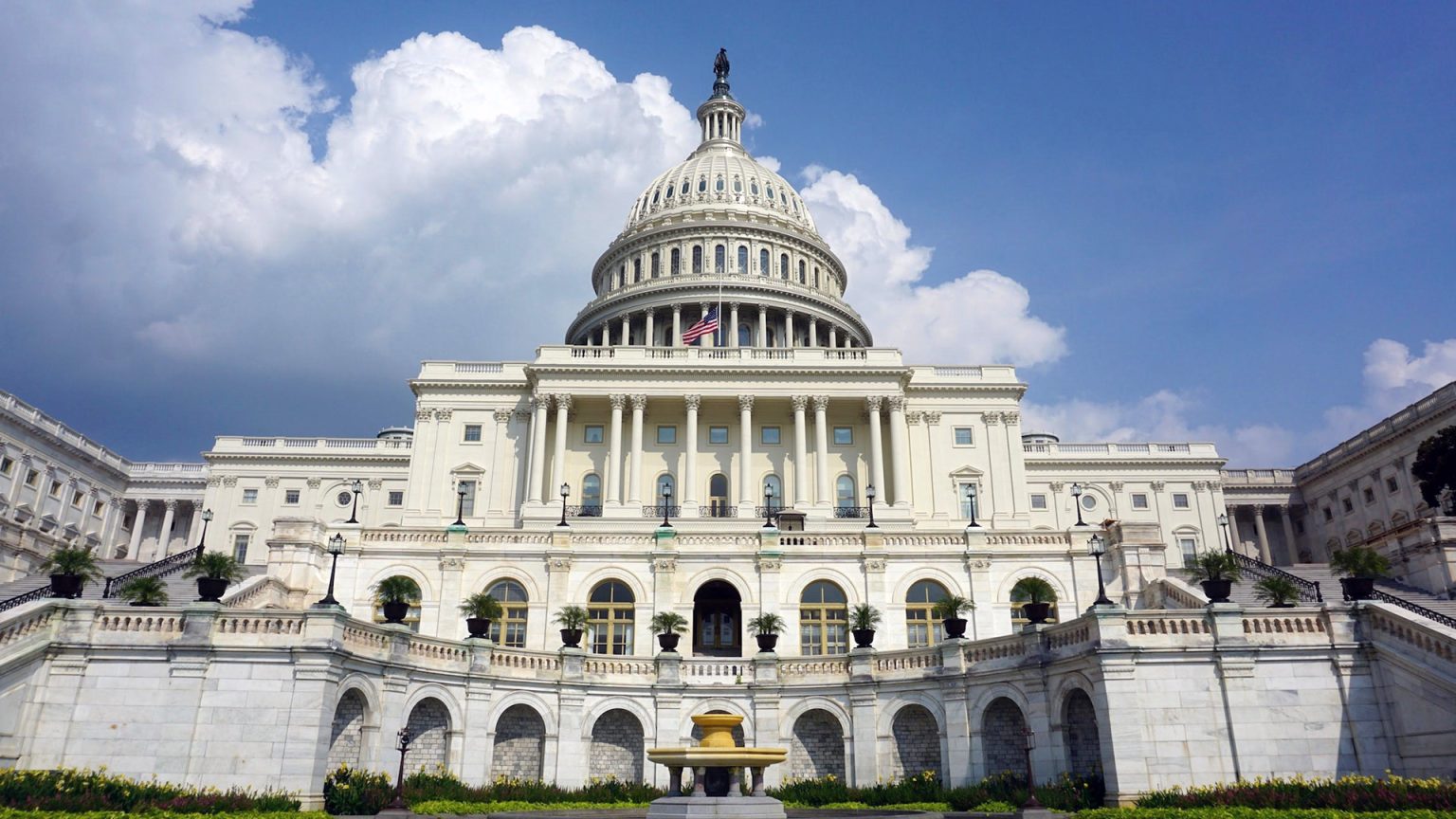
After ten separate attempts, the U.S. Senate has narrowly approved a war powers resolution aimed at blocking President Donald Trump from resuming military hostilities against Iran without congressional authorization. The 50–48 vote, which followed earlier passage in the House of Representatives, was carried by a fragile coalition of Democrats and four Republicans Susan Collins, Lisa Murkowski, Rand Paul, and Bill Cassidy underscoring both bipartisan unease and deep partisan fragmentation over the use of force in the Middle East.
The measure, grounded in the 1973 War Powers Resolution, asserts congressional direction over the termination of unauthorized hostilities. Yet its practical enforceability remains contested, resting in a constitutional grey zone that has long defined the balance between Congress’s authority to declare war and the executive branch’s ability to conduct military operations. The White House has not signaled compliance, and legal scholars remain divided over whether courts would intervene in a separation-of-powers dispute of this nature.
What makes this moment politically significant is not only the vote itself, but the broader reassertion however tentative of congressional authority in matters of war. It comes at a time of renewed U.S.–Iran tension, fragile diplomatic backchannels, and heightened sensitivity in the Gulf following repeated cycles of escalation. The resolution may not immediately constrain the president’s operational freedom, but it signals a growing institutional discomfort in Washington with open-ended executive war-making in the Middle East.
Analysis: A Constitutional Tool Re-Activated in an Era of Executive Dominance
At the heart of the Senate vote lies an unresolved constitutional tension that has defined American foreign policy for decades: Congress holds the power to declare war, but presidents have steadily expanded the boundaries of “authorized” military action through executive interpretation, emergency authorities, and broad readings of prior authorizations for the use of military force.
The War Powers Resolution of 1973 was designed to correct this imbalance following the Vietnam War. It requires the president to notify Congress within 48 hours of deploying armed forces and limits unauthorized military engagement to 60 days without congressional approval. Critically, it also allows Congress to direct the removal of forces through a concurrent resolution. However, since its passage, successive administrations have treated its constraints as advisory rather than binding, arguing that it infringes upon Article II commander-in-chief powers.
The latest Senate vote attempts to revive this dormant congressional mechanism in relation to Iran, where U.S. military posture has oscillated between deterrence, episodic strikes, and the persistent risk of escalation. While the specific trigger for the resolution reflects recent hostilities and heightened fears of renewed confrontation, the deeper driver is institutional: lawmakers increasingly view the executive branch as having normalized unilateral military engagement without sustained legislative consent.
The coalition behind the resolution reflects this shift. Progressive Democrats, traditionally skeptical of Middle East military entanglements, aligned with a small group of libertarian-leaning and moderate Republicans. Their convergence is not ideological so much as structural: a shared concern that Congress has been steadily sidelined in decisions that carry the highest stakes of war and peace.
Yet the resolution’s legal ambiguity remains decisive. The Supreme Court has historically avoided ruling directly on War Powers disputes, often citing the political question doctrine. This leaves enforcement uncertain and largely dependent on political compliance rather than judicial arbitration. As a result, the resolution functions less as a binding constraint than as a formalized assertion of congressional intent.
For the executive branch, the incentives to resist are strong. Modern U.S. military operations particularly in the Middle East depend on speed, flexibility, and classified intelligence cycles that do not easily align with legislative timelines. Any concession to congressional operational control risks setting a precedent that future administrations may seek to avoid.
Escalation Without Strategy
The focus on Iran gives the vote immediate geopolitical weight. Over the past several years, U.S.–Iran relations have moved through a pattern of calibrated escalation: targeted strikes, maritime confrontations in the Gulf, proxy conflicts across Iraq, Syria, and Yemen, and intermittent diplomatic engagement aimed at preventing full-scale war.
The recent Memorandum of Understanding referenced by lawmakers suggests that diplomatic channels remain active, even as military posturing continues. However, the coexistence of negotiations and kinetic signaling has created a volatile equilibrium in which miscalculation remains a constant risk.
Within Congress, this dual-track approach is increasingly viewed as unstable. Critics of the administration’s Iran policy argue that episodic military action—particularly when conducted without explicit congressional authorization—undermines diplomatic credibility while increasing the likelihood of escalation. Supporters of the administration, by contrast, frame military pressure as a necessary component of deterrence, particularly in response to Iranian regional activities and nuclear enrichment thresholds.
The Senate vote reflects a widening gap between these two interpretations of strategic stability. For lawmakers backing the resolution, the central concern is not whether force is ever justified, but whether the executive branch has accumulated excessive discretion in determining when and how it is used.
Signals Beyond Washington
For U.S. allies in the Middle East, the vote introduces an additional layer of uncertainty into an already complex strategic environment. Gulf states, which rely on U.S. security guarantees while simultaneously managing their own channels of communication with Tehran, will interpret the resolution less as operational constraint than as political signal—evidence that American foreign policy is increasingly contested domestically.
Israel, which views Iranian regional influence and nuclear capabilities as existential threats, is likely to read the episode differently: as a potential constraint on U.S. responsiveness in the event of rapid escalation. The reference by some lawmakers to “Trump & Netanyahu’s Iran war” highlights the degree to which Iran policy is now entangled in broader domestic political polarization in the United States, where foreign policy is increasingly filtered through partisan alignment rather than strategic consensus.
For Iran, the vote is ambiguous. On one hand, it may reinforce perceptions of U.S. internal division, potentially strengthening Tehran’s belief that Washington’s coercive capacity is politically constrained. On the other, the bipartisan nature of congressional concern about escalation signals that even critics of military action are not advocating strategic disengagement.
In Europe, the vote will likely be interpreted through the lens of strategic autonomy debates. European governments, particularly those involved in nuclear negotiations with Iran, have long sought to preserve diplomatic frameworks insulated from U.S. domestic volatility. The Senate resolution underscores the difficulty of that ambition: American foreign policy toward Iran is not only shaped by transatlantic coordination but also by internal institutional conflict.
Policy Outlook: Three Paths for Congressional Influence
Three plausible trajectories emerge from the current standoff.
The first is institutional erosion of the resolution’s impact. In this scenario, the executive branch continues military operations under existing interpretations of commander-in-chief authority, while Congress’s assertion of control remains symbolic. This has been the default pattern for much of the post-9/11 era.
The second is partial judicial engagement. Should lawmakers pursue litigation, courts may eventually be forced to clarify the justiciability of War Powers enforcement. However, given historical precedent, judicial reluctance to intervene in national security disputes remains high.
The third, and least likely but most consequential, is a political recalibration in which future administrations voluntarily re-engage Congress in structured authorization processes for military action. This would require not only institutional reform but also a shift in executive incentives—an outcome that appears distant under current conditions.
In the near term, key indicators to watch include the administration’s response to the resolution, the continuity of U.S. operational activity in the Gulf, and whether congressional leaders follow through on legal enforcement efforts. Equally important will be the trajectory of U.S.–Iran diplomatic channels, which may determine whether military risk increases or stabilizes.
Conclusion
The Senate’s narrow vote to halt potential hostilities with Iran is less a reassertion of legislative dominance than a reminder of its erosion. It exposes the structural imbalance that has come to define American war powers: Congress retains formal authority, but the executive retains operational control.
Yet even in its legal ambiguity, the resolution carries political weight. It signals that after two decades of sustained military engagement in the Middle East, parts of the U.S. political system are re-examining the costs of executive-driven war-making. Whether this leads to institutional change or remains a symbolic gesture will depend less on constitutional theory than on future crises.
For now, the vote stands as a rare moment of bipartisan convergence in a deeply polarized Congress—and a tentative attempt to reinsert legislative judgment into decisions that have increasingly been made elsewhere.
In Europe, it reinforces perceptions of a more contested and less predictable American security posture, complicating coordination on Iran diplomacy and broader Middle East stability. For U.S. allies, it underscores the reality that Washington’s commitments are increasingly filtered through domestic institutional tensions, where Congress and the executive may not always speak with one voice. Israel, meanwhile, reads the vote through a more immediate security lens, wary that legislative pushback in Washington could narrow operational flexibility at critical moments of escalation with Iran. Taken together, the episode highlights a central paradox of U.S. power: even as America remains the indispensable security actor, its internal political divisions are becoming an external strategic variable that allies must now actively factor into their own planning.