



Despite electoral fraud, propaganda, cyber attacks and bomb threats from the Kremlin, Maia Sandu’s pro-European party “Partidul Acțiune și Solidaritate” (PAS), in English “Party of Action and Solidarity”, won this year’s Moldovan parliamentary elections by a clear margin. What can the accession country now do under Sandu to join the EU quickly?
- Enlargement at the forefront or not?
- The Real Obstacle Is No Longer the Candidates
- The Economic Case Is Becoming More Important
- The Danger of “Gradual Europe”
- A Defining Test for Europe’s Strategic Ambitions
- The Architect of Moldova’s European Path
- The Corruption Barrier
- What means for Moldova EU membership
Moldova’s bid to join the European Union has evolved from a technocratic enlargement process into one of Europe’s most consequential geopolitical tests. Situated on the frontline of the contest between democratic integration and Russian influence, the small Eastern European state is no longer merely seeking accession; it is attempting to secure its long-term sovereignty in an increasingly fragmented security landscape. The question facing Brussels is no longer whether Moldova belongs in Europe, but whether Europe is prepared to act with sufficient urgency to keep Moldova firmly anchored there.
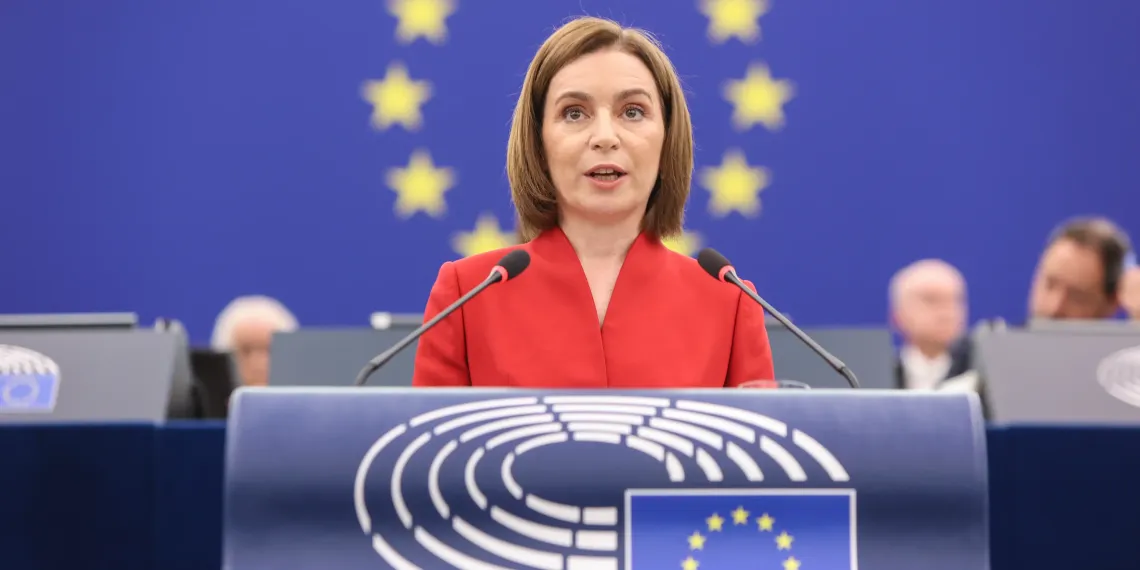
That challenge took centre stage at the latest EU-Moldova summit in Brussels, where President Maia Sandu delivered a pointed message to European leaders. Calling on member states to open all remaining accession negotiation clusters with Chișinău “immediately,” Sandu argued that Moldova has completed the technical groundwork necessary to advance across the entire accession agenda. Her appeal reflected growing frustration in Chișinău that the pace of political decision-making inside the Union risks lagging behind the speed of reforms undertaken by candidate countries exposed to external pressure.
The stakes extend well beyond enlargement policy. Moldova has become a critical battleground in the Kremlin’s broader effort to retain influence across the post-Soviet space. Through disinformation campaigns, political interference, energy leverage, and support for pro-Russian networks, Moscow continues to test the resilience of Moldovan institutions and public support for European integration. Every delay in the accession process risks creating political space for forces that argue Europe’s promises are long on rhetoric but short on delivery.
Recent attempts by some EU leaders to soften language regarding the timetable for Moldova’s accession have therefore raised concerns in both Brussels and Chișinău. While caution remains a defining feature of EU decision-making, the geopolitical environment surrounding enlargement has changed dramatically since Russia’s invasion of Ukraine. Enlargement is no longer solely about exporting stability; it has become a strategic instrument for protecting it. For Moldova, the credibility of the European project will be measured not by declarations of support, but by the Union’s willingness to translate political commitments into concrete steps.
As Europe reassesses its security architecture and prepares for a more competitive geopolitical era, Moldova offers a revealing test case. The country’s reform trajectory, democratic resilience, and strategic orientation have already demonstrated a clear European choice. The remaining question is whether the EU can match that determination with the political resolve necessary to accelerate accession before external actors exploit the gap between ambition and action.
Enlargement at the forefront or not?
The EU’s foreign policy chief, Kaja Kallas, said in early November that the bloc could add new members by 2030. Russia’s full-scale invasion of Ukraine has thrust enlargement back atop the EU agenda as a defensive bulwark to harden frontiers and counter encirclement by Russian aggression. This moves EU enlargement from expansive growth to protective consolidation.
“We believe that this enlargement is the most important geopolitical investment in peace, security and prosperity,” said António Costa, the European Council president, ahead of a meeting with Western Balkan leaders during the first days of his mandate.
The EU currently has nine candidates for accession; four of them could become members by the end of 2030: Albania, Moldova, Montenegro and Ukraine. The EU’s enlargement commissioner, Marta Kos, said that Montenegro could be ready to become the 28th EU member state by 2028, and Albania the 29th EU member by 2029. Ukraine and Moldova could be ready to conclude accession negotiations by 2028 and accede to the EU by 2030.
Despite the optimistic statements, the candidates face both domestic obstacles and resistance from some EU member states; not everyone is pro-enlargement. Ukraine is a particularly controversial candidate due to the scale of its reconstruction needs, persistent corruption and governance concerns, and nervousness among some member states about importing a country still at war with Russia into the EU. Moreover, Hungary has blocked Ukraine’s progress for what it claims are reasons related to minority rights.
Even the other frontrunner candidates—Albania, Moldova and Montenegro—which are conducting demanding institutional reforms to edge closer to membership, face obstacles to accession from the EU side. Member states fear that adding new members would be a large cost and risk importing instability or corruption. Worse, it could block EU decision-making altogether because it depends on unanimity. These concerns are preventing the bloc from agreeing on plan of action for enlargement. There is no consensus among capitals on how to reform the EU internally to make space for new members.
Given the enlargement deadlock, the European Commission appears to be advancing “gradual integration” as a pragmatic interim step. Introduced in the EU’s 2020 overhaul of the enlargement methodology, this approach allows candidates to phase into EU programmes and policies while they conduct reforms and bring their laws in line with EU laws—the acquis. Yet gradual integration could be problematic if candidate countries come to see it as a replacement process to actual accession. It could leave them in a limbo of indefinite integration without the benefits of full membership.
A failure to articulate a clear and timely roadmap for enlargement risks far more than procedural delay. It could unravel the very pillars of Europe’s security, prosperity, and democracy—as well as the EU’s credibility as a global power. Without a decisive strategy, the EU could lose the trust and enthusiasm of its most eager partners (in the Western Balkans, as well as Ukraine, Moldova and Georgia), eroding their reform drive and Western orientation (Serbia and Georgia being current exceptions). Inaction would create a strategic vacuum that external powers are ready to fill. Russia, China, Turkey and Gulf states are already expanding their footprint across the region.
This policy brief begins by analysing these geopolitical aspects of the current enlargement process. It then examines progress towards membership in the four frontrunners and the hurdles they have left to clear. Next, it sets out the internal challenges the EU faces in making enlargement happen and why gradual integration could be counterproductive. Finally, the brief argues that the EU should place a stronger focus on helping the few more manageable candidate countries (Albania, Montenegro and Moldova) become as ready as they can for accession. If the bloc can do that, then it may smooth the way for the other candidates including Ukraine.
The Real Obstacle Is No Longer the Candidates
Perhaps the most striking feature of today’s enlargement debate is that the primary obstacles are increasingly located inside the European Union rather than among candidate countries. The traditional narrative focused on candidate states needing to reform. The emerging reality is that the EU itself is struggling to adapt to the prospect of becoming a significantly larger political union.
Questions about budget contributions, agricultural subsidies, migration management and institutional decision-making have become central to enlargement discussions. Adding multiple new members could fundamentally alter voting dynamics inside European institutions and complicate consensus-building on critical issues such as foreign policy and taxation.
The problem is particularly acute because the EU still relies heavily on unanimity in several policy areas. Hungary’s repeated use of veto power over Ukraine-related issues has become a powerful illustration of how a single member state can block collective action. As enlargement approaches, concerns are growing that additional members could multiply these obstacles.
This explains why discussions about institutional reform are increasingly inseparable from discussions about enlargement.
Some governments now support limiting veto powers for new member states during transitional periods after accession. Others advocate expanding qualified-majority voting across more policy areas before admitting additional countries. Both approaches reflect a growing recognition that enlargement without institutional adaptation may create new forms of paralysis inside the Union.
The Economic Case Is Becoming More Important
Security arguments dominate headlines, but economics may ultimately determine whether enlargement succeeds politically.
European leaders have often struggled to communicate the economic benefits of expansion to domestic audiences. Enlargement is frequently presented as a geopolitical obligation rather than an economic opportunity.
That framing may be changing.
The accession of countries such as Albania, Montenegro and Moldova would expand the EU’s single market, increase investment opportunities and strengthen economic connectivity across strategically important regions. At a time when Europe faces persistent productivity challenges and increasing competition from both the United States and China, a larger and more integrated market could provide meaningful long-term advantages.
Moreover, economic integration often delivers geopolitical dividends. Financial connectivity, infrastructure investment and regulatory harmonization reduce the space for rival powers to exercise influence. The EU’s recent efforts to integrate candidate countries into payment systems, telecommunications frameworks and energy markets illustrate a broader strategy of creating irreversible economic links before full membership occurs.
The question is whether these intermediate steps strengthen accession prospects or merely create a permanent waiting room.
The Danger of “Gradual Europe”
This is perhaps the most important strategic dilemma facing Brussels. The European Commission increasingly promotes gradual integration as a way to maintain momentum when political obstacles delay full membership. Candidate countries can join specific programs, access parts of the single market and participate in selected policy areas before formal accession.
In theory, the approach is pragmatic.
In practice, it carries significant risks.
If gradual integration becomes a substitute for membership rather than a pathway toward it, candidate countries may lose incentives to pursue difficult reforms. Political leaders could conclude that the costs of transformation outweigh the uncertain benefits of eventual accession. Such an outcome would weaken European influence precisely when Brussels is attempting to strengthen it.
The credibility of enlargement has always depended on a simple principle: reforms eventually lead to membership. Once that connection becomes ambiguous, the transformative power of the accession process begins to erode.
For that reason, advocates of accelerated enlargement increasingly argue that the EU must prioritize visible success stories. Bringing a small number of highly prepared candidates into the Union before 2030 could demonstrate that membership remains achievable and restore confidence in the enlargement project.
A Defining Test for Europe’s Strategic Ambitions
The enlargement debate ultimately reveals a deeper truth about the European Union’s evolution.
For years, Europe attempted to separate geopolitics from integration policy. Enlargement was treated as a technical process governed by rules and benchmarks.
The return of great-power competition has ended that separation.
Today, accession policy sits at the intersection of security, economics, democracy and strategic competition. Decisions about who joins the Union and when will shape Europe’s geopolitical landscape for decades. The real question is no longer whether the EU can absorb new members. It is whether the Union can adapt quickly enough to a strategic environment that no longer allows the luxury of indefinite waiting.
If Brussels succeeds, enlargement could become the defining geopolitical achievement of the decade, extending stability across Europe’s eastern and southeastern frontiers while reinforcing the Union’s global influence. If it fails, the EU risks creating a continent divided between members and perpetual candidates—an outcome that would leave strategic vacuums precisely where Europe can least afford them. In that sense, enlargement is no longer about expanding the Union. It is about determining what kind of geopolitical actor the European Union intends to become.
The Architect of Moldova’s European Path
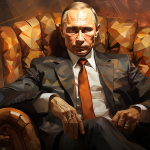
Maia Sandu, Moldova’s president since 2020, has emerged as the key driver of the country’s accelerated European trajectory, anchoring her political authority in a reform agenda centred on anti-corruption, judicial strengthening, and alignment with EU governance standards. A former World Bank economist and leader of the pro-reform Action and Solidarity Party (PAS), she represents a technocratic strand of leadership that has redefined Moldova’s foreign policy orientation in explicitly strategic terms.
Her presidency operates under sustained structural pressure: weak institutional capacity at home combined with persistent Russian influence operations, including disinformation, political financing networks, and energy coercion. Within this constrained environment, Sandu has framed EU integration not as a distant aspiration but as an urgent geopolitical necessity, using the accession process as both a reform anchor and a deterrent against external destabilisation, while pressing Brussels to translate technical progress into accelerated political commitment.
The Corruption Barrier
At the end, Moldova’s struggle with corruption is unfolding in parallel with its broader effort to withstand sustained Russian interference, creating a dual pressure that defines both its domestic politics and its European trajectory. While strengthening anti-corruption institutions remains essential, the very persistence of these challenges risks becoming a structural obstacle in its EU accession path, where progress is measured against strict benchmarks on the rule of law and institutional resilience. In this context, corruption is not only a governance issue but also a political flashpoint, frequently amplified in electoral cycles and exploited within a highly contested information environment.
As Rosca & Ciobanu (2025, p.195) note, “Given Moldova’s limited resources, external assistance from the EU and other democratic allies is crucial in bolstering electoral integrity.” Yet external support alone is insufficient; sustainable progress depends on durable domestic backing for reform and the gradual strengthening of independent institutions capable of resisting both internal decay and external pressure. This is a long-term process, likely to unfold over years rather than accession cycles, testing both Moldova’s political endurance and the EU’s commitment to enlargement under conditions of geopolitical strain.
What means for Moldova EU membership
However For Moldova, EU membership would be a shield to safeguard its sovereignty and security, offering a counterbalance to external threats and regional instability, mainly from Russia. The Kremlin maintains influence in Moldova through Transnistria and has sought to influence parliamentary elections and the referendum on the EU to obstruct Moldova’s EU path. President Maia Sandu expressed her ambition to join the EU by 2030, viewing EU membership as a means to escape Russia’s sphere of influence and assure the country’s future security. Many policymakers point to the war in Ukraine as evidence of the risks Moldova faces if it fails to integrate into the EU.
Arguably, the determined leadership of Moldova’s pro-EU president, the government and the parliamentary majority have driven the country to take concrete steps toward accession. Moldova has completed its screening process and the first cluster on fundamentals was slated to begin during the Polish presidency in the spring of 2025.
In the meantime, Moldova’s EU accession process is tied to Ukraine’s through the EU’s “package approach”, which links their dossiers because of their shared eastern partnership origins and their simultaneous candidate status in 2022. Hungary vetoed Ukraine’s accession over alleged discrimination against its Ukrainian minority, agriculture concerns and the war, but this blocked the whole negotiation cluster, stalling Moldova’s accession too—even though Hungary supports Moldova’s path without preconditions. This is why it is important for Moldova to be decoupled from Ukraine in this process, which these days that is the main thing for Moldova’s President Maia Sandu on her list.