


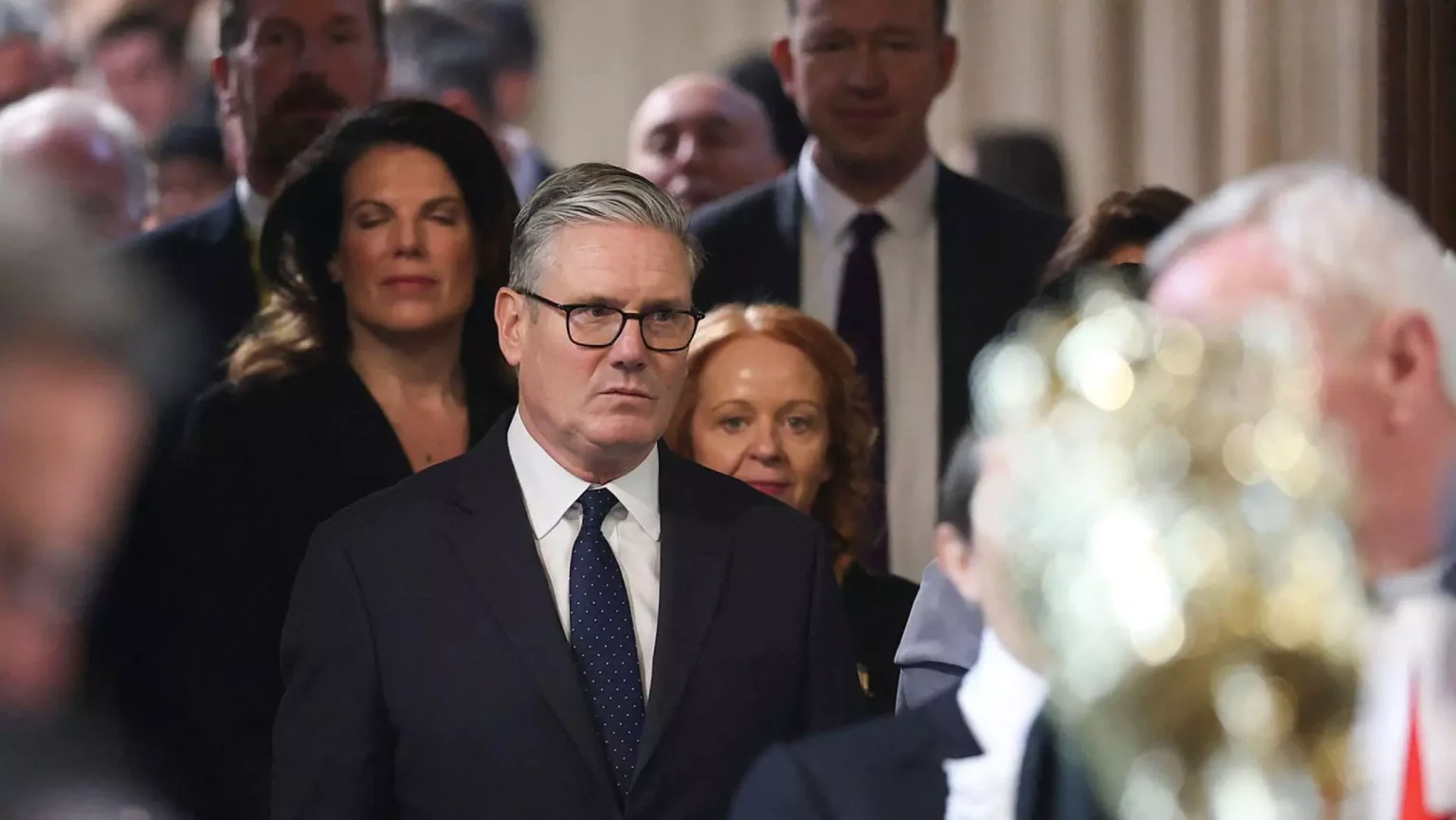


The battle between Keir Starmer and Andy Burnham is becoming more than a leadership contest—it is a test of whether Britain’s governing party can maintain political authority amid mounting economic pressures, voter disillusionment and the rise of populist challengers.
The debate unfolding inside Britain’s governing Labour Party is no longer merely about the future of Prime Minister Keir Starmer. It has become a broader referendum on the direction of British politics after a period marked by economic stagnation, institutional distrust and growing pressure from insurgent political forces.
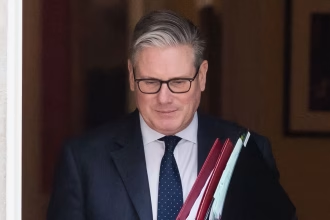
Reports that senior cabinet ministers and party figures are urging Starmer to establish a timetable for departure suggest that Labour’s internal crisis has moved beyond routine factional maneuvering. The significance lies not in whether Starmer survives the coming weeks, but in what his weakened position reveals about the fragility of political authority in contemporary Britain.
The return of Andy Burnham to Westminster following his Makerfield victory has accelerated a debate that had been simmering beneath the surface for months. Burnham’s supporters view him as a politician capable of reconnecting Labour with working-class voters who have become increasingly volatile and willing to shift between mainstream parties and populist alternatives. His emergence comes at a moment when Labour faces an uncomfortable reality: electoral victory alone has not translated into durable political legitimacy.
The contest now unfolding is less a personal rivalry than a struggle over Labour’s governing model.
The End of the Post-Brexit Political Settlement
Britain’s political landscape remains shaped by forces unleashed long before Labour entered government.
The Brexit era fractured traditional party loyalties, weakened ideological identities and transformed elections into contests driven increasingly by leadership perception and cultural grievances rather than party loyalty. Both Labour and the Conservatives have struggled to construct a stable post-Brexit governing coalition capable of maintaining support across England’s diverse regions.
Starmer’s original appeal rested on competence, moderation and stability. After years of political turbulence, many voters appeared willing to embrace managerial governance over ideological confrontation. Yet the limits of that approach have become increasingly evident.
Britain’s economic challenges remain severe. Growth remains weak, productivity sluggish and public services under strain. Voters who supported Labour in hopes of rapid improvement have encountered the reality that structural problems accumulated over more than a decade cannot be reversed quickly.
This gap between electoral expectations and governing capacity has become one of the defining political risks facing Western democracies. Governments inherit problems that require long-term solutions, but voters increasingly demand immediate results.
Starmer is not the first leader to confront this dilemma. Similar pressures have challenged governments across Europe, from Germany and France to Spain and the Netherlands. What makes Britain distinctive is the speed with which political dissatisfaction is being captured by alternative movements.
Reform UK and the New Political Threat
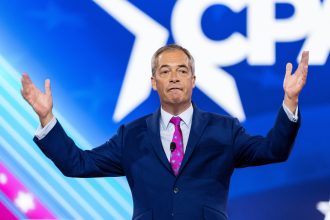
The most significant development behind Labour’s internal turmoil may not be Burnham’s rise but the continued advance of Nigel Farage and Reform UK.
Although Burnham successfully resisted Reform’s challenge in Makerfield, the election underscored a broader trend. Constituencies once regarded as safely Labour can no longer be taken for granted.
The emergence of Reform represents a deeper transformation in British politics. The party has successfully positioned itself as a vehicle for voters frustrated with both major parties, particularly on issues relating to immigration, national identity, economic inequality and political representation.
This phenomenon mirrors developments elsewhere in Europe, where populist and anti-establishment parties continue to gain support despite varying ideological orientations.
For Labour strategists, the challenge is particularly acute. The party must simultaneously retain progressive urban voters while preventing further erosion among working-class communities increasingly attracted to populist alternatives.
Burnham’s appeal stems partly from his perceived ability to bridge this divide. His political brand combines social-democratic economics with a stronger emphasis on regional identity and local governance. Supporters argue that this approach offers Labour a path back toward voters who feel disconnected from London’s political establishment.
Whether that assessment proves correct remains uncertain. Yet the fact that many Labour MPs appear willing to consider such an alternative illustrates the extent of anxiety within the governing party.
International Implications of Domestic Instability
Britain’s leadership uncertainty arrives at a sensitive geopolitical moment.
The United Kingdom remains deeply involved in supporting Ukraine, strengthening NATO deterrence and navigating increasingly complex relationships with both the United States and the European Union.
Political instability in London risks complicating these efforts.
Foreign governments generally prioritize predictability when dealing with allies. Leadership contests rarely produce immediate policy reversals, but they can weaken a government’s ability to make difficult decisions, negotiate long-term agreements or commit political capital to international initiatives.
For European partners, the prospect of prolonged Labour infighting raises concerns about Britain’s reliability at a time when Europe faces multiple security challenges. The continent continues to confront Russian aggression, economic competition from China and uncertainty regarding future American strategic priorities.
A distracted British government could diminish London’s influence within Western policymaking circles precisely when European security coordination is becoming more important.
The timing is especially notable given ongoing debates about defense spending, industrial resilience and strategic autonomy. Britain’s role as one of Europe’s leading military powers means domestic political uncertainty inevitably carries international consequences.
Burnham’s Rise and the Regional Challenge
Burnham’s emergence also reflects a broader shift in Western politics toward regional representation.
Across Europe and North America, political leaders increasingly gain influence by presenting themselves as defenders of local interests against distant national institutions. Governors, mayors and regional leaders often enjoy higher public trust than national governments.
As mayor of Greater Manchester, Burnham has cultivated precisely this image. He has repeatedly positioned himself as an advocate for regional empowerment and economic decentralization.
His appeal highlights a growing frustration with highly centralized governance models. Many voters believe national governments have become detached from local realities, particularly outside major metropolitan centers.
This trend extends beyond Britain. Similar dynamics can be observed in Germany’s federal states, Italy’s regions and even parts of the United States. Political legitimacy is increasingly linked to perceived proximity to citizens rather than institutional authority alone.
Should Burnham eventually succeed Starmer, his leadership would likely place greater emphasis on devolution, regional investment and local decision-making. Such a shift could reshape Labour’s political identity and influence debates about governance throughout the United Kingdom.
What Happens Next?
Several scenarios are now plausible.
The first is that Starmer survives the immediate challenge, reshuffles his cabinet and attempts to reassert authority. Such an outcome would buy time but would not necessarily resolve Labour’s underlying strategic problems.
A second possibility involves a negotiated transition in which Starmer establishes a timetable for departure while maintaining government stability. This would mirror leadership transitions seen elsewhere in parliamentary systems when governing parties seek renewal without triggering broader political disruption.
The third—and potentially most destabilizing scenario would involve an extended leadership battle that exposes ideological divisions and weakens Labour’s standing among voters.
The party’s calculation will ultimately depend on whether MPs believe replacing the leader would improve Labour’s electoral prospects or simply deepen perceptions of political dysfunction.
Over the next six to twelve months, policymakers should watch several indicators closely: Reform UK’s polling trajectory, Labour’s performance in local elections, economic growth figures and the willingness of senior ministers to publicly align themselves with alternative leadership candidates.
These developments will reveal whether the current turbulence represents a temporary leadership dispute or the beginning of a more profound political realignment.
A Crisis Beyond One Prime Minister
The significance of Labour’s internal conflict extends far beyond Keir Starmer’s future.
What is unfolding reflects a broader challenge confronting democratic governments across the West: the growing difficulty of translating electoral mandates into sustainable political authority. Voters are increasingly impatient, economic constraints are tightening and populist competitors are becoming more effective at channeling public frustration.
Whether Starmer survives or Burnham ultimately prevails may prove less important than the structural forces driving the contest itself. The real story is not the fate of a prime minister but the search for a governing model capable of restoring public confidence in an era of economic uncertainty, fragmented electorates and declining trust in traditional institutions.
Britain’s next political chapter will therefore be watched closely not only in Westminster, but across Europe and beyond, as governments grapple with the same question: how can democratic leaders maintain legitimacy when the demand for change consistently outpaces the capacity to deliver it?