


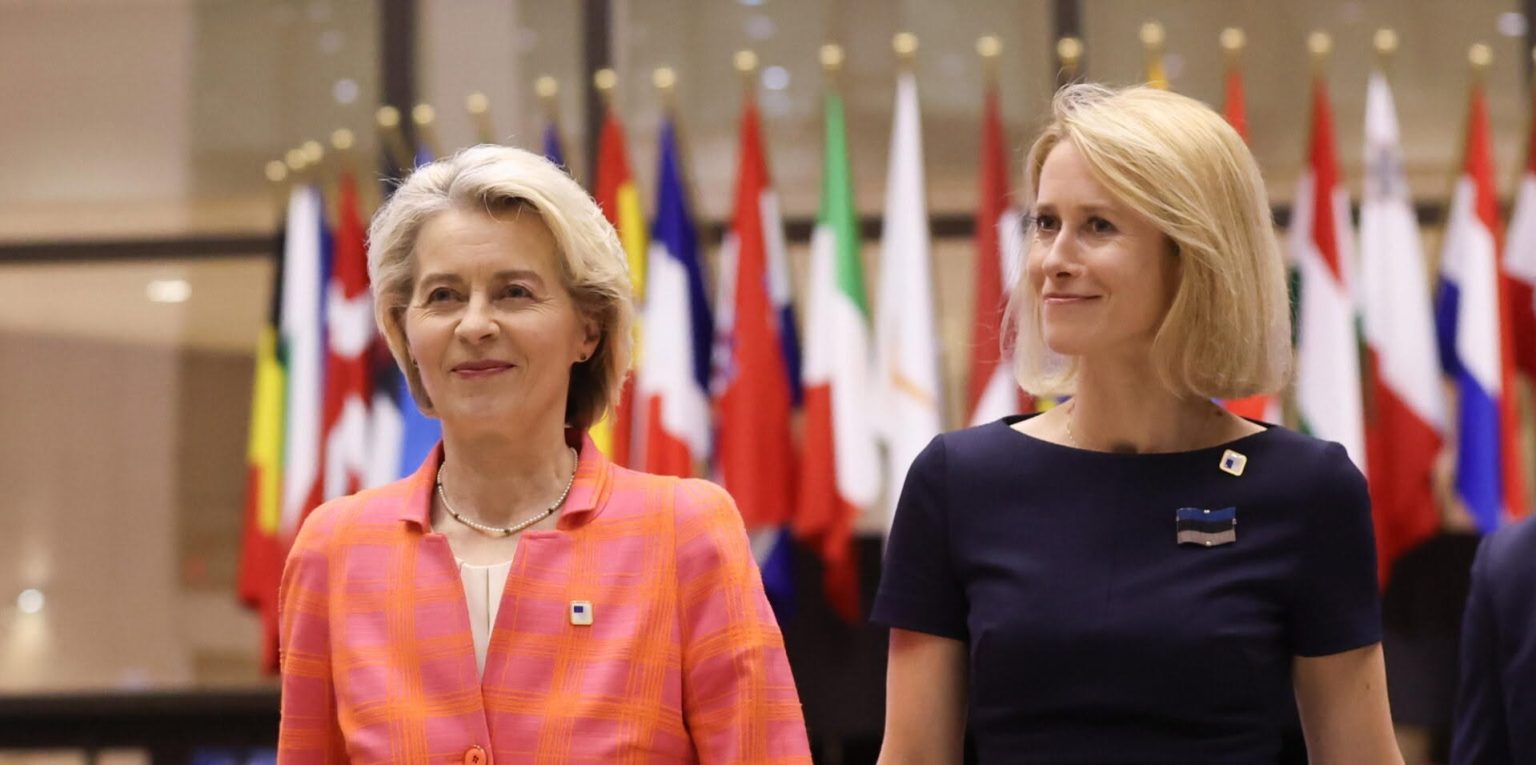

As institutional boundaries blur and political authority becomes increasingly centralized, the rivalry between Ursula von der Leyen and Kaja Kallas reflects a broader struggle over who defines the European Union’s foreign policy at a time of mounting geopolitical uncertainty.
The quiet conflict between European Commission President Ursula von der Leyen and the European Union’s High Representative for Foreign Affairs and Security Policy, Kaja Kallas, is increasingly moving beyond a bureaucratic disagreement and evolving into a battle for control over the EU’s foreign policy machinery, according to the Madrid-based newspaper El País.
The publication argues that the power struggle between the European Commission president and the EU’s foreign policy chief threatens to undermine Europe’s position at a time when the Union is facing wars, geopolitical upheavals, and increasingly uncertain relations with its traditional allies. What initially appeared to be an internal dispute over competencies between the European Commission and the European External Action Service has, according to El País, developed into an open contest over the levers of power and the right to shape the EU’s political narrative.
The dispute, the newspaper notes, does little to project an image of unity at a moment when Brussels is attempting to present itself as a coherent global actor. At the heart of the disagreement lies a fundamental question: who truly leads European diplomacy? Institutionally, that responsibility belongs to Kallas as High Representative, yet politically, von der Leyen has further strengthened the Commission’s influence over foreign policy during her second term in office.
Tensions have intensified following discussions within European diplomatic circles about reforming the European External Action Service. According to Reuters, one French proposal envisaged restructuring the EU’s diplomatic apparatus, including measures that could strengthen Kallas’ role, while other options would transfer certain foreign policy responsibilities closer to the European Commission or the Council of the European Union.
At the same time, criticism of Kallas has emerged from several directions. She has been accused of focusing excessively on Russia, while some European officials believe the EU under her leadership has responded too slowly and unconvincingly to other international crises, including developments in the Middle East.
Euronews has argued that the debate surrounding Kallas exposes deeper structural weaknesses in European foreign policy, particularly its slow decision-making process, lack of coordination, and institutional fragmentation.
Von der Leyen, meanwhile, faces accusations from her own critics that she is increasingly centralizing decision-making and conducting foreign policy independently, often sidelining the EU’s formal institutional mechanisms. This clash between two competing approaches Commission-led centralization and the diplomatic authority of the High Representative has become one of the most sensitive political issues in Brussels.
The dispute has gained additional significance due to the ongoing war in Ukraine. Since taking office, Kallas has been regarded as one of the strongest advocates for continued support for Kyiv, leading some observers to interpret any discussion about weakening her position or a potential resignation as a setback for the Ukrainian leadership.
Cypriot journalist Alex Christoforou has argued that Kallas’ departure would be disastrous for Volodymyr Zelensky, as Kyiv would lose one of its most outspoken supporters within the EU’s leadership.
Although there has been no official confirmation in Brussels that Kallas’ removal is being considered, the very fact that such speculation is circulating suggests that the crisis within European diplomacy has moved beyond routine institutional disagreements. At a time when the European Union is striving to present itself as a unified geopolitical actor, the internal struggle over authority increasingly reveals the opposite—that European foreign policy remains constrained by its own internal divisions.