


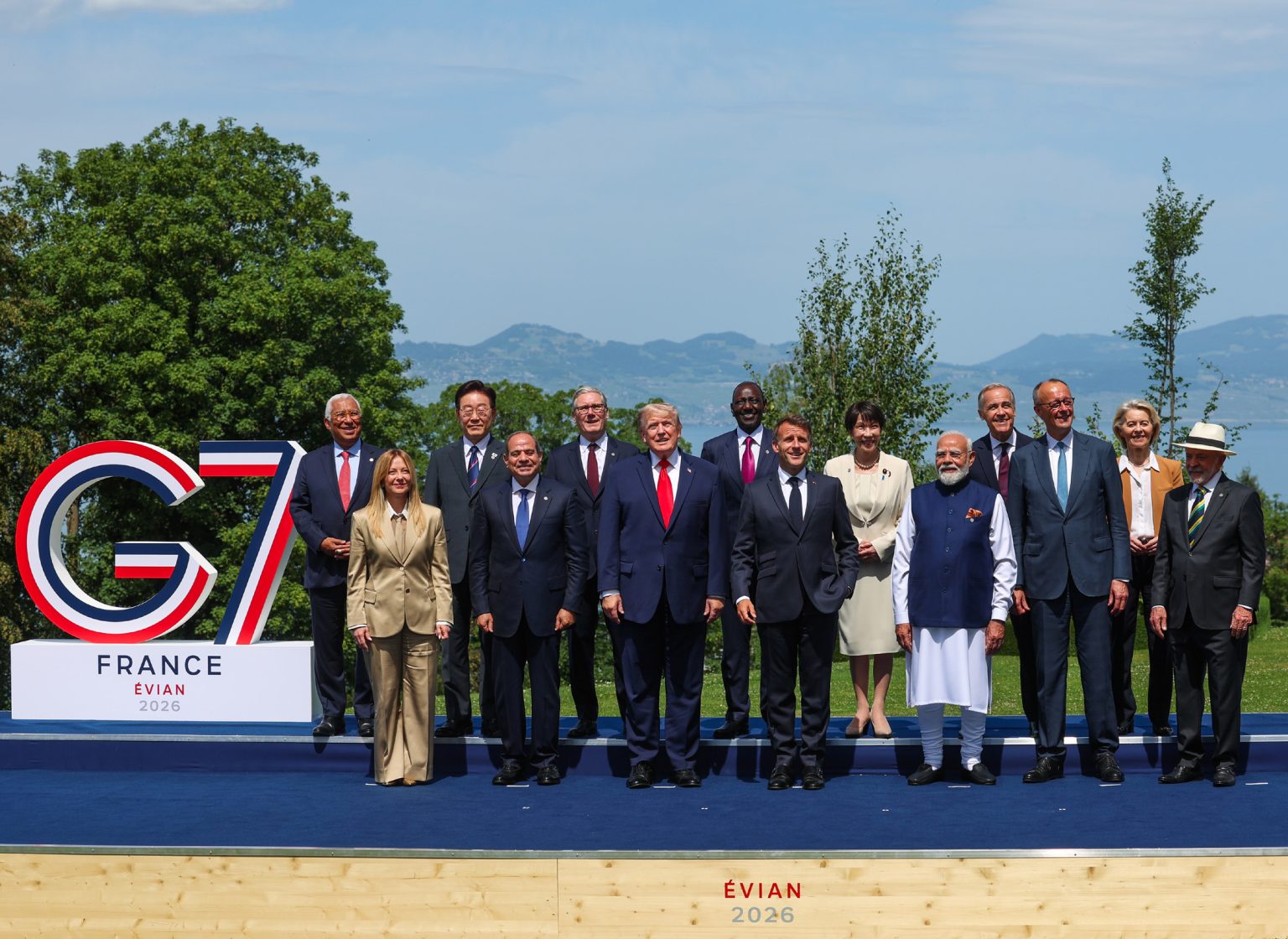


The leaders of the world’s major advanced economies, joined by a number of strategic partner states, convened in Évian-les-Bains against a backdrop of overlapping global crises, from the grinding war in Ukraine to a fragile and still reversible truce in the Middle East. Yet unlike previous, more fractious gatherings, this summit was marked less by confrontation than by cautious coordination.
- Ukraine remains the anchor of Western cohesion, but with limits
- Middle East diplomacy and the return of energy geopolitics
- China as the systemic economic counterweight
- Artificial intelligence and the emerging logic of technological security
- France and the politics of summit orchestration
- A fragmented consensus system under pressure
Diplomats repeatedly returned to a single keyword “convergence” to describe the tone of discussions, signaling an unusual degree of alignment on core security and economic priorities.
The relatively smooth proceedings, coupled with perceptions of a more cooperative stance from U.S. President Donald Trump, have been interpreted in some capitals as a temporary easing of transatlantic and intra-alliance tensions, even if underlying geopolitical fault lines remain unresolved, with six key takeaways emerging that underline renewed support for Ukraine, fragile Middle East de-escalation, tighter coordination on trade and energy security, growing attention to China-related risks, and an effort to preserve a fragile but notable sense of unity among the participating powers.
Ukraine remains the anchor of Western cohesion, but with limits
Ukraine emerged as the clearest area of convergence in Évian, with leaders reaffirming support for air defence systems, energy infrastructure assistance, and continued sanctions pressure on Russia. The language of accelerated deliveries and expanded military cooperation signals sustained commitment rather than policy reversal.
However, the political texture of this support is shifting. The absence of a full bilateral breakthrough between Kyiv and Washington underscored the conditional nature of transatlantic alignment. While Washington signalled openness to reviewing expanded military production arrangements, it stopped short of firm commitments, reflecting domestic constraints and strategic prioritization debates within the United States.
The more consequential development lies in the subtle recalibration of rhetoric. The framing of Russia as the party that must “make a deal” represents a notable shift in narrative positioning, but it does not yet translate into a unified strategy for ending the war. Instead, the G7 appears to be managing a long conflict environment rather than preparing a diplomatic exit architecture.
This distinction matters. Sustained material support can coexist with strategic ambiguity, but over time the gap between resources committed and political objectives defined risks widening.
Middle East diplomacy and the return of energy geopolitics
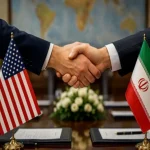
The Middle East once again functioned as an external shock absorber and agenda setter for the G7. Discussions were shaped by a tentative framework involving Iran and the broader question of maritime security in the Strait of Hormuz, a critical artery for global energy flows.
The emerging diplomatic outline reflects familiar trade offs in regional crisis management. Iran’s reintegration into global economic flows is linked to constraints on its nuclear ambitions and commitments regarding maritime access, while sanctions relief remains a central bargaining instrument. Western reactions were cautiously optimistic, driven less by confidence in the durability of any agreement and more by immediate concerns over energy price stability.
What is significant is not the content of the reported understandings but the structural dependency they reveal. European economies remain exposed to energy price volatility originating far beyond their control, particularly in maritime chokepoints where geopolitical risk can rapidly translate into inflationary pressure.
The G7’s discussion therefore reflects an uncomfortable truth: energy security has become inseparable from diplomatic outcomes in regions where Western influence is increasingly indirect.
China as the systemic economic counterweight
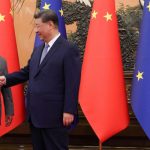
If Ukraine represents cohesion and the Middle East represents external dependency, China represents strategic ambiguity within the G7 itself.
The language emerging from Évian on global economic imbalances reflects growing concern over state led industrial policy, subsidy regimes, and the structural effects of Chinese export capacity on global markets. Yet consensus stops at diagnosis rather than prescription.
European and North American economies broadly agree that persistent external surpluses and distortive industrial practices pose risks to global economic equilibrium. However, they diverge on how aggressively to respond. The United States has leaned toward a more confrontational economic security posture, while European states remain more cautious due to industrial exposure and supply chain dependencies.
The result is a shared analytical framework without a unified policy response. This gap is increasingly characteristic of the G7’s approach to China. It functions as a forum for articulating concerns that cannot yet be translated into coordinated economic statecraft.
In practice, this means fragmentation is managed rather than resolved. Members are effectively pursuing parallel strategies that converge rhetorically but diverge operationally.
Artificial intelligence and the emerging logic of technological security
Artificial intelligence emerged as one of the most strategically consequential discussions in Évian, not because of immediate policy breakthroughs, but because of the structural questions it exposed.
The presence of leading technology executives highlighted the growing entanglement between state power and private technological capability. At the center of discussion was not only innovation but control over access to advanced models and the geopolitical implications of export restrictions on AI systems.
The underlying concern among allies is increasingly clear: technological asymmetry within the Western alliance itself. The possibility that access to frontier AI systems could be restricted even among partners underscores a shift from open technological ecosystems toward managed access regimes.
This evolution aligns AI governance with broader trends in strategic competition. Issues of child safety, misinformation, and digital governance are now embedded within a wider framework of technological sovereignty and security.
However, divisions persist over regulatory approaches, particularly regarding platform restrictions and governance models. As with trade and China policy, convergence exists at the level of principles rather than implementation.
France and the politics of summit orchestration
For the host country, the Évian summit represented a diplomatic success not only in substance but in process management. The production of multiple joint statements and the absence of visible breakdowns reinforced France’s positioning as a stabilizing force within the G7 framework.
This matters because summit diplomacy has increasingly become about preventing fragmentation from becoming visible rather than eliminating underlying disagreement. The emphasis on procedural success reflects a broader shift in multilateral governance where optics of unity carry as much weight as substantive breakthroughs.
Yet this success is also indicative of lowered expectations. Compared to earlier periods when G7 summits were associated with major policy initiatives, today’s meetings are judged by their ability to avoid failure rather than deliver transformation.
A fragmented consensus system under pressure
The broader significance of Évian lies in what it reveals about the evolution of the G7 itself. Once a central coordinating mechanism for the liberal international order, it now operates as a managed consensus platform within a fragmented global system.
This does not render the G7 irrelevant. On the contrary, it remains one of the few forums where advanced economies coordinate responses to systemic shocks. However, its function has shifted from rule making to stabilization, from agenda setting to risk management.
The implication is that global governance is becoming increasingly episodic. Alignment emerges in response to crises but dissipates in periods of relative calm. The G7 reflects this rhythm rather than shaping it.
Looking ahead, three dynamics will define the G7’s trajectory.
First, Ukraine will continue to serve as the principal test of sustained political and financial commitment, with increasing emphasis on burden sharing and long term planning rather than escalation.
Second, China will remain the central unresolved strategic issue, with growing pressure for alignment colliding with domestic economic constraints across member states.
Third, technological governance, particularly around artificial intelligence and critical supply chains, will intensify as a domain of strategic competition embedded within alliance structures.
The key risk is not institutional breakdown but strategic drift. The G7 may continue to function as a forum while losing its capacity to define coherent collective direction.
The Évian summit illustrates a broader transformation in global governance. The G7 remains intact, active, and diplomatically relevant, but its core function has evolved. It no longer sets the terms of global order in a unified manner. Instead, it manages the consequences of a world in which consensus is increasingly difficult to sustain.
This shift carries important implications. Managed convergence can sustain stability for a time, but it is inherently reactive. As geopolitical competition intensifies and economic fragmentation deepens, the gap between shared rhetoric and divergent strategy is likely to widen further.