


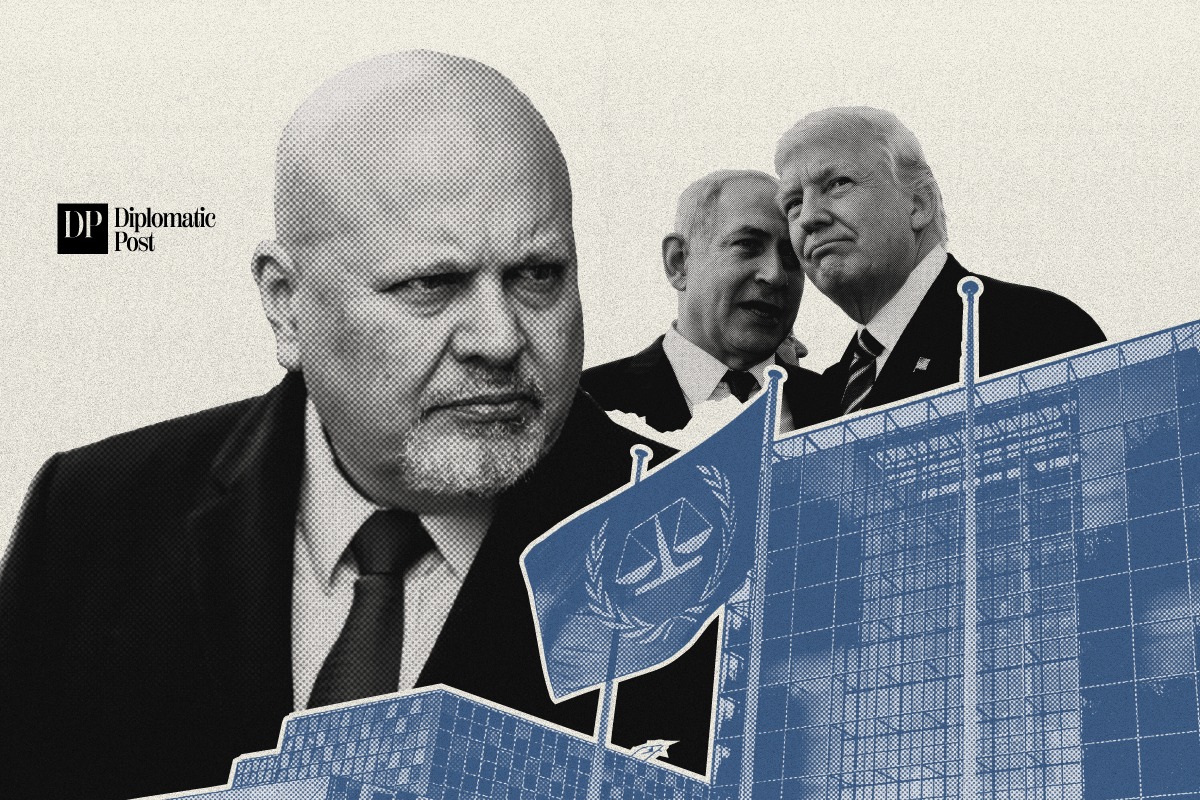
Karim Khan pursued arrest warrants against Netanyahu. Months later, he was removed for misconduct. Whether those two facts are connected is the question now hanging over the world’s only permanent war crimes court
The International Criminal Court has just done something it has never done before: remove its own chief prosecutor from office while he was still serving. On July 24, member states voted 82 to 125 to dismiss Karim Khan, citing a finding of serious misconduct and a serious breach of duty, according to a media report. Khan denies any wrongdoing and says he will challenge the decision. The timing is what makes this genuinely difficult to untangle. Khan is the same prosecutor who, in 2024, sought arrest warrants against Israeli Prime Minister Benjamin Netanyahu, and who spent the following year absorbing direct sanctions and explicit political threats from the United States government. Whether his removal is a straightforward accountability case, or the product of sustained outside pressure finally paying off, is now the central question facing the court’s credibility.
A warning that came before the warrants
The pressure on Khan did not begin after he sought the Netanyahu warrant. It began before. Twelve Republican senators sent Khan a letter in 2024 explicitly warning him against pursuing Israeli officials, using language that left little room for interpretation: “Target Israel and we will target you,” and “You have been warned,” according to a media report. The letter threatened sanctions, visa restrictions, and consequences for ICC personnel and their families.
Khan proceeded regardless. He formally applied for arrest warrants on May 20, 2024, against Netanyahu, then Defence Minister Yoav Gallant, and three Hamas leaders, according to the ICC prosecutor’s own official statement on the applications. Judges issued the warrants against Netanyahu and Gallant on November 21, 2024, after rejecting Israel’s challenges to the court’s jurisdiction, concerning alleged war crimes and crimes against humanity. Under the ICC’s own rules, these remain allegations unless and until established through a full judicial process, but the warrants themselves were a historic step, marking the first time the court had targeted the sitting leader of a close American ally.
Washington’s response was swift, and unusually direct
The Trump administration did not wait long to act. It issued an executive order imposing sanctions directly on the ICC, describing the court’s actions against American or allied personnel as an “unusual and extraordinary threat” to US national security and foreign policy, according to the White House’s own executive order. The order authorised asset freezes and entry restrictions, and named Karim Khan explicitly in its annex.
The practical impact was significant. Khan’s British bank accounts were blocked, and his ICC email access was cancelled, according to a media report. Organisations assisting the court’s investigations reportedly scaled back their cooperation, worried about facing American penalties themselves. By December 2025, the sanctions had expanded to cover a total of 11 ICC officials, including Khan, two deputy prosecutors, and eight judges, according to a media report. Washington framed these measures as a defence of sovereignty and of Israel against what it considers illegitimate ICC jurisdiction. The court itself described the sanctions as a serious attack on judicial independence.
Secretary of State Marco Rubio went further still, publicly launching a diplomatic campaign aimed at dismantling the court entirely, according to a media report, with plans to pressure other governments and frame the confrontation as a defence of national sovereignty against international institutions. Separate coverage detailed the administration’s broader sanctions strategy alongside criticism from legal experts and ICC supporters, who argue the campaign is designed specifically to shield American and Israeli officials from international scrutiny, according to a media report. The pressure campaign reportedly extended even further. Trump suggested during discussions with Chinese President Xi Jinping that the United States, China and Russia should cooperate against the ICC, according to a media report, though that account rests on people familiar with the discussions rather than formal confirmation from any of the three governments involved.
The misconduct case itself is genuinely messy
Here is where the story resists a simple narrative. Former EU foreign policy chief Josep Borrell argued in an opinion piece that the misconduct proceedings against Khan cannot be separated from this broader American campaign against the court, framing his removal as effectively engineered by outside political pressure, according to his own commentary published on July 17. That is a legitimate argument, but it is an opinion, not proof that Washington or Israel orchestrated the specific allegations against him.
The actual evidentiary record is more complicated than either side’s framing suggests. Reuters reported that UN investigators found a factual basis for parts of the allegations against Khan, but a separate three-judge review concluded the evidence was insufficient to establish misconduct beyond a reasonable doubt, according to the outlet’s reporting. That finding does not necessarily mean nothing happened. It means that particular judicial panel, applying a demanding evidentiary standard, was not satisfied the case cleared that bar.
A separate ICC oversight mechanism reached a different conclusion entirely, finding serious misconduct and a serious breach of duty, according to a media report. This is the detail that complicates any tidy version of this story. Different bodies within the ICC’s own accountability structure, applying different procedures and different evidentiary thresholds, arrived at different conclusions about the same set of facts. That is not necessarily evidence of political manipulation. It is also not proof the process was clean and independent of outside pressure. It is simply a genuinely contested internal disciplinary record.
Independent reporting on Khan’s actual removal reflects that same tension. He became the first sitting ICC prosecutor ever removed by the Assembly of States Parties, and the court reached that decision while under sustained American political and economic pressure, according to a media report. That same reporting presents both sides fairly, Khan maintaining the process was unfair, while supporters of his removal argue that workplace accountability matters regardless of the surrounding geopolitical context.
Removal was always legally possible. That’s not really the question
It is worth being clear that nothing about Khan’s removal was procedurally unusual on its face. Article 46 of the Rome Statute, the ICC’s founding treaty, explicitly allows a prosecutor to be removed for serious misconduct or a serious breach of duty, through a majority decision of the Assembly of States Parties. The real controversy was never whether member states had the legal authority to remove Khan. They plainly did. The controversy is whether the findings and the process that led to this specific removal, arriving in the middle of an extraordinary, sustained campaign of sanctions and explicit threats from a superpower, provided genuinely sufficient grounds to use that authority now.
Pulling this together honestly means resisting both the simplest pro-Khan and anti-Khan narratives. The evidence strongly supports several things happening simultaneously and factually. Khan and the ICC faced explicit political threats from American lawmakers before he ever sought the Netanyahu warrant. The Trump administration then imposed extensive, documented sanctions on Khan and ten other ICC officials. Rubio publicly and explicitly campaigned to dismantle the court. Those sanctions materially disrupted ICC personnel and operations, cutting off bank access and email, and chilling cooperation from partner organisations. And American opposition to the court intensified sharply and specifically after the warrants targeting Israeli officials were issued.
What the evidence does not conclusively establish is that Washington or Israel manufactured the misconduct allegations against Khan from nothing. That case had its own separate evidentiary record, however contested, and ICC bodies eventually found grounds sufficient to justify removal under their own rules.
The most defensible reading, then, sits between the two extremes. US and Israeli pressure likely did not create the misconduct case against Karim Khan out of thin air. But that pressure unmistakably shaped the political atmosphere in which the allegations were investigated, and his removal ultimately decided. The combination of sustained sanctions, direct diplomatic threats, and a genuinely contested internal disciplinary process risks setting a precedent considerably larger than one prosecutor’s career: that a powerful state, sufficiently determined, can meaningfully weaken an international court’s independence without ever having to formally abolish it.