


Trump Ordered the U.S. Military Not to Strike Iran to Keep Diplomatic Talks Alive.
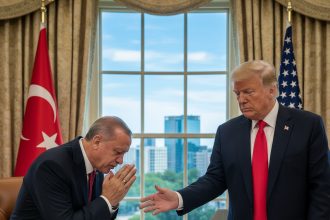
For thirteen straight days, American commanders had walked into the Oval Office each afternoon with a strike plan, and each afternoon the president had signed off on it. On the fourteenth day, according to media reports, he told them no. It was a small pause in a war that has convulsed the Gulf for five months, yet it was enough to unsettle Israeli officials, rattle oil markets and remind the region that the fate of the conflict now rests less on the battlefield than on the mood of one man in Washington.
The order, first disclosed in American media reports citing officials familiar with the decision, broke a run of daily air raids that had become almost routine since fighting flared again in early July. According to those reports, the president was presented with a fresh set of targets on a Friday afternoon, the same kind of proposal he had approved without hesitation for nearly two weeks. This time he withheld authorisation and told the military to hold its fire instead. Hours earlier, a delegation from Oman had landed in Tehran for talks aimed at reopening the Strait of Hormuz, the narrow waterway through which roughly a fifth of the world’s oil passes and which Iran has repeatedly closed and reopened as a bargaining chip since the war began. Regional officials briefed on the discussions told reporters that progress had been made and that an understanding between Oman and Iran could be reached within days, though any final agreement would still need the president’s sign off.
The wider war has already reshaped the security map of the Gulf once this year. It began at the end of February, when American and Israeli aircraft struck Iranian military sites in a campaign that killed Iran’s supreme leader and triggered Iranian retaliation across the region. A ceasefire understanding reached in June was meant to wind the conflict down, but it never fully held. Iran continued to harass shipping in the strait, attacking tankers and warning vessels away from routes it did not control, and by early July the president had declared the truce effectively over. What followed was the most intense period of the war so far, with American strikes hitting bridges, railways and power lines around the port city of Bandar Abbas, and Iranian missiles and drones reaching as far as Bahrain, Kuwait, Qatar, Jordan and Oman. Two tankers were hit in the strait in a single week, oil prices jumped by nearly ten per cent in a day, and the American embassy in the United Arab Emirates pulled out non essential staff. It was against that backdrop of near daily bombardment that the sudden order to stand down landed as such a jolt.
A pause that unsettled an ally before it reassured anyone else
Nowhere felt the shift more sharply than in Israel. According to reports citing Israeli officials, the country’s security cabinet and military had expected another round of American strikes on the Friday in question and had readied themselves for the possibility of a much larger American operation, one that could in turn provoke Iranian retaliation against Israeli territory. Officials there said they did not have a clear picture of Washington’s intentions and so prepared for the worst, keeping forces on alert through the night. When word came through that the strikes had been called off, it left Israeli decision makers with the uncomfortable sense that the tempo of the war, and the choice between diplomacy and escalation, was being set in Washington on a day by day basis rather than through any settled strategy agreed between allies. Some Israeli sources quoted anonymously in the days that followed suggested they still expected negotiations to fail and a major American strike to follow regardless, a view that underlines how little confidence there is, even among America’s closest partner in the conflict, that the lull will last.
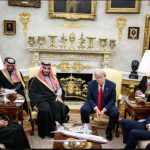
The president’s own remarks the same day captured the balancing act he is trying to perform. Speaking to reporters at the White House, he said the United States could keep attacking Iran gradually or intensify the campaign sharply, but that making a deal was the smarter path. He described Iran as growing more serious by the day while cautioning that talks could still collapse, and he insisted that any agreement would have to stop Tehran from ever acquiring a nuclear weapon. Later the same evening, at a separate public event, he struck a more sceptical note, saying he did not believe Iran was ready to make a deal at that moment but that he remained willing to listen. That contrast, hopeful in one setting and doubtful in another, has become something of a pattern for the president throughout the crisis, and it leaves both allies and adversaries trying to read genuine strategy into what may often be improvisation.
Why one afternoon in Washington matters far beyond it
The significance of the pause lies less in what it changed on the ground, since American forces continue to prepare strike options and could resume operations at short notice, and more in what it revealed about how this war is actually being run. Decisions that would normally move through layers of interagency planning and alliance coordination are, by the accounts of officials close to the process, being made in daily increments inside the Oval Office, shaped as much by the state of talks in Muscat and Tehran as by any fixed military objective. For a conflict that has already drawn in five Gulf states as targets of Iranian fire, disrupted a critical artery of global energy trade and killed and wounded dozens of people across multiple countries, that degree of improvisation carries real risk. Gulf governments that have found themselves attacked simply for hosting American forces have little say over whether Washington chooses talks or bombs on any given day, and that imbalance is likely to sharpen frustrations in capitals such as Doha, Manama and Kuwait City even as they continue to rely on American protection.
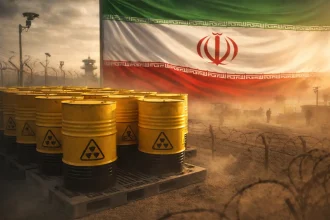
Over the coming weeks, three things will show whether this pause was a genuine turning point or simply a pause between rounds. The first is whether Oman and Iran actually produce a written understanding on the strait, since verbal progress in negotiations has collapsed before in this war without warning. The second is whether Iran uses the lull to rebuild the very capabilities that American strikes have been degrading, from air defences to missile production, which would make any subsequent American escalation both more necessary and more costly. The third, and perhaps most consequential, is whether Israel’s doubts about the durability of any deal prove justified, since a unilateral Israeli strike on Iranian nuclear sites during an American pause would tear open the very diplomatic window Washington is trying to create. What is already clear is that after five months of war, the decision to fight or to talk on any given day in the Gulf now depends less on fixed strategy than on the shifting judgement of a single man in the White House, and that is a precarious foundation for a region still counting its dead.