


Bridges, desalination plants and a downed hope for peace: how the US-Iran conflict slipped past the limits both sides once respected
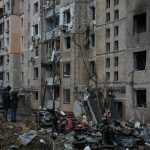
More than a week of Iranian attacks on vessels in the Strait of Hormuz, followed by American strikes and Iranian retaliation, has left much of the Middle East holding its breath. What began as a carefully negotiated 14-point agreement meant to de-escalate months of conflict is now being tested by missiles and drones hitting bridges, roads and desalination plants on both sides of the Arabian Gulf, according to a media report. What makes this moment genuinely alarming is not simply the violence itself, but the sense that neither Washington nor Tehran fully controls where it goes next.
The geography alone tells the story of how far this has spread. This latest wave of confrontation stretches from Jordan to Oman, according to media reports, with Iranian missiles aimed at Jordan reportedly seen as part of an effort to clear a path for attacks on Israel. At the same time, a separate strike on a ship off the Omani coast drew condemnation from India, according to media reports and media reports on the incident. Repeated Iranian attacks on Kuwait’s water and power networks, alongside unrelenting American strikes inside Iran, point to a conflict breaking through limits both sides once appeared to respect, according to a media report.
A conflict without a coherent goal
Iran has now formally abandoned the memorandum of understanding that had briefly restrained the fighting, and at least two American personnel were killed in Jordan, according to reporting. Against that backdrop, identifying any realistic political objective either side is actually pursuing has become genuinely difficult.
Washington has not managed to halt Iran’s disruption of regional security, including its ongoing threats to shipping around the Strait of Hormuz, according to a media report. Iran, for its part, has proven unable to effectively defend its own airspace, unable to break its international isolation, and unable to secure any meaningful reprieve for a leadership already under significant strain. Instead, each new strike is justified publicly as retaliation for the one before it, producing a pattern that increasingly resembles strategic drift rather than a war being fought toward any defined end.
The resulting condition is best described as a state of no war, no peace. Neither side is achieving its stated objectives, yet the costs of the conflict continue to be absorbed, not only by Washington and Tehran themselves, but by other countries across the region caught in the crossfire. This situation is unsustainable, and it demands a resolution that has so far proven elusive.
Diplomacy has been tried and found wanting
The diplomatic approach pursued to this point has clearly fallen short, as more than a week of tit-for-tat strikes demonstrates. Back channel communication is reportedly still ongoing between the two sides, but a genuine change of direction is now needed if this pattern is to be broken.
Actors with real influence and credibility need to make their presence felt far more forcefully than they have so far. The United Nations, too often reduced to the role of passive observer in this conflict, needs to reassert itself meaningfully. Russia and China both maintain genuine channels of influence in Tehran that have gone underused. Even Gulf states that have themselves been targeted by Iranian strikes still have a role to play in pushing toward de-escalation, despite being victims of the violence rather than parties driving it.
Attempting to resolve every dimension of this conflict simultaneously is likely to produce only diplomatic overload. A more realistic path forward would start more narrowly, with a time-bound truce focused specifically on halting further destruction of civilian infrastructure, the water networks, power grids and desalination plants that ordinary people across the region depend on regardless of who is winning any particular exchange.
From there, a sequenced process of de-escalation, involving independent third-party monitors to verify compliance, could follow. Negotiations themselves would benefit from being divided into separate, manageable tracks, treating nuclear issues, military tensions and regional proxy conflicts as distinct problems rather than one impossibly tangled dispute.
The real question is not who wins
The greatest danger at this stage is that regional stability itself is being sacrificed to a confrontation driven fundamentally by US-Iran rivalry and an escalating, widening cycle of retaliation. Gulf countries, Iraq and Jordan are absorbing the consequences of an escalation none of them chose, and few of them can control.
Framing this conflict around who ultimately wins the next exchange of strikes misses what is actually at stake. The far more urgent question is whether anyone, Washington, Tehran, or the international actors watching from the sidelines, can still stop a war that is gradually slipping beyond the control of the very parties waging it. Every additional strike on a bridge, a power plant or a water facility makes that question harder to answer, and leaves the region’s stability hanging on a diplomatic process that has, so far, consistently arrived a step behind the violence it is meant to contain.