




A rights group’s forensic account of three deadly strikes adds pressure on Israel’s military conduct just as a fragile ceasefire framework tries to hold.
Amnesty International has accused Israeli forces of killing entire families in three airstrikes on civilian homes in Lebanon, calling for the attacks to be investigated as war crimes. The finding, released Thursday, lands at a delicate moment: a US-backed framework agreement reached last month was meant to pave the way toward ending hostilities between Israel and Hezbollah, yet Israeli strikes on southern Lebanon have continued intermittently since.
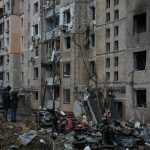
Amnesty’s investigation focused on three strikes carried out between 6 and 13 March, which killed 24 civilians, 12 of them children. Researchers built their account on interviews with 15 people, including survivors, relatives, paramedics, journalists who visited the strike sites, and local officials. Based on that evidence, the organisation said it had a reasonable basis to conclude Israeli forces violated international humanitarian law in each case, whether by failing to distinguish between civilians and military targets, directing attacks at civilian objects, or failing to take feasible precautions to limit civilian harm.
Kristine Beckerle, Amnesty’s deputy regional director for the Middle East and North Africa, said the military had, within the space of a single week, wiped out entire families, including a dozen children, calling it a demonstration of callous disregard for civilian life. Amnesty is now pressing states to impose a comprehensive arms embargo on Israel and to pursue universal and extraterritorial jurisdiction to investigate and prosecute those responsible, a legal mechanism that allows national courts to prosecute grave international crimes regardless of where they occurred or the nationality of those involved.
How Israel has responded
Amnesty said it approached Israeli authorities during its investigation. Officials responded that some of the strikes had targeted Hezbollah military objectives, while others had been referred for internal examination. Despite follow-up requests, Amnesty said the Israeli military did not provide specific information about the three attacks, including what the intended targets may have been.
Israel’s defence minister, Israel Katz, addressed the broader campaign in Lebanon on Thursday without directly responding to Amnesty’s findings. He said Hezbollah had attacked Israel on its own initiative on two occasions, and that Israeli forces had, over the past two and a half years, dismantled most of Hezbollah’s capabilities and leadership. Katz added that Israeli forces would remain in a self-declared security zone inside Lebanese territory for as long as deemed necessary to protect communities in northern Israel. The gap between Amnesty’s specific, incident-level findings and Israel’s general framing of the campaign as a defensive response to Hezbollah aggression remains, at this stage, unresolved by any independent judicial process.
The war behind the findings
The current round of fighting began on 2 March, when Hezbollah launched rockets at Israel in a show of support for its patron, Iran, drawing Lebanon into the wider Middle East conflict. Israel responded with sustained airstrikes and a ground invasion. According to Lebanese authorities, the campaign has killed more than 4,300 people, including more than 250 children, a toll that situates the three strikes Amnesty examined within a far larger pattern of civilian casualties still awaiting comprehensive independent accounting.
A ceasefire architecture has since begun to take shape, though unevenly. Last month, Lebanon and Israel concluded a US-backed framework agreement intended to lay the groundwork for a permanent end to hostilities, following a separate memorandum of understanding between Iran and the United States that ended the broader regional conflict and included a ceasefire covering Lebanon. Despite that framework, Israeli strikes on southern Lebanon have continued intermittently, some of them fatal, underscoring how far the arrangement remains from a fully enforced cessation of hostilities. Lebanese officials have signalled they will only attend a planned follow-up round of talks in Rome if Israel first withdraws from two contested positions it continues to hold inside Lebanese territory, a precondition that illustrates how unresolved ground presence, not just the ceasefire’s terms on paper, remains a central obstacle to consolidating the truce.
Why the accountability push matters strategically
Amnesty’s intervention is significantly less for its immediate legal effect, which is limited since the organisation has no enforcement power of its own, than for the diplomatic and legal architecture it is trying to activate. A push for a comprehensive arms embargo targets the supply relationships, chiefly with the United States and other Western partners, that sustain Israel’s ability to sustain high-tempo air operations. A push for universal jurisdiction prosecutions targets individual commanders and officials in national courts abroad, a mechanism that has previously been used, with mixed success, against officials from other conflicts who travel to jurisdictions willing to exercise it.
Whether these findings gain traction with governments will depend heavily on factors well beyond the evidence itself, including how the Lebanon ceasefire framework holds up over the coming months and how much political appetite there is, particularly in Washington and European capitals, to act on human rights findings against a security partner in the middle of a fragile de-escalation process. That tension, between documented battlefield conduct and the diplomatic caution that regularly follows it, has recurred across nearly every major investigation into this conflict’s civilian toll.
An accounting still incomplete
Amnesty’s three-strike sample represents a fraction of the civilian casualties recorded since March, and the organisation has not claimed otherwise. Its findings stand as a documented account of a narrow set of incidents, assessed against the legal standards of international humanitarian law, while the broader toll and the question of how many of the more than 4,300 deaths reported by Lebanese authorities meet a similar evidentiary threshold remain for now outside the scope of any single investigation.